
Why PDRN? | How It Works | Who It Suits | Side Effects | FAQs
Why Interest in PDRN Treatment Has Grown?
The skin concerns patients usually come in with
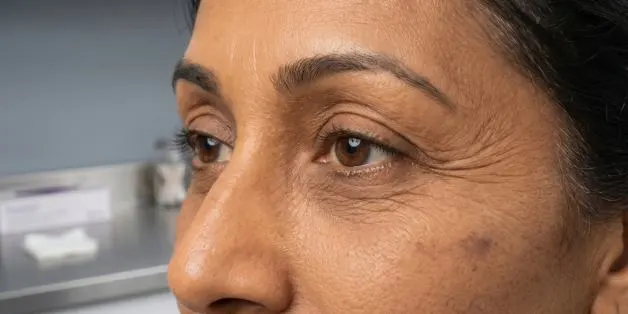
Many patients who ask me about PDRN treatment are not looking for a dramatic change. They are more often concerned about skin that looks tired, dull, crepey, inflamed after repeated procedures, or slower to recover than it used to. In Mumbai, I also see patients dealing with a mix of issues at once — early textural ageing, post-acne marks, under-eye crepiness, sun exposure, and a skin barrier that has been stressed by overuse of actives or frequent treatments.
That matters because these are not always concerns that need volume or a strong device first. Sometimes the skin needs a more repair-oriented approach. That is where interest in PDRN has grown. It sits within a category of treatment that aims to support tissue recovery and improve skin quality gradually rather than simply making the face look fuller.[1,3]
Why “regenerative” treatments are getting attention now?
Aesthetic dermatology has moved beyond only treating lines and folds. Patients now ask whether the treatment is improving the skin itself or only changing how it looks for a short time. Regenerative treatments get attention because they try to support the tissue environment, not just cover the problem. I still think the term regenerative is used too loosely. PDRN is promising, but it is not a shortcut and it does not replace sound diagnosis or good sequencing.[3,4]
What Is PDRN Treatment?
What PDRN stands for
PDRN stands for polydeoxyribonucleotide. In simple terms, it refers to DNA fragments studied for their role in tissue repair and recovery. It has a medical background in wound-healing and tissue-support settings, which is part of why it later drew interest in dermatology and aesthetic practice.[1]
Patients also come across terms such as salmon DNA treatment, polynucleotides, and skin boosters, often used as if they all mean the same thing. They do not. There is overlap, but they are not always interchangeable categories, and that distinction matters when expectations are being set.[3,5]
How PDRN is different from general “skin boosters”?
The term skin booster is broad. It may include hyaluronic acid based injectables, polynucleotide products, and other formulations meant to improve hydration or skin quality. I think of PDRN more as a repair-oriented treatment than a purely hydrating one. In selected cases, I use that distinction to decide whether the patient needs a treatment for hydration, for tissue support, or for something else entirely.[1,3]
How PDRN Works in the Skin
The tissue-repair and anti-inflammatory pathways behind it
The science around PDRN suggests two important mechanisms. One is adenosine A2A receptor related activity, which may support anti-inflammatory and pro-healing signalling. The other is the salvage pathway, where nucleotides may support cellular repair and regeneration.[1,3]
In simple terms, I explain it as a treatment that may improve the environment in which the skin repairs itself. It does not work like filler, and it should not be judged by filler-like expectations. Reviews in aesthetic medicine suggest that DNA-derived injectables in this category may support hydration, texture, elasticity, and overall skin quality, though the evidence is still evolving.[3,4]
Why results are usually gradual, not instant?
PDRN is usually a gradual treatment. Some patients may notice freshness after a session, but the more meaningful changes, if they happen, tend to appear over weeks. That makes biological sense. A treatment relying on repair pathways and tissue recovery is not expected to give the same immediate visual shift as a volume-based procedure.[1,4]
Who I Consider for PDRN Treatment, and Who I Do Not?
Patients who may benefit from it
I am more likely to consider PDRN when the main issue is skin quality rather than shape. Examples include thin or tired-looking skin, under-eye crepiness where I do not want unnecessary puffiness, early textural ageing, recovery support after selected procedures, and some cases of post-acne texture as part of a wider plan.[3,4]
It usually suits patients who want subtle, progressive improvement and understand that this is not a one-session transformation. Patients concerned about dark circles and under-eye skin quality are often well-suited for a detailed assessment to decide whether PDRN is relevant to their specific concern.
When I would defer, refuse, or choose another treatment first?
I do not choose PDRN just because a patient asks for it by name. I may defer it if the diagnosis is unclear, if there is active infection or uncontrolled inflammation, if the barrier is very compromised, or if the patient actually needs acne control, pigment treatment, vascular assessment, or a structural treatment first. If the goal is lifting, contour, or deep fold correction, PDRN is usually not my first answer.
I am also cautious when patients arrive with social media expectations that PDRN works for nearly everything. Good treatment selection starts with defining the problem correctly.[4,5]
Why I Choose PDRN in Selected Cases?
What problems it is better suited for than many patients realise?
What I value about PDRN is that it gives me a less volume-driven, more skin-quality-focused option. I may think about it when the skin is looking thin, mildly crepey, stressed, or slower to recover — especially when I want improvement without making the face look treated. That is a useful niche.
The literature around polynucleotides and related treatments suggests potential benefits in hydration, texture, elasticity, and wrinkle appearance, with generally mild short-term adverse effects. But systematic review level evidence also points to differences in products and protocols, which is why I prefer measured language over hype.[3,4]
What it can improve, and what it cannot
PDRN may help improve skin quality, hydration, fine textural change, and recovery in selected patients. In some under-eye cases, it may be relevant where the concern is thin, crepey skin rather than puffiness or deeper hollowness.[2,3]
What it does not do well is equally important. It does not replace lifting where lifting is needed. It does not behave like a filler. It does not erase established scars by itself, and it does not fix every type of pigmentation. These limits need to be stated clearly.
Side Effects, Safety, and What Patients Should Know Beforehand
Common short-term reactions
The most common side effects are usually those expected with injectable procedures — temporary redness, swelling, tenderness, bruising, or small bumps at the treatment points. Most reported adverse effects in the literature are mild and transient.[2,4]
Rare but important safety considerations
No injectable should be treated as trivial. Product quality, sterility, correct depth, patient selection, and management of complications all matter. Even when a treatment has a reassuring safety profile in studies, that does not mean it is suitable for indiscriminate use. The evidence around PDRN and polynucleotides is encouraging, but there are still gaps in standardisation across products and protocols.[3,5]
Why product quality and injection judgement matter?
One issue patients rarely hear enough about is terminology. In the market, PDRN and polynucleotides are sometimes grouped together as if they are identical. Recent literature has tried to clarify that they are related but not always interchangeable categories, with different molecular profiles and potentially different clinical behaviour.[5] At my clinic, I use purified DNA derived from salmon.
When I Prescribe Other Treatments Instead?
PDRN vs hyaluronic acid skin boosters
Hyaluronic acid skin boosters are more hydration-forward. They may be reasonable when dehydration and surface freshness are the main goals. PDRN is more relevant to me when I want a repair-oriented approach and when hydration alone is not the central issue.[2,5]
PDRN vs polynucleotides
This comparison is often poorly explained. Many branded aesthetic treatments fall under the broader polynucleotide space, while classical PDRN has its own pharmacological and regenerative background. Reviews suggest that PDRN is discussed more in relation to repair pathways, while higher-molecular-weight polynucleotide products are often positioned more strongly within aesthetic rejuvenation and tissue support.[1,3,5]
PDRN vs PRP, lasers, and microneedling
PRP (platelet-rich plasma), lasers, and microneedling all have different jobs. PRP depends on the biology of the patient. Lasers may be more logical where pigment, vascular issues, or scar remodelling need a targeted energy-based approach. Microneedling may help with textural concerns and controlled remodelling. If the patient needs that kind of targeted change, PDRN alone is usually not enough.
Why the “best” treatment depends on the skin problem, not the trend
There is no single best injectable for all skin concerns. The right treatment depends on whether the priority is hydration, pigment, inflammation control, scar remodelling, structural support, under-eye quality, or barrier repair. In responsible practice, the diagnosis chooses the treatment, not the trend.[4,5]
How I Personalise PDRN With Other Treatments
Combining it with devices and procedures for better sequencing
PDRN can make more sense when used as part of a sequence rather than as a standalone hero treatment. In some patients, I may think about it before or after other procedures to support recovery or improve overall skin quality. In others, it may come later, once active acne, sensitivity, or inflammation is better controlled. Patients who have explored options such as the vampire facial or other regenerative approaches will find PDRN sits within a similar philosophy of supporting the skin’s own repair process.
Why timing, inflammation control, and skin barrier status matter
If the barrier is unstable, if the patient is inflamed, or if too many procedures are being layered without a plan, even a sensible treatment can disappoint. A biologically sound treatment can still be clinically mistimed.
Why combination plans are not the same for every patient?
Two patients may both ask for PDRN and still need very different plans. One may need pigment work first. Another may need acne control and scar mapping. A third may need no injectable at all, just better barrier repair and a more realistic skincare plan. Personalisation is not an optional extra in dermatology. It is the treatment.
Patients interested in skin tightening alongside skin quality improvement may also wish to explore skin tightening treatments available at our clinic, which address structural concerns that PDRN alone is not designed to correct.
Why PDRN Is Considered an Innovative Treatment?
PDRN is considered innovative because it sits at the intersection of pharmacology, tissue repair, and aesthetic medicine. Its rationale is linked to repair pathways, anti-inflammatory effects, and support for tissue regeneration rather than only cosmetic camouflage.[1,3]
My approach is to see PDRN as a useful option within a broader regenerative toolbox, not as a universal answer. It needs the right patient, the right indication, and the right sequence.
What Most People Get Wrong About PDRN Treatment?
“It works like filler”
No. If the goal is volume replacement, contour, or deeper support, PDRN is not the same conversation as filler.
“It gives instant glow after one sitting”
Some patients may look fresher after treatment, but that is not the best way to judge whether PDRN is doing its real job. I consider it a gradual treatment.
“If it is natural, it suits everyone”
Natural sounding terminology does not make a treatment universally suitable. Suitability still depends on diagnosis, skin condition, goals, tolerance, and treatment history.
“It can replace every other rejuvenation treatment”
It cannot. In some patients it is useful. In others it is secondary. In others it is unnecessary. Good clinical judgement includes knowing when not to use an interesting treatment.
Patient Questions I Often Get About PDRN Treatment
Is PDRN treatment painful?
Most patients find it tolerable, especially when the technique and plan are appropriate. Sensitivity varies by area and by individual tolerance.
How many sessions do I usually need?
That depends on the indication and how the skin responds. A course is commonly discussed for skin-quality treatments in this category, but I individualise the plan rather than promise a fixed number for everyone.[2,4]
Is there downtime after PDRN treatment?
Usually downtime is limited, but temporary redness, bruising, swelling, or small bumps can happen. The practical answer is that you should plan for short-term visible injection effects even if the treatment is considered low downtime.[2,4]
Can PDRN help under-eye skin, acne scars, or dull skin?
It may help selected patients in those areas, especially where skin quality and recovery are part of the problem. But it is not the answer for every type of dark circle, every scar pattern, or every cause of dullness.[2,3]
How long do results usually last?
That varies with the skin problem, the product used, treatment sequence, and ongoing skin stressors such as sun exposure and inflammation. I prefer not to discuss it as a fixed duration because that can be misleading.
Can PDRN be done before an event?
Possibly, but timing matters. Because even low-downtime injectables can leave temporary marks, I generally prefer not to schedule any new injectable treatment too close to an important event.
References
- Squadrito F, Bitto A, Irrera N, Pizzino G, Pallio G, Minutoli L, Altavilla D. Pharmacological Activity and Clinical Use of PDRN. Frontiers in Pharmacology. https://pubmed.ncbi.nlm.nih.gov/28491036/
- Cavallini M, Bartoletti E, Maioli L, Massirone A, Palmieri IP, Papagni M, Priori M, Trocchi G. Consensus report on the use of PN-HPT™ (polynucleotides highly purified technology) in aesthetic medicine. Journal of Cosmetic Dermatology. https://pubmed.ncbi.nlm.nih.gov/32799391/
- Lee KWA, Chan KWL, Lee A, et al. Polynucleotides in Aesthetic Medicine: Current Practices and Perceived Effectiveness. International Journal of Molecular Sciences. https://pubmed.ncbi.nlm.nih.gov/39125793/
- Lampridou S, Bassett S, Cavallini M, Christopoulos G. The Effectiveness of Polynucleotides in Esthetic Medicine: A Systematic Review. Journal of Cosmetic Dermatology. https://pubmed.ncbi.nlm.nih.gov/39645667/
- Kim ST. Comparison of Polynucleotide and Polydeoxyribonucleotide in Dermatology: Molecular Mechanisms and Clinical Perspectives. Pharmaceutics. https://pubmed.ncbi.nlm.nih.gov/40871045/