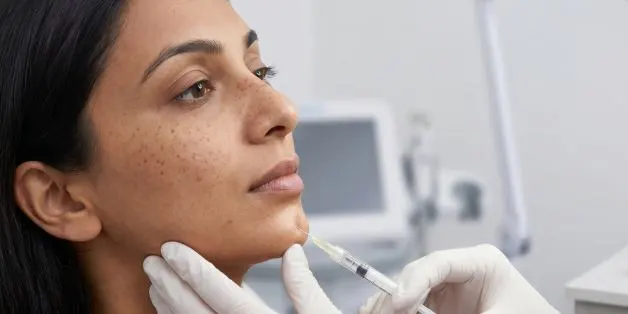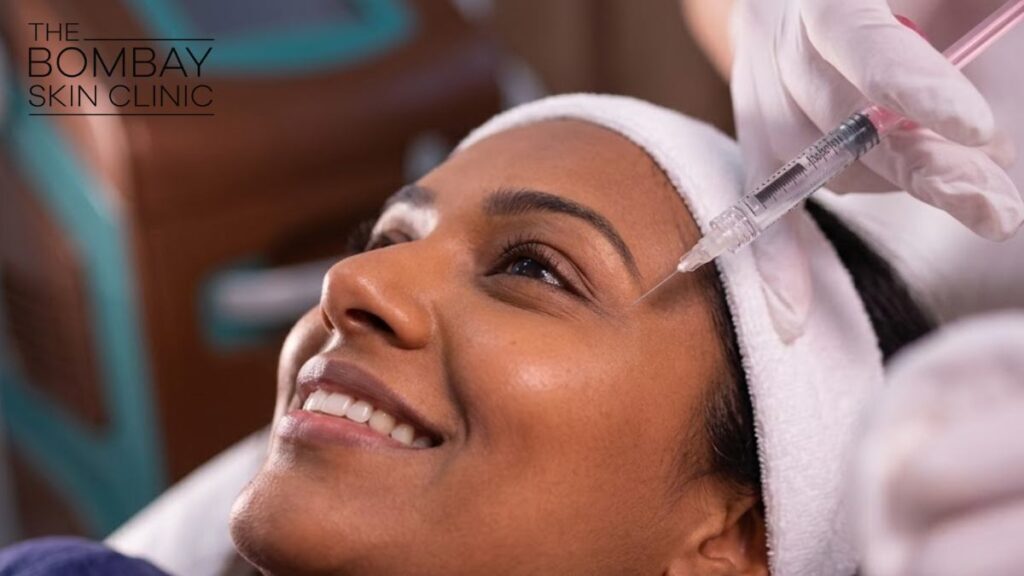
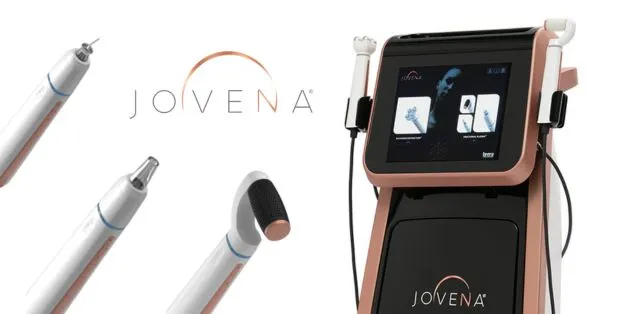
I consider Jovena® treatment in Mumbai for patients who are noticing early to moderate changes such as softening of the jawline, early jowls, mild under-chin laxity, and a general “tired” facial look that comes from a mix of skin laxity and reduced tone. Many patients also want a subtle improvement in skin smoothness and a mild tightening effect over time, rather than a dramatic change in facial structure.
What it does not do matters just as much. Jovena® does not replace surgical lifting for advanced laxity. It does not dissolve large fat pads in a predictable way, and it is not a primary treatment for deep scars, active acne, or significant pigment problems. If your main concern is heavy laxity or major volume loss, I may discuss other approaches first, including combinations.
How Jovena® works
The two layers I target, skin support and facial muscle tone
Facial ageing is not only about wrinkles. In practice, I see three broad contributors: changes in skin (collagen, elastin, hydration), changes in fat (shift in position and volume), and changes in muscle tone and support. RF devices are best known for dermal heating that can trigger collagen remodelling and improve firmness over time. Across RF systems, clinical reviews show improvements in skin texture and firmness, with adverse effects usually mild and short-lived when protocols are appropriate.[1,2]
Some RF systems are designed for deeper, non-microneedling heating that targets laxity and contour concerns, and clinical studies show measurable improvement in selected patients.[3] Practical, real-world technique recommendations have been published for non-microneedling monopolar RF, and the safety message is consistent, patient selection, sensible parameters, and operator training matter.[4]
Jovena®’s clinical intent is to add an extra element to this conversation, facial muscle activation alongside deep warming. For Jovena® specifically, some vendors describe a combined approach of deep warming and rhythmic muscle activation. Independent, device-specific, peer-reviewed evidence for this “muscle activation” element is still limited compared with the broader RF literature. In my consultations, I treat this as a potential adjunct for tone and contour definition, while keeping expectations realistic and prioritising safety.
What you should realistically expect to change?
I set expectations in three time frames.
- Immediately after a session, some patients notice a transient “fresh” look from circulation changes and mild tissue tightness. This is not the final result.
- Over weeks, the meaningful changes may show up as better skin bounce and a slightly sharper contour in suitable candidates, as collagen remodelling occurs.
- With a maintained plan, results tend to be more stable than one-off sessions.
What will not change is bone structure, deep sagging from advanced laxity, or major volume loss. If these are your priorities, I will say that clearly and propose other options.
Why choose Jovena®?
The patient profiles where I consider it a good fit
I tend to consider Jovena® when a patient has one or more of the following:
- Early facial laxity, early jowls, or a soft jawline where they want a non-surgical option.
- Patients in their late 20s to early 40s who want to support facial tone and skin quality before changes become more fixed.
- Patients who cannot afford downtime because of work, travel, or family routines.
- Patients who prefer gradual, natural-looking improvement over higher intensity procedures.
In Mumbai, where sun exposure, humidity, and pollution are daily realities, I also think about barrier health and pigment risk. A comfortable, low downtime option can be easier to fit into a longer-term plan. Explore our range of skin tightening treatments to find the right fit for your skin concern.
My clinical decision framework, when Jovena® makes sense vs when it does not
I use a simple framework that keeps the plan patient-centred.
- Define the main problem, is it skin laxity, muscle tone, fat shift, or volume loss?
- Define the dominant area, jawline, under-chin, midface, or neck.
- Define the timeline, are we working around an event, or over a quarter?
- Define the risk profile, history of pigment sensitivity, eczema, keloid tendency, or recent energy-based treatments.
Jovena® fits best when mild laxity and reduced tone are important contributors. It is less suitable when the primary need is surgical lifting, major fat reduction, or significant structural volume replacement.
Key takeaways
- Think of Jovena® as support for tone, contour definition, and skin firmness, not as a replacement for surgery.
- Results are usually gradual, and the most consistent outcomes come from realistic targets.
- Safety depends on correct selection and technique, as with any energy-based procedure.[4]
Who is a suitable candidate?
Skin, age, laxity, and lifestyle factors that influence outcomes
Age is not a strict rule, but it is a useful signal. Younger patients with early laxity often respond well because tissue elasticity is better. Older patients can also benefit, but the improvement may be modest unless we combine treatments.
Lifestyle factors matter. Smoking, sustained sun exposure, poor sleep, and large weight fluctuations can change facial tone and contour. If these are active, I discuss them early because they affect how satisfying a non-surgical plan will feel. Read more about our approach to anti-ageing treatment in Mumbai.
Medical contraindications and safety flags I screen for
I typically defer or avoid treatment when there is active skin infection, uncontrolled inflammatory skin disease in the area, or very recent procedures that have not settled. I also review implantable devices and relevant medical history. If there is any doubt, I choose the safer path and delay.
Timing considerations, events, travel, and recovery windows
One reason patients explore a jawline contouring treatment in Mumbai is logistics. Jovena® is usually planned as a low downtime session, but I still advise not scheduling it immediately before a major event if you are prone to redness or swelling. If you expect long outdoor exposure in peak heat, I plan around that.
Treatment journey, what to expect step by step
I assess facial balance at rest and in expression. “Lift” can mean different things, jawline definition, midface freshness, or under-chin tightening. I also note asymmetry because most faces are not symmetrical, and it is better to plan for that than to promise symmetry.
Pre-treatment preparation, what I advise in the week before
Preparation is usually simple. I advise avoiding any new, aggressive skincare actives right before the session if you are prone to irritation. Arrive with clean skin on the day. If you have a history of cold sores around the mouth, I plan cautiously for that region.
During the session, sensations, duration, and comfort measures
Most patients describe the session as warm and comfortable, with rhythmic tightening or pulsing in certain areas. Comfort depends on skin sensitivity and how we set expectations. I prefer a conservative approach that prioritises safety and consistency.
After the session, immediate changes vs delayed changes
Immediately after, mild redness or warmth can occur. Some patients feel that the face looks slightly tighter. The more meaningful changes, in suitable candidates, are typically noticed over the following weeks as tissue response evolves.[3]
Follow-up and review, how I track response over time
Follow-up is where clinical judgement matters. I ask you to observe changes in normal lighting, not only in selfies. If there is no meaningful response after a reasonable trial, I reassess and switch strategies rather than continuing blindly.
When other treatments are prescribed instead?
- HIFU, I consider this when the goal is deeper, focused heating of the SMAS and deeper tissue planes to support lift and structural definition. It suits fuller or more voluminous faces where jawline definition, lower-face lift, or double-chin reduction is the priority. Learn more about HIFU skin tightening treatment.
- Non-microneedling monopolar RF, I consider this when the primary target is dermal tightening and collagen remodelling, especially for jowls and mild laxity.[4]
- Microneedling RF, I consider this when texture, pores, acne scars, or certain fine lines are key priorities, because it targets dermis through controlled micro-injury with RF heating.[5] Explore our MNRF treatment in Mumbai.
- Lasers and light-based options, I may prefer these when pigment, redness, or surface texture dominates the complaint, and when the patient’s skin type and history make it a safe choice.
- Injectables, I may use neuromodulators for dynamic lines and fillers for true volume loss. In some faces, volume correction has a bigger visual impact than tightening alone.
- Threads, I reserve these for selected cases where mechanical lift is needed and the patient understands the limitations, potential side effects, and maintenance expectations.
Where Jovena® sits in the overall non-surgical lift spectrum
I position Jovena® as a supportive, low downtime option for early laxity and tone-related contour changes. It can be a useful bridge treatment, either before stronger interventions, or as a maintenance tool in a broader plan. It is not my first choice for severe laxity, and I say that upfront.
How I combine Jovena® with other treatments?
Personalisation is where outcomes become more consistent. For jawline and jowls, I think about three contributors: skin laxity, fat shift, and muscle tone.
- In patients with very mild laxity, thinner faces, muscle weakness, or early hollowness, I often place Jovena® as a first-line treatment. It supports muscle engagement and collagen stimulation, and the results tend to look natural without over-tightening or volume distortion.
- In patients with a fuller face, more visible sagging, or in those over 40, I often use Jovena® as a priming step. Starting with Jovena® helps stimulate collagen and improve muscle quality before layering higher-intensity treatments that focus on deeper lifting or tightening.
- As a third role, I also use Jovena® as a post-treatment and maintenance option after procedures such as fillers, threads, HIFU, or Density RF. In these plans, the aim is to support tissue quality, improve how results settle, and help maintain the outcome over time.
For the under-chin, I assess fat thickness, muscle tone, and skin recoil. Jovena® can help where laxity and muscle support are part of the concern, while other modalities may be needed if fat volume or deeper tissue descent dominates.
For the midface, I differentiate between true volume loss and tissue descent. Jovena® can support tone and early firmness, but volume correction or deeper lifting may be layered when indicated.
Sequencing: what I do first, what I layer later, and why
Sequencing reduces irritation and improves clarity of outcomes.
- When laxity is minimal or the face is thinner, Jovena® may be the starting and sometimes sufficient treatment.
- When laxity is greater or ageing changes are more established, I often start with Jovena® to prime the skin and muscle, then layer higher-intensity options such as HIFU or Density RF if needed.
- If volume loss is significant, I address that early because it changes how lift and contour appear.
- If texture is the dominant issue, I may prioritise microneedling RF or resurfacing, and introduce Jovena® later to support tone and firmness.
Special situations, recent fillers, sensitive skin, melasma-prone skin, acne-prone skin
With recent fillers, I plan treatment zones carefully and avoid aggressive energy over fresh filler until it has settled. With melasma-prone skin, my approach is cautious because excess inflammation can act as a trigger. With acne-prone skin, I avoid treating over active, inflamed lesions.
These are not blanket rules. They are risk-reduction decisions made to fit the individual, not the device.
Why the treatment is considered innovative?
The innovation claimed in FaceStim-style RF is the attempt to combine deep tissue warming with muscle activation patterns, rather than focusing only on dermal heating. If this is delivered safely, it may help address a gap in non-surgical rejuvenation, because facial ageing is not only a skin problem.
RF as a category has clinical evidence supporting improvements in skin firmness, texture, and patient satisfaction, with adverse effects typically mild and transient in appropriately performed treatments.[1,2]
What most people get wrong about Jovena®?
Myth 1: It replaces surgery
No non-invasive device replaces a surgical lift for advanced laxity. Jovena® can support tone and mild tightening, but it cannot reposition heavily descended tissue in the way surgery can.
Myth 2: One session is enough for everyone
Response depends on age, baseline laxity, and lifestyle. Some patients see early improvement, but a plan of sessions is usually more effective for lasting results.
Myth 3: It melts a lot of fat
Jovena® is not a primary fat reduction procedure. If under-chin fat is a main issue, I assess fat thickness and discuss other options that target fat more directly, while still respecting skin recoil.
Myth 4: It is the same as every RF facial
RF devices differ in energy delivery, depth profile, cooling, and clinical intent. Outcomes and side effects can vary across systems, which is why I match the tool to the problem.[4]
Myth 5: If it is painless, it is not working
Discomfort is not a reliable marker of efficacy. Many effective non-ablative procedures are designed to be tolerable. What matters is controlled energy delivery and correct patient selection.
Patient questions I often get
1. Is Jovena® safe for Indian skin and sensitive skin?
When performed by a trained doctor with careful selection and conservative technique, RF-based facial treatments are generally well tolerated across skin types.[1,4] Sensitive skin still needs caution. I prefer a barrier-first plan for reactive patients, and I avoid treatment if the skin is inflamed.
2. How many sessions do I usually need, and how do you decide?
I decide based on your baseline laxity and your response after the first sessions. If we see meaningful improvement and you recover smoothly, we continue. If response is minimal, I reconsider the diagnosis and the tool. The goal is meaningful improvement, not overtreatment.
3. How long do results last?
Results develop over weeks as collagen remodelling occurs.[3] Longevity depends on your baseline, lifestyle, and whether we combine supportive treatments. I avoid making time guarantees because facial ageing continues.
4. Can I do Jovena® if I have fillers, Botox, or threads?
Often yes, but timing and sequencing matter. I usually avoid aggressive energy work immediately after filler or threads until tissue has stabilised. For Botox, we plan around your goals, because muscle activation and neuromodulation have different intents.
5. What is the downtime, can I go back to work the same day?
Most patients return to normal routines the same day. Mild redness or swelling can occur, especially in sensitive skin. If you have a major event, I still advise a buffer, because individual skin responses vary.
6. How is Jovena® different from HIFU or microneedling RF for tightening?
HIFU is designed for deeper, focused heating, often used for lifting in selected patients. Microneedling RF combines controlled micro-injury with RF heat, and it is often chosen when texture and scars are priorities.[5] Jovena® is positioned as a non-invasive option that aims to support tone and firmness with minimal downtime. Which is more suitable depends on your primary problem, your skin type, and your tolerance for downtime and intensity.
References
- Kumar N, et al. A Systematic Review of Efficacy, Safety, and Patient-Centered Outcomes of Radiofrequency Treatments. Aesthetic Surgery Journal Open Forum. https://academic.oup.com/asjopenforum/article/doi/10.1093/asjof/ojaf159/8355023
- El-Domyati M, et al. Radiofrequency facial rejuvenation: Evidence-based effect. Journal of the American Academy of Dermatology. https://pmc.ncbi.nlm.nih.gov/articles/PMC6541915/
- Shin JM, et al. Efficacy and Safety of Monopolar Radiofrequency for Facial Skin Laxity. Cosmetics. https://www.mdpi.com/2079-9284/11/3/71
- Weiss RA, et al. Consensus Recommendations for 4th Generation Non-microneedling Monopolar Radiofrequency for Skin Tightening. Journal of Drugs in Dermatology. https://pubmed.ncbi.nlm.nih.gov/31985194/
- Chandra S, Mysore V, Shah S, Malayanur D, SRS. Physics of fractional microneedle radiofrequency, a review. Journal of Cutaneous and Aesthetic Surgery. https://pmc.ncbi.nlm.nih.gov/articles/PMC11497551/