Weight Management Treatments | How Treatments Work | Treatment Recommendations | Good Candidates | Side Effects Safety
Introduction, When Weight Feels More Complicated Than “Eat Less, Move More”
In Mumbai, I often meet patients who feel they are doing many things right and still not getting the result they expected. Some are trying to eat better but the scale barely changes. Others are not mainly worried about body weight, but about a lower abdomen, flanks, or overall softness that does not improve even after effort. This is where confusion begins, because people often use weight loss, fat loss, inch loss, and body toning as if they all mean the same thing. They do not.
When I discuss weight management treatments, I do not see them as shortcuts. I see them as tools that may or may not fit a person’s biology, goals, and daily reality. Obesity is now understood as a chronic disease, and current guidance also emphasises respectful, individualised care rather than one fixed formula for everyone.[1,2] That is why my first question is not, “Which treatment is trending?” It is, “What exactly are we trying to solve?”
What I Mean by Weight Management Treatments?
Weight loss is not the same as fat loss
Weight includes fat, muscle, water, and normal daily variation. Fat loss is narrower. It refers to reducing adipose tissue. This matters because patients sometimes judge progress only by the scale, even when their body is changing in a more useful way. On the other hand, a drop in weight is not always ideal if too much of it comes from lean mass.
So when I use the phrase weight management treatments, I am not talking about one single category. I may be talking about a medical treatment that helps regulate appetite and eating behaviour, or a localised fat-reduction treatment, or a body-composition treatment that supports tone and muscle definition.
Weight management is not the same as body contouring
Body contouring is not a treatment for obesity. It is a shape-refining approach. A treatment such as cryolipolysis is meant for selected pockets of subcutaneous fat. It does not treat the metabolic drivers of weight gain, and it is not a substitute for broader obesity care.[5,6]
This distinction prevents disappointment. A patient who needs appetite regulation and systemic support is unlikely to be happy with a localised fat treatment alone. Equally, someone with stable body weight but a stubborn lower abdominal bulge may not need a medical weight-loss pathway.
How Weight Management Treatments Work?
Treatments that help regulate appetite and eating patterns
Some patients need help at the level of hunger, fullness, cravings, and meal control. In that setting, weight loss injections may come into the discussion. These treatments act through hormonal pathways involved in appetite and satiety. They are not cosmetic fat-dissolving procedures. They belong to medical obesity care and work best inside a doctor-led framework.[2,3,4]
Treatments that target stubborn localised fat
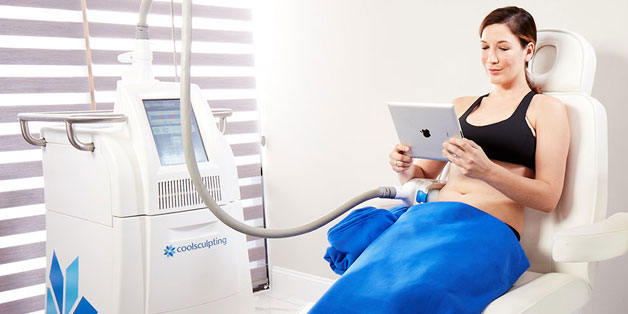
When the concern is a defined pocket of pinchable fat, cryolipolysis (CoolSculpting) may be relevant. It uses controlled cooling to selectively affect fat cells in a targeted area. The change is gradual because the body clears the affected cells over time. This is why I describe it as contour refinement, not true weight-loss treatment.[5,6]
Treatments that improve body composition and muscle tone
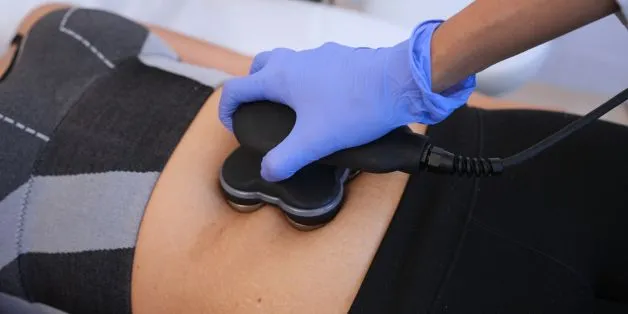
Some people are less troubled by total body weight and more by softness, poor core definition, or weak-looking muscle tone. In those cases, body-composition treatments that use high-intensity focused electromagnetic energy, sometimes combined with radiofrequency depending on the platform, may be useful. This category is more about tone and shape than major total-weight reduction.[7,8]
Why I Recommend One Treatment Over Another?
When I consider medically supervised injections?
I consider this route when the issue is broader excess weight, appetite dysregulation, repeated regain, or obesity-related risk. In such cases, I want a treatment that works upstream rather than only changing shape in one area. Trials of semaglutide and tirzepatide have shown meaningful weight reduction in appropriate adults with overweight or obesity when used as part of a larger programme.[3,4]
But evidence alone does not decide suitability. I also assess whether the patient understands that this is a medical journey, not a quick cosmetic fix.
When I consider body contouring treatments like CoolSculpting?
I think about cryolipolysis when body weight is relatively stable and the main complaint is a localised bulge. I also assess the type of fullness. It works on selected subcutaneous fat. If the problem is mainly visceral fat, bloating, or skin laxity, the treatment is unlikely to match the concern.[5,6]
When I consider body-composition treatments like Emsculpt NEO?
I consider this category when the patient wants better tone, firmer lines, or support for body composition rather than major weight loss. Published reviews suggest useful contour-related and muscle-related outcomes in selected patients, but I still explain it with measured language. It is a helpful tool, not a replacement for comprehensive weight management.[7,8]
When lifestyle support matters more than adding another procedure?
There are times when the smartest next step is not another technology. If sleep is poor, meals are highly irregular, stress is driving eating, or expectations are unrealistic, a procedure can become a distraction. Current guidance supports a whole-person approach because durable outcomes do not come from technology alone.[1,2]
Who May Be a Good Candidate, and Who I May Refuse?
Clinical factors I assess before recommending treatment
I assess fat distribution, weight stability, appetite pattern, metabolic context, prior attempts, and the patient’s main outcome goal. I also look at whether the concern is generalized weight, localised fat, laxity, weak muscle tone, or a combination. For patients interested in a body contouring treatment, I evaluate whether body weight is sufficiently stable and the concern is genuinely localised. In Asian Indian patients, central adiposity deserves particular attention because metabolic risk may be significant even when the body does not appear dramatically overweight.[1]
Red flags, unrealistic expectations, and refusal criteria
I may refuse a treatment when expectations are unrealistic, when the chosen procedure does not match the complaint, or when the patient is asking for a promise that medicine cannot honestly make. I am cautious when someone wants body contouring for generalized obesity, or wants a weight-loss injection only for a short event-driven target. Refusal is not rejection of the patient. It is part of safe selection.
The Treatment Journey, What Patients Can Expect
Consultation and baseline assessment
The first consultation should define the problem before it discusses the solution. When a patient says, “I want to lose weight,” I need to know whether they mean the scale, the waistline, one stubborn area, appetite control, or post-pregnancy body change. That distinction shapes the whole plan.
Planning the treatment sequence
Sequence matters. If the main issue is broader excess weight, I usually think about getting that under better control before refining smaller contour concerns. If body weight is already fairly stable but one area remains resistant, a targeted contouring approach may make sense sooner. In combination plans, I often think in layers, first the systemic driver, then shape refinement, then tone or maintenance.
Sessions, follow-up, and progress review
Different treatments have different rhythms. Medical weight management needs monitoring and review. Cryolipolysis is procedural and area-specific, with gradual change. Body-composition technologies are session-based and should be judged by contour, fit, and consistency, not only by kilograms.[3-8]
What maintenance usually involves
Maintenance is where many plans either settle well or fall apart. This is especially true in weight management, because obesity has a strong tendency toward regain if the long-term drivers are ignored.[1,2] In practical terms, maintenance usually means a realistic plan for meals, movement, sleep, and periodic review, especially in a city where routine is often disrupted by travel, long workdays, and social eating.
Side Effects, Limitations, and Safety Considerations
Common side effects patients should know
Every treatment category has limits and possible side effects. With medical weight-loss injections, gastrointestinal symptoms are among the more commonly discussed issues in trials and practice.[3,4] With cryolipolysis, temporary redness, bruising, numbness, tenderness, or altered sensation in the treated area may occur. More serious but uncommon events, such as paradoxical adipose hyperplasia, should also be part of informed consent.[5,6] With body-composition technologies, temporary muscle soreness or transient discomfort can occur, depending on the treated area and settings.[7,8]
What these treatments can do, and what they cannot do
These treatments can support weight reduction, improve contour, and help selected body-shape concerns. They cannot replace judgement, remove every cause of weight gain, or make all bodies respond in one uniform way. A treatment that helps regulate appetite does not do the same job as one that cools a local fat bulge. A device that supports muscle tone is not the same as metabolic obesity care.
Why medical supervision matters?
Medical supervision matters because the same visible complaint may come from very different causes. A fuller abdomen may reflect generalized adiposity, visceral fat, weakened abdominal tone, bloating, or stubborn subcutaneous fat. If the diagnosis is wrong, the treatment can look ineffective even when the technology itself is working exactly as intended.
When I Prescribe Another Treatment Instead?
Why injections are not the answer for everyone?
If a patient is already close to their preferred body weight and mainly wants one small area refined, a medical weight-loss route may be the wrong match. In that setting, the more intelligent question is often about shape, not weight.
Why body contouring is not a treatment for obesity?
Body contouring can improve silhouette in selected areas. It is not designed to treat obesity as a chronic disease. If someone needs broader weight reduction or metabolic risk management, focusing only on localised fat is usually the wrong starting point.[1,2,5,6]
Why muscle-toning devices are not a shortcut to major weight loss?
Muscle-toning devices may have a role in body composition and contour strategy, but they are not a substitute for comprehensive obesity treatment. I use this category when the goal is better tone and shape, not when a patient expects a major drop in body weight without broader change.[7,8]
How I Personalise Weight Management Treatments?
Matching the plan to body shape, lifestyle, and metabolic pattern
Personalisation is not only about the device. It is about the pattern. A professional with long sedentary hours, irregular meals, and progressive waist gain may need a very different plan from someone whose body weight is stable but whose lower abdomen remains resistant after good effort. In Mumbai, commute time, late dinners, sleep debt, and stress often affect how realistic a treatment plan will be.
Combining treatments for better body composition, not just lower numbers on the scale
Combination plans can make sense when the biological targets are different. A patient with broader excess weight and one stubborn contour area may eventually need both systemic weight management and local refinement. Another may benefit from contouring plus a body-composition treatment if tone is part of the goal. But I combine thoughtfully, not automatically.
Sequencing treatment to reduce frustration and improve adherence
Good sequencing reduces emotional fatigue. When patients understand why I am prioritising one step before another, they are less likely to feel that nothing is working. My job is not only to recommend a treatment. It is to create a framework that makes the journey easier to understand.
Why These Treatments Are Considered Innovative
What the science says, and what I find matters in real practice?
These treatments are considered innovative because they target different parts of the weight-and-shape problem with more precision than older one-size-fits-all approaches. Modern obesity pharmacotherapy has changed what is possible for selected patients with overweight and obesity.[2,3,4] Cryolipolysis created a non-surgical option for localised fat reduction.[5,6] Electromagnetic body-composition platforms added a more muscle-focused dimension to non-invasive contouring.[7,8]
Technology is useful, but selection is more important than hype
This is the point I most want patients to remember. Newer technology does not remove the need for diagnosis. A highly advanced treatment used on the wrong patient is still the wrong treatment.
What Most People Get Wrong About Weight Management Treatments?
“If I take injections, I do not need to change anything else”
This is one of the most common misconceptions. Medication can be useful, but long-term success still depends on the broader framework around eating patterns, movement, sleep, review, and maintenance.[1-4]
“Body contouring and weight loss are the same thing”
They are not. One targets body shape in selected areas. The other addresses broader body weight and, in many cases, metabolic risk.
“If the scale does not move fast, the treatment is not working”
Not always. Some patients are changing in inches, silhouette, or body composition before they feel satisfied with the scale. The scale matters, but it is only one marker.
“One treatment suits everyone”
This is rarely true in medicine, and certainly not true here. The same complaint can have different causes, and the same technology can help one patient and disappoint another.
Patient Questions I Often Get
Which treatment is actually meant for weight loss, and which is meant for inch loss?
Medical weight-loss injections are part of broader obesity and weight-management care. Cryolipolysis is for localised fat reduction and contour improvement. Body-composition devices are more about tone and shape than major total-weight reduction.
How do I know whether I need injections, body contouring, or both?
I decide this by identifying the primary problem first. If the issue is generalized excess weight and appetite control, I think medically. If the issue is a stable but stubborn local bulge, I think contouring. If the issue is tone and definition, I think body composition.
Will I regain weight after stopping treatment?
Weight regain is possible if the long-term drivers are not addressed. This is why I discuss maintenance early, not as an afterthought.[1,2]
Are these treatments safe if I have PCOS, insulin resistance, or thyroid issues?
These conditions do not create one universal answer. They change the evaluation. The right treatment depends on the metabolic context, goals, and medical history, which is why physician assessment matters before choosing a path.
How soon do people usually notice a visible change?
That depends on the treatment category and the body’s response. A systemic weight-management plan, a localised fat-reduction treatment, and a body-composition treatment all reveal change on different timelines.
Can these treatments help with loose skin after weight loss?
Sometimes only partially, and not in every patient. Loose skin is not the same as excess fat. If laxity is the main issue, I reassess the plan because the answer may lie outside core weight-management treatments.
Final Thoughts, Choosing a Smarter, More Individual Plan
When patients ask me about weight management treatments in Mumbai, I do not start with a machine or a medication. I start by defining the problem accurately. Is this obesity care, appetite dysregulation, stubborn subcutaneous fat, or a body-composition concern? Once that is clear, the treatment pathway becomes much more logical.
The most useful plan is not the most aggressive one. It is the one that fits the patient’s biology, goals, timeline, and ability to sustain the journey.
Citation Sources
- Madhu SV, Kapoor N, Das S, et al. ESI Clinical Practice Guidelines for the Evaluation and Management of Obesity in India, An Update (2025). Indian J Endocrinol Metab. https://pubmed.ncbi.nlm.nih.gov/40917319/
- Wilding JPH, Batterham RL, Calanna S, et al. Once-Weekly Semaglutide in Adults with Overweight or Obesity. N Engl J Med. https://pubmed.ncbi.nlm.nih.gov/33567185/
- Jastreboff AM, Aronne LJ, Ahmad NN, et al. Tirzepatide Once Weekly for the Treatment of Obesity. N Engl J Med. https://pubmed.ncbi.nlm.nih.gov/35668024/
- Ingargiola MJ, Motakef S, Chung MT, Vasconez HC, Sasaki GH. Cryolipolysis for fat reduction and body contouring, safety and efficacy of current treatment paradigms. Plast Reconstr Surg. https://pubmed.ncbi.nlm.nih.gov/26017594/
- Resende L, Minuzzi AL, de Carvalho Pereira J, et al. Application of cryolipolysis in adipose tissue, a systematic review. Dermatol Ther. https://pubmed.ncbi.nlm.nih.gov/35869825/
- Kohan J, Duncan D, Hruza G, et al. High-Intensity Focused Electromagnetic (HIFEM) Energy and HIFEM with Synchronized Radiofrequency for Body Contouring. Aesthet Surg J Open Forum. https://pubmed.ncbi.nlm.nih.gov/37957393/
- Samuels JB, Kaufman Y, Hruza GJ, et al. Radiofrequency Heating and High-Intensity Focused Electromagnetic Procedure for Abdominal Body Shaping. Aesthet Surg J Open Forum. https://pmc.ncbi.nlm.nih.gov/articles/PMC9028295/