What Is Density RF Treatment | How Density RF Works | Suitable Candidate | Treatment Journey | Side Effects & Safety | Patient Questions
When the Face Feels Less Firm but Surgery Feels Too Much
Many patients do not come to me saying, “My skin is lax.” They usually say that their jawline looks less clear, the lower face feels heavier, or their skin no longer sits as firmly as it once did. This concern may reflect skin laxity, volume loss, fat descent or a combination of changes, so the visible symptom alone does not identify the correct treatment.
This is where non-invasive radiofrequency can have a role. It is intended for measured tissue heating and gradual remodelling, not for removing excess skin or reproducing a surgical result.
In my practice, I do not choose Density RF simply because a patient asks for “tightening.” I first identify what is creating the concern. I also consider previous procedures, facial proportions, medical history and whether preserving facial fat is especially important.
For patients considering Density RF treatment in Mumbai, this distinction matters.
What Is Density RF Treatment?
Density RF is a non-invasive energy-based procedure that uses radiofrequency energy to produce controlled heating within the skin and supporting tissue.
The treatment is commonly discussed as a skin-firming option for the face, jawline and neck.
Is Density RF Bipolar RF, Monopolar RF or Both?
Density RF may be described as a dual-mode technology because it can use monopolar and bipolar radiofrequency in a planned sequence or in selected areas.
In monopolar RF, energy travels from an active treatment tip through a wider tissue pathway towards a return electrode.
This does not mean monopolar is always better for deep concerns or bipolar is always better for delicate areas.
How Non-Invasive RF Differs From RF Microneedling
Non-invasive Density RF delivers energy through the skin surface without inserting needles.
I may consider non-invasive RF when the main concern is early laxity and the patient prefers limited downtime.
One should not be marketed as a painless replacement for the other.
What Density RF Can and Cannot Treat
Density RF may be considered for mild to moderate loss of firmness, early jawline softening, fine crepiness and selected areas of facial or neck laxity.
It cannot replace lost bone, restore significant facial volume, remove heavy excess skin or reproduce a surgical facelift.
How Does Density RF Work?
RF energy meets resistance as it moves through tissue.
Heat can cause an immediate change in the structure of some existing collagen fibres.
How Controlled Heat Influences Collagen Remodelling
Collagen is a structural protein that helps give skin firmness and support.
This response takes time.
The response also varies. The neck and under-eye region need particular caution because the skin is thinner and important structures lie close beneath the treatment area.
Why Monopolar and Bipolar RF Reach Different Tissue Depths
Monopolar RF generally creates a broader electrical field.
In practical terms, I may use a broader mode when the treatment goal involves general support across a larger zone.
The Role of Impedance Monitoring and Surface Cooling
Impedance is a measure of how tissue resists electrical energy.
Surface cooling is used to protect the epidermis and improve comfort while deeper tissue is heated.
Why Higher Energy Does Not Automatically Mean Better Results
A common mistake is to treat heat as a score.
The useful dose is the dose that creates an adequate tissue response without overheating the skin or underlying structures.
I would rather deliver controlled, even energy than chase an aggressive endpoint.
Why Might I Choose Density RF for a Patient?
I choose Density RF when the patient’s concern, anatomy and expectations fit what non-invasive RF can reasonably do.
Mild Jawline Softening and Early Jowling
Early jowling can develop from a mixture of skin laxity, ligament change, volume shift and fat distribution.
During assessment, I look at the jawline at rest and in movement.
Reduced Firmness Across the Cheeks and Lower Face
Some patients have reasonable facial volume but feel that the skin envelope has become less firm.
Patients with a naturally lean face need particular caution.
Fine Crepiness Around the Face and Neck
Fine crepiness may respond when it is related to mild collagen loss.
In the under-eye area, I first distinguish fine skin laxity from hollowness, fluid retention, pigmentation and eye bags.
Patients Who Prefer Gradual Change With Limited Downtime
Density RF may suit people who cannot accommodate visible peeling, crusting or several days away from work.
The trade-off is that change is usually subtle and progressive.
When I Refuse or Postpone Density RF Treatment
I postpone treatment when there is active infection, an inflamed skin condition, open wounds, recent significant sunburn or poorly healed recent procedures in the same area.
Pregnancy is generally a reason to defer elective energy-based aesthetic treatment.
Who Is a Suitable Candidate for Density RF?
My Clinical Selection Framework
My decision framework has five parts: identify the dominant concern, identify the tissue responsible, assess severity, check safety factors, and agree on a realistic endpoint.
I ask whether the patient is primarily seeing laxity, volume loss, fat, texture, pigmentation or muscle-related change.
I also ask about previous fillers, threads, lasers, ultrasound or RF procedures.
Distinguishing Skin Laxity From Facial Fat and Volume Loss
Skin laxity is not the same as facial volume loss.
When volume loss dominates, carefully planned injectables or other supportive options may be more appropriate. Patients should contact their treating doctor promptly if discomfort increases rather than settles, or if blistering, marked colour change or persistent numbness develops.
Assessing Skin Thickness, Facial Structure and Ageing Pattern
Thicker skin can hide early laxity but may need a different energy plan from thin, delicate skin.
I divide the face into treatment zones rather than applying one setting everywhere.
Density RF Considerations for Indian Skin Tones
RF is not based on a pigment target in the way many lasers are, so it can be used across a wide range of Indian skin tones.
I ask about previous pigmentation after procedures, recent tanning, melasma activity and skin sensitivity.
Pregnancy, Active Skin Conditions, Implants and Other Contraindications
Elective treatment is usually deferred during pregnancy.
Metal in or near the treatment area, reduced sensation, severe scarring tendency, recent surgery and certain systemic illnesses may alter the decision.
The Density RF Treatment Journey
Consultation and Facial Assessment
The journey begins with a medical and aesthetic assessment.
I explain whether Density RF is likely to address the concern, partly address it or miss the main cause.
Mapping Treatment Zones and Selecting Energy Parameters
I map areas that need support and areas that need caution.
A lean temple or hollow cheek should not be treated like a fuller lower face.
Preparing for the Procedure
The skin should be clean and free from make-up, heavy creams and jewellery in the treatment area.
Depending on the device and treatment plan, numbing cream may not be required.
What Happens During a Density RF Session?
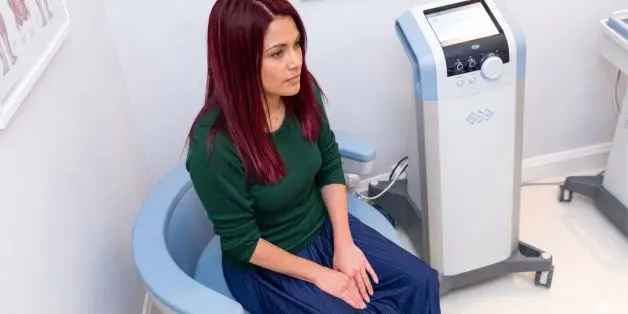
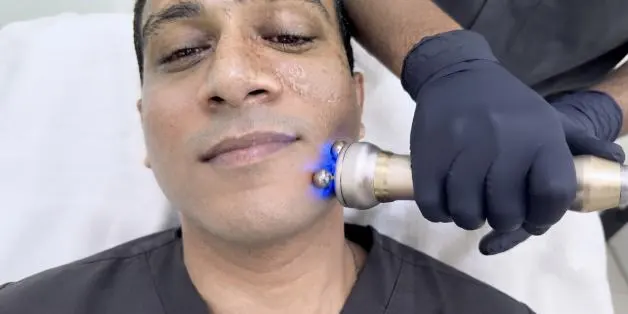
A treatment handpiece is placed against the skin, often with a conductive medium.
The session length depends on the areas treated and the protocol.
What the Treatment Feels Like
Most patients describe warmth, pressure or brief pulses of heat.
I ask patients to report sudden, localised or excessive heat.
Immediate Aftercare and Return to Routine
Mild redness, warmth, tenderness or swelling may occur.
Most people can return to normal routine, but aftercare should be adjusted to the actual skin response rather than followed as a rigid checklist.
When Collagen-Related Changes May Become Noticeable
Some patients notice early firmness, but collagen remodelling develops over weeks and months.
I usually assess progress only after enough time has passed for the tissue response to settle.
How I Decide Whether Further Sessions or Maintenance Are Appropriate
I do not prescribe the same number of sessions for everyone.
Further treatment is considered only after reviewing benefit, tolerance and whether the original concern remains the correct target.
Side Effects and Safety of Density RF
Expected Redness, Warmth, Tenderness and Swelling
Temporary redness, warmth, mild tenderness and swelling are among the more expected effects of non-invasive RF.
A 2022 review found that reported complications from monopolar and bipolar RF were mostly minor and temporary, while also noting that complication patterns vary by technology [4].
Less Common Risks: Burns, Pigmentation Changes and Uneven Response
Less common risks include burns, prolonged redness, pigment change, temporary altered sensation, contour irregularity, scarring and unwanted fat loss.
Older adverse-event data on monopolar RF documented burns and rarer events such as persistent redness, swelling and fat atrophy [3].
Why Thin Areas Such as the Neck and Under-Eyes Need Greater Caution
Thin skin heats differently from thicker tissue.
I do not treat an under-eye hollow as if it were loose skin, or a neck band as if it were surface crepiness.
Warning Signs That Require Medical Review
Increasing pain, blistering, marked swelling, persistent numbness, skin colour change, crusting or a sharply defined burn-like area should be reviewed promptly.
How Technique and Treatment Spacing Influence Safety
Safe treatment depends on full contact, appropriate energy, controlled overlap, suitable movement, surface cooling and attention to patient feedback.
More frequent treatment is not automatically more effective.
When I Recommend Another Treatment Instead
Density RF vs HIFU for Skin Tightening
HIFU uses focused ultrasound to create thermal points at selected depths.
Evidence supports a role for microfocused ultrasound in selected facial and neck laxity, but study methods and outcomes vary [5].
Density RF vs RF Microneedling for Scars, Pores and Texture
When acne scars, enlarged pores or uneven texture dominate, RF microneedling may be more relevant because needles deliver energy at controlled depths and create a fractional injury pattern.
For early laxity with limited downtime, non-invasive RF may be preferable.
Density RF vs EndoliftX for Laxity and Facial Contouring
EndoliftX is a minimally invasive laser-based procedure performed beneath the skin.
I do not call one universally better.
Density RF vs Jovena for Skin and Muscle-Related Ageing
Jovena combines technologies that may address skin quality and muscle-related support in different ways.
The decision should remain anatomical.
When Fillers, Neuromodulators, Lasers or Surgery Address the Concern Better
Fillers may help when structural support or volume loss is dominant.
Recommending a different treatment is not a failure of RF.
How I Combine Density RF With Other Treatments
Laxity With Facial Volume Loss
When laxity and volume loss coexist, I decide which problem contributes more.
I avoid overfilling a face simply to disguise laxity.
Laxity With Pigmentation or Uneven Skin Tone
RF does not directly treat every type of pigmentation.
In Mumbai’s strong sun and humid climate, I also consider recent tanning, outdoor exposure and the likelihood of post-treatment inflammation.
Laxity With Acne Scars and Enlarged Pores
For scars and pores, RF microneedling, fractional laser, subcision or other scar-specific methods may be more suitable.
Combination planning depends on scar type.
Laxity With Dynamic Wrinkles
Dynamic wrinkles are created mainly by muscle movement.
Sequencing Energy Devices, Injectables and Skin Treatments Safely
Sequencing depends on tissue target, inflammation, depth and healing time.
There is no universal interval for every combination.
Why I Avoid Aggressive Treatment Stacking
More procedures in one visit do not always produce a better outcome.
My preference is to give every treatment a defined role.
Why Density RF Is an Innovative Technology
Combining Broader and More Focused RF Heating
The useful innovation in dual-mode RF is the ability to plan different energy pathways for different tissue needs.
This flexibility is valuable only when the operator understands anatomy and energy behaviour.
What Current Scientific Evidence Suggests
Published reviews suggest that monopolar and bipolar RF can produce measurable improvement in selected cases of facial and body laxity, generally with an acceptable complication profile [4].
However, studies differ in device, protocol, outcome scale, follow-up and patient group.
Where the Evidence Is Still Limited
Many aesthetic-device studies are small, lack long-term comparison groups or use subjective rating scales.
We also need better evidence on long-term facial volume effects, ideal treatment intervals and which anatomical patterns respond most reliably.
Why Device Innovation Cannot Replace Clinical Judgement
A machine cannot decide whether a shadow is caused by laxity, fat, bone structure or volume loss.
Technology improves options.
What Most People Get Wrong About Density RF
Myth: Density RF Produces a Surgical Facelift
Density RF may improve mild or moderate firmness in selected patients.
Myth: Bipolar RF and Monopolar RF Are the Same
Both use RF energy, but their electrical pathways and heating patterns differ.
Myth: More Heat Produces More Tightening
Excess heat can cause injury.
Myth: Density RF Melts Facial Fat in Every Patient
RF can affect tissue differently depending on depth, temperature and exposure.
Myth: One Standard Setting Works for the Entire Face
The face contains thin and thick skin, fat-rich and fat-poor zones, curved surfaces and bony areas.
Myth: Non-Invasive RF Has No Risks
Non-invasive does not mean risk-free.
Myth: Everyone Needs a Fixed Number of Sessions
Session number depends on the technology, baseline concern, response and agreed endpoint.
Patient Questions I Often Get
Is Density RF painful?
Most patients feel warmth and brief pulses of heat.
Is Density RF suitable for darker Indian skin tones?
It can be considered across Indian skin tones because RF does not depend on melanin as its primary target.
Can Density RF be used under the eyes and on the neck?
These areas may be treated in selected patients, but they need greater caution because the skin is thin and anatomy is complex.
How is Density RF different from HIFU?
Density RF creates heat through electrical resistance.
How soon can I assess the outcome?
Early firmness may be noticed, but collagen-related change develops over weeks to months.
Can Density RF be combined with fillers, Botox, lasers or skin boosters?
It can be part of a combined plan, but timing and sequence must be personalised.
Citation Sources
References
- El-Domyati M, El-Ammawi TS, Medhat W, et al. Radiofrequency facial rejuvenation: evidence-based effect. Journal of the American Academy of Dermatology. https://pmc.ncbi.nlm.nih.gov/articles/PMC6541915/
- Zhang B, et al. The landscape of radiofrequency technology for skin rejuvenation. Journal of Cosmetic Dermatology. https://pubmed.ncbi.nlm.nih.gov/41467235/
- de Felipe I, Del Cueto SR, Pérez E, Redondo P. Adverse reactions after nonablative radiofrequency: follow-up of 290 patients. Journal of Cosmetic Dermatology. https://pubmed.ncbi.nlm.nih.gov/17760693/
- Rohrich RJ, et al. Minimally invasive approach to skin tightening of the face and body: a systematic review of monopolar and bipolar radiofrequency devices. Plastic and Reconstructive Surgery. https://pubmed.ncbi.nlm.nih.gov/35877937/
- Khan U, et al. A systematic review of the clinical efficacy of micro-focused ultrasound treatment for skin rejuvenation and tightening. Cureus. https://pmc.ncbi.nlm.nih.gov/articles/PMC8722640/
- Shauly O, et al. Radiofrequency microneedling: technology, devices, and indications in the modern plastic surgery practice. Aesthetic Surgery Journal Open Forum. https://pmc.ncbi.nlm.nih.gov/articles/PMC11181949/