Emsella Chair Mumbai | How It Works | Who Is It For | Safety & Contraindications | Patient Questions
Bladder leakage is more common than most people admit. Many patients in Mumbai quietly adjust their day around it — avoiding long commutes, locating washrooms before meetings, or cutting back on fluids before stepping out. It affects how people travel, work, socialise, and feel about their bodies. Emsella Chair treatment in Mumbai offers a non-invasive, fully clothed option for strengthening the pelvic floor in carefully assessed patients. This guide explains how it works, who it is for, what to expect, and when other treatments may serve you better.
What Is Emsella Chair Treatment?
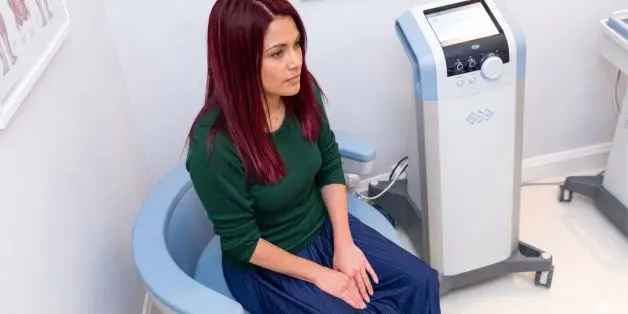
The Emsella Chair is a medical device by BTL Technologies that uses high-intensity focused electromagnetic (HIFEM) energy to stimulate the pelvic floor muscles. The patient sits fully clothed on the treatment chair while the device delivers electromagnetic pulses that cause the pelvic floor muscles to contract involuntarily. No insertion, no undressing, and no active effort from the patient during the session.
The pelvic floor is a group of muscles forming the base of the pelvis. They support the bladder, bowel, and uterus, help maintain posture and core stability, and contract at the right moment to prevent urine leakage during activities like coughing, laughing, running, or lifting. When these muscles weaken or lose coordination — due to pregnancy, childbirth, ageing, menopause, or other factors — bladder control can be affected. Emsella is designed to address pelvic floor weakness as part of a medically assessed treatment plan [1].
Key Advantages of Emsella Chair Treatment
- Non-invasive and fully clothed: No internal placement, no undressing, and no needles involved.
- Targets deep pelvic floor muscles: HIFEM technology stimulates muscles that are difficult to activate voluntarily, especially for patients who struggle to perform Kegel exercises correctly.
- Suitable for both women and men: Pelvic floor weakness is not exclusive to women. Selected male patients with urinary control concerns may also be considered after medical assessment.
- No downtime: Most patients return to their regular activities the same day.
- Comfortable sessions: Most patients describe the sensation as strong pelvic contractions rather than pain, and intensity can be adjusted to comfort.
Who Is It For? Eligibility at a Glance
You May Be a Good Candidate If
- You experience stress urinary leakage — urine loss during coughing, sneezing, laughing, jumping, or exercise.
- You have mild mixed urinary symptoms (a combination of stress and urgency leakage) and have been assessed by a doctor.
- You are a woman with post-pregnancy or post-childbirth pelvic floor weakness, after appropriate medical clearance.
- You are perimenopausal or menopausal and notice reduced pelvic floor control or bladder confidence.
- You struggle to correctly identify or contract the pelvic floor muscles during exercises.
It May Not Be Right for You If
- You are currently pregnant.
- You have an implanted electronic device such as a pacemaker or defibrillator.
- You have certain metal implants in or near the pelvic area.
- You have an active pelvic or urinary tract infection, unexplained pelvic bleeding, or undiagnosed pelvic pain.
- You have had recent pelvic surgery without medical clearance, significant prolapse, severe incontinence, or a neurological bladder condition — these require specialist evaluation before any non-surgical intervention is considered.
Bladder leakage has different causes. Stress incontinence, urge incontinence, and mixed symptoms each follow a different clinical path. Leakage linked to infection, diabetes, medication, prolapse, prostate concerns, or neurological issues cannot be addressed with a device alone. A thorough assessment before starting Emsella Chair treatment in Mumbai ensures that the underlying cause is identified and the right treatment path is chosen [1,2].
How Emsella Chair Treatment Works
The Emsella Chair uses HIFEM — high-intensity focused electromagnetic energy — to induce repeated involuntary contractions of the pelvic floor muscles. Think of it as an assisted workout: the device does the contracting while the patient simply sits. A single session can produce thousands of pelvic floor contractions, far more than most patients achieve through voluntary exercise alone [3].
Unlike Kegel exercises, which are voluntary contractions that many patients perform incorrectly (often squeezing the abdomen, gluteal muscles, or inner thighs instead), HIFEM stimulation targets the pelvic floor directly without requiring the patient to locate or activate the muscles consciously. This matters because research consistently shows that a significant proportion of women cannot correctly perform pelvic floor exercises without professional guidance [1].
Clinical studies on HIFEM-based pelvic floor treatment report improvement in urinary incontinence symptom scores and quality-of-life measures in selected patients, with good tolerability [3,4]. The evidence is promising and continues to grow, though it should be interpreted alongside a full clinical assessment — not every patient responds equally, and some causes of bladder leakage require a different treatment approach entirely.
Your Session Plan and Comfort
How Long Each Session Takes
A standard Emsella session typically lasts approximately 28 minutes. The patient sits on the chair fully clothed throughout. The sensation varies — most patients describe it as strong pelvic floor contractions or a tapping, lifting feeling in the pelvic area. The intensity can be adjusted based on comfort. If anything feels sharp, cramping, or deeply uncomfortable, the session is paused and settings are reassessed.
How Many Sessions You May Need
A typical starting course involves multiple sessions, often scheduled twice a week over a few weeks. The exact number depends on your symptoms, their severity, and your response to treatment. Some patients notice improvement after the first few sessions; others require the full course and possibly a maintenance plan. Your dermatologist will assess your progress and advise on whether additional sessions or supportive care is appropriate. Results vary based on the underlying cause, muscle condition, and lifestyle factors. A plan that is right for one patient may differ from another’s.
Safety and Contraindications
- Generally well tolerated: Most patients experience no side effects beyond temporary pelvic muscle fatigue, mild tingling, or a sensation similar to post-exercise soreness in the treated area.
- Not suitable during pregnancy: Emsella should not be used during pregnancy under any circumstances.
- Electronic implants are a contraindication: Patients with pacemakers, implanted defibrillators, or certain neurostimulators should not undergo this treatment.
- Metal implants near the treatment area: Certain metal implants in or close to the pelvic field require careful evaluation and may preclude treatment.
- Active infection or unexplained symptoms: Active urinary or pelvic infection, unexplained pelvic pain, or undiagnosed bleeding must be investigated before starting any energy-based pelvic treatment.
It is important to understand that non-invasive does not automatically mean universally safe. The pelvic floor is a medically significant area, and any treatment affecting it — including Emsella — should be preceded by proper screening. This is not a formality; it protects patients by identifying contraindications and cases where another treatment route is safer or more appropriate.
Results and Realistic Timelines
Many patients who are well-selected for Emsella Chair treatment report a meaningful improvement in bladder control, reduced leakage episodes, and greater confidence in physical activities. Some notice a change after two to three sessions, while others see progressive improvement over the full course and in the weeks following treatment as muscles strengthen further.
Results are not uniform. A woman with mild post-pregnancy stress leakage typically responds differently from someone with a long history of mixed symptoms or pelvic organ prolapse. Lifestyle factors — hydration habits, constipation management, body weight, continuation of pelvic floor exercises — also influence outcomes. Maintenance sessions may be recommended at intervals to support long-term results. Your treating doctor will discuss realistic expectations based on your specific assessment and symptom history.
How It Compares to Related Treatments
Supervised pelvic floor physiotherapy remains the well-established first-line approach for stress and mixed urinary incontinence, as recommended by NICE and other major clinical bodies [1,2]. It provides muscle education, biofeedback, coordination training, and habit coaching — elements that a device alone cannot replicate. For many patients, Emsella works best as a complement to physiotherapy rather than a replacement, particularly for those who cannot activate the pelvic floor correctly on their own.
Bladder training and medication may be recommended when urgency or urge leakage is the dominant symptom, as Emsella is not primarily designed to address overactive bladder. Surgical options — such as mid-urethral sling procedures — may be considered by urology specialists in patients with significant stress incontinence where conservative care has not provided adequate relief [2]. Emsella sits in the non-invasive, non-surgical category and is appropriate for selected patients at that stage of the treatment journey, not as a substitute for specialist evaluation when it is genuinely needed.
Why Choose The Bombay Skin Clinic
At The Bombay Skin Clinic, Emsella Chair treatment is offered within a dermatologist-led clinical framework. Every patient begins with a thorough consultation to assess symptoms, review medical history, identify contraindications, and determine whether Emsella is genuinely the right option — or whether another path should come first.
Our team includes experienced, qualified medical professionals who understand both the technology and the clinical context around pelvic floor health. We do not apply standard packages to every patient. Treatment intensity, session frequency, and any supporting care are personalised based on your individual assessment.
The clinic uses well-maintained, advanced equipment, and strict hygiene and sterilisation protocols are followed throughout every appointment. If your assessment suggests that specialist referral — to a gynaecologist, urologist, or pelvic floor physiotherapist — would serve you better, we will say so clearly and help coordinate that next step. Honest clinical guidance is a non-negotiable part of how we work. To discuss whether Emsella is suitable for you, book a consultation at our Mumbai clinic or reach out via WhatsApp.
Indicative Pricing
Emsella Chair treatment pricing at The Bombay Skin Clinic depends on the individual’s concern, symptoms, and the number of sessions recommended after assessment. Since every patient’s treatment plan is different, pricing is shared during the consultation once suitability has been reviewed. Final pricing is based on a personalised treatment plan, not a one-size-fits-all package.
Frequently Asked Questions
Is Emsella Chair treatment painful?
Most patients do not describe it as painful. The sensation is typically one of strong, rhythmic pelvic floor contractions — unusual but manageable. Intensity is adjusted to the patient’s comfort level throughout the session. If you experience sharp pain, cramping, or anything that feels wrong, the session is paused immediately and the settings are reassessed.
Can I have Emsella treatment after pregnancy?
It may be considered after childbirth, but only once healing is adequate and your doctor has provided clearance. We do not advise starting pelvic floor stimulation immediately after delivery. Post-pregnancy pelvic floor recovery should be assessed carefully and individually, taking healing, symptoms, and overall health into account.
Is Emsella Chair treatment suitable for men?
Yes, men also have pelvic floor muscles, and selected male patients with urinary control concerns or pelvic floor weakness may be considered for treatment. A thorough medical assessment is essential first, as prostate-related symptoms, surgical history, pain, or neurological concerns all need proper evaluation before electromagnetic pelvic floor stimulation is appropriate.
How soon will I notice results from Emsella?
Some patients report improvement after a few sessions; others see progressive change over the full course and in the weeks that follow. Results depend on the cause and severity of your symptoms, your muscle condition, and your lifestyle habits. Your doctor will set realistic expectations during your consultation and review your progress as the course continues.
Do I still need to do pelvic floor exercises if I have Emsella?
Emsella stimulates pelvic floor contractions through the device, but daily habits and correct exercise technique still matter for long-term results. Some patients benefit from both Emsella and guided pelvic floor exercises. If your Kegel technique has been unclear, a pelvic floor physiotherapist can help ensure you are activating the right muscles correctly.
Is Emsella a replacement for surgery?
No. Emsella is a non-invasive treatment option for selected patients — it is not a replacement for surgical evaluation in patients who need it. Severe or complex incontinence, significant prolapse, or cases where conservative treatment has not helped adequately may require a gynaecology or urology specialist opinion. We will always be transparent about which path is right for you.
References
- National Institute for Health and Care Excellence. Urinary incontinence and pelvic organ prolapse in women: management. NICE guideline NG123. https://www.nice.org.uk/guidance/ng123
- American Urological Association. Stress Urinary Incontinence Guideline. https://www.auanet.org/guidelines-and-quality/guidelines/stress-urinary-incontinence-(sui)-guideline
- Samuels JB, Pezzella A, Berenholz J, Alinsod R. Safety and efficacy of a non-invasive high-intensity focused electromagnetic field (HIFEM) device for treatment of urinary incontinence and enhancement of quality of life. Lasers Surg Med. https://pmc.ncbi.nlm.nih.gov/articles/PMC6851770/
- Silantyeva E, Kasyan G, Tarasova M, et al. A comparative study on the effects of high-intensity focused electromagnetic technology and electrical stimulation for the treatment of pelvic floor muscles. Lasers Surg Med. https://pmc.ncbi.nlm.nih.gov/articles/PMC8016513/
- National Institute for Health and Care Excellence. Quality statement 4: Supervised pelvic floor muscle training. NICE quality standard QS77. https://www.nice.org.uk/guidance/qs77/chapter/quality-statement-4-supervised-pelvic-floor-muscle-training