When Skin Starts to Feel Looser but You Are Not Ready for Surgery
Facial ageing often begins quietly. The jawline looks softer, fine creases stay visible for longer, or the skin feels less firm even though there is no major sagging. Many patients in Mumbai want to improve these early changes without surgery or a long recovery period.
Volnewmer is a newer monopolar radiofrequency, or RF, system used for controlled tissue heating. RF itself is not new. A 2025 systematic review found that facial RF treatments can improve firmness, texture and other ageing-related concerns, but the evidence is heterogeneous across devices, treatment settings and outcome measures. [1] This matters because no RF platform should be treated as a one-machine solution for every ageing face.
I am discussing Volnewmer here as an independent clinical interpretation of published evidence and technical information. I am not presenting this article as a statement that I personally use or offer Volnewmer. The more useful question is where this type of monopolar RF may fit, what it cannot do, and how patient anatomy changes the decision.
What Is Volnewmer Treatment?
Is Volnewmer a Monopolar Radiofrequency Treatment?
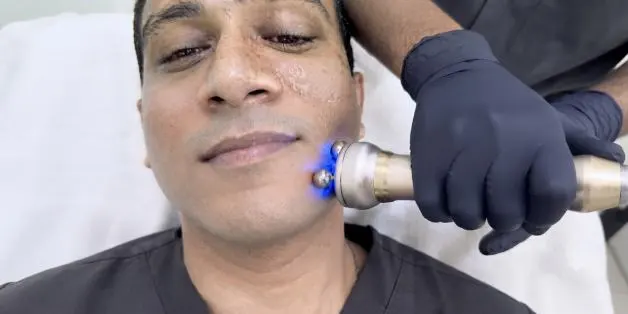
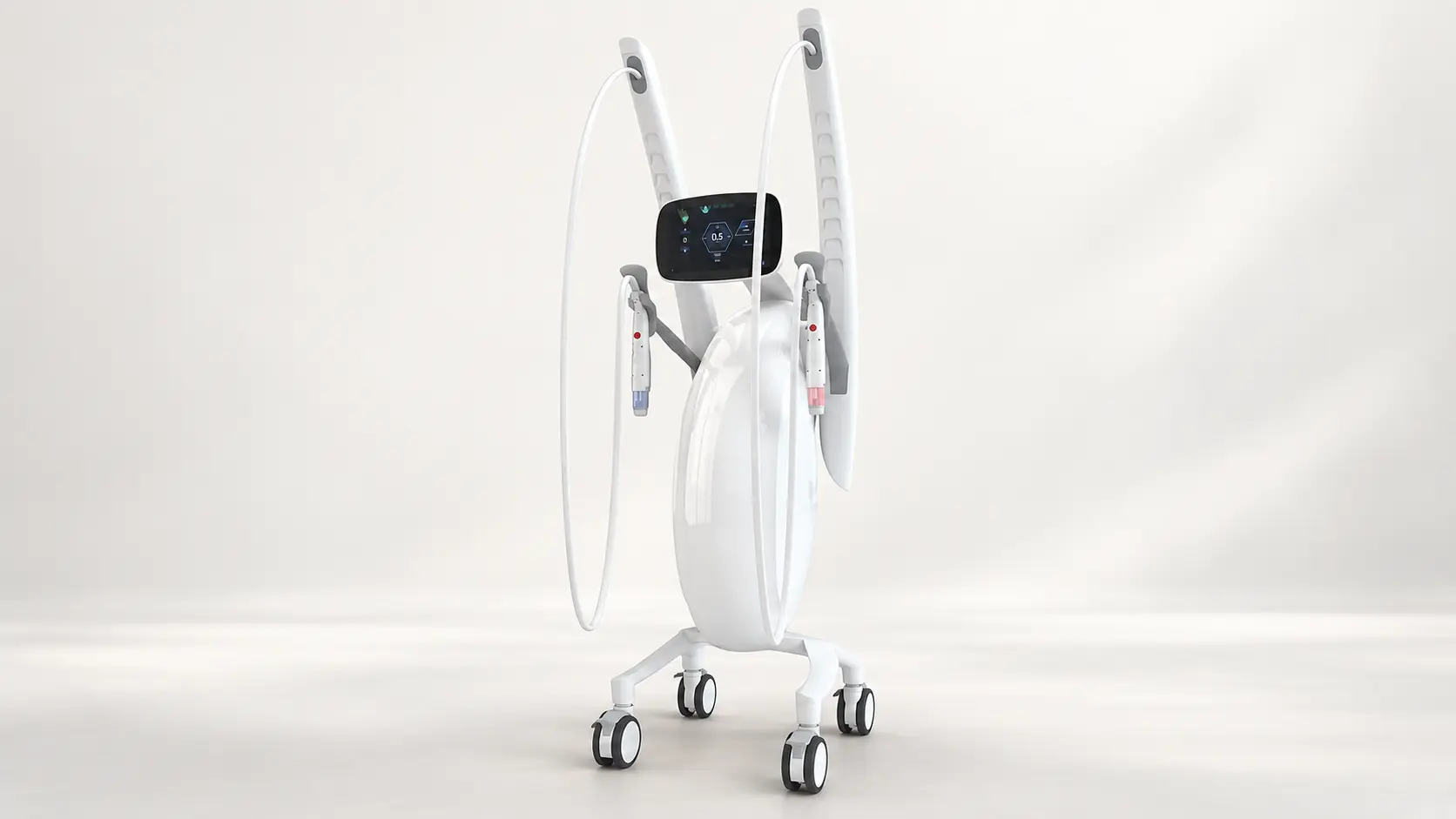
Yes. Volnewmer is a non-invasive monopolar RF system. The current FDA 510(k) summary describes a 6.78 MHz radiofrequency output, a maximum output of 115 W, a separate return pad and conductive cooling of the epidermis. [2] In monopolar RF, energy travels from the active treatment tip through tissue towards the return electrode. This differs from bipolar RF, where current travels between electrodes positioned close to each other.
Neither design is automatically better. The practical value depends on the tissue being treated, the device, technique and patient selection. My Density RF guide explains these RF categories in more detail.
What Concerns Can Volnewmer Realistically Address?
Volnewmer is most relevant to mild or moderate skin laxity, early jawline softening, fine wrinkles and reduced firmness. Small studies of continuous water-cooled monopolar RF have reported improvements in lifting-related measures, facial contour and skin characteristics after treatment. [3,4]
The limitation is important. A face can look loose because of skin laxity, fat-pad descent, volume loss, reduced bone support or a combination of these. RF mainly addresses tissue heating and remodelling. It cannot correct every cause of facial ageing.
What Volnewmer Cannot Replace
Volnewmer cannot remove significant excess skin or reproduce surgical repositioning in advanced laxity. It also cannot replace volume correction when true volume loss is the main problem, and it is not primarily a treatment for pigment, deep scars or strong expression lines.
This is why diagnosis comes before technology. A patient with jowls may need skin tightening, deeper support, volume correction, submental fat treatment or even a surgical opinion. My jowls treatment guide explains this decision more broadly.
How Does Volnewmer Work?
How 6.78 MHz Monopolar RF Heats the Dermis
Radiofrequency is electrical energy rather than laser light. As RF current passes through tissue, resistance converts part of that energy into heat. Controlled heating can trigger collagen contraction and a repair response that supports later collagen remodelling. Systematic reviews support this general mechanism for non-invasive RF, while also showing that results vary between devices and protocols. [1]
Volnewmer uses 6.78 MHz monopolar RF. The frequency describes part of the device engineering, but it should not be used alone to predict treatment depth, comfort or cosmetic outcome. Those depend on the complete system and how it is applied.
Why Continuous Water Cooling Matters
Non-invasive RF has to create useful heating below the surface while limiting excessive epidermal heat. Volnewmer uses continuous water-based conductive cooling at the treatment interface. [2]
In a randomized split-face study of 22 Asian women, continuous water-cooled monopolar RF produced short-term rejuvenation outcomes comparable with cryogen spray-cooled monopolar RF, while patients reported less procedural pain on the water-cooled side. [4] I consider that encouraging evidence for comfort and energy control, but the sample was small and follow-up was only eight weeks.
How Tip Size and Treatment Area Change the Plan
The FDA summary lists Volnewmer treatment tips of 0.25, 3, 4 and 16 cm². [2] Different sizes are clinically relevant because the forehead, peri-orbital area, cheek, jawline and neck do not have the same shape or tissue thickness.
A split-face study of monopolar RF tip size found that different facial regions responded differently to smaller and larger tips. [5] I would not turn this into a fixed recipe, but it supports a sensible principle: applicator choice should follow anatomy rather than convenience.
Why Might I Consider Volnewmer for the Right Patient?
Mild to Moderate Skin Laxity and Early Jawline Softening
I would think about monopolar RF when the main concern is early to moderate laxity and the patient wants gradual improvement rather than a dramatic structural change. One small Volnewmer-related study of 21 patients reported improvements in lifting and facial volume measurements after a single session. [3]
The study is useful, but it does not tell us how every face shape, age group or tissue thickness will respond. Patient selection remains more important than the brand name.
Patients Who Want Gradual Change With Limited Recovery
Non-invasive RF appeals to patients who want to return to routine quickly. Redness, warmth, tenderness or mild swelling may occur, but recovery is generally shorter than with invasive or ablative procedures. The trade-off is that improvement is usually more modest than surgery. [1]
I prefer to describe this as limited expected recovery, not as a “facelift without surgery”. That keeps the expectation realistic.
When I Would Postpone or Decline Treatment
I would postpone an energy-based treatment if there is active infection, significant inflammation, an unhealed wound or another local problem that makes treatment unsafe or difficult to assess. Pregnancy, implanted electronic devices, relevant medical conditions, medicines, or recent procedures in the same area may also require specific medical review.
I would also decline treatment when the expectation is mismatched. If someone wants a major surgical lift from non-invasive RF, increasing energy is not the answer. Choosing a different treatment is.
The Volnewmer Treatment Journey
Before Treatment: Consultation, Anatomy and Skin Assessment
A sensible treatment journey begins with facial assessment. I would look at skin thickness, laxity, facial volume, fat distribution, asymmetry, previous fillers, thread lifts and energy procedures, as well as the area that actually bothers the patient.
In Mumbai, many aesthetic patients have already had several treatments over time. That history can influence timing and sequencing, so it should be discussed before a new heat-based treatment is planned.
During Treatment: What the Patient Feels and What the Doctor Monitors
Patients generally feel repeated warmth or heat during monopolar RF. Cooling can improve comfort, but unexpectedly sharp or focal heat should not simply be ignored.
The doctor should monitor consistent contact, anatomical boundaries, treatment overlap, skin response and cumulative thermal exposure. I would not publish one universal energy level or shot count because these decisions depend on device protocol, area and patient anatomy.
After Treatment: Recovery, Results Timeline and Review
Temporary redness, warmth or mild swelling can occur soon after treatment. Meaningful tightening, when it develops, is usually gradual because collagen remodelling takes time. Device-specific studies have mainly followed patients for weeks to a few months. [3-5]
I prefer to judge an RF treatment after an appropriate response period rather than looking for a dramatic immediate change. Follow-up also helps decide whether another intervention is useful or unnecessary.
Side Effects and Safety of Volnewmer
Common Short-Term Reactions
Common short-term reactions to non-invasive RF include redness, warmth, tenderness and mild swelling. A systematic review of facial RF found that reported adverse events were generally mild and temporary, although downtime reporting across studies was inconsistent. [1]
In Volnewmer-related studies, temporary reactions and procedural discomfort were reported, while continuous water cooling appeared to improve tolerability in the split-face comparison. [3,4]
Less Common Risks and Warning Signs
Any device that deliberately heats tissue can cause unwanted thermal injury if energy delivery, contact or technique is poor. Persistent pain, blistering, marked swelling, open skin or a focal area that remains unusually hot should be medically reviewed.
RF does not target melanin in the same way many lasers do, but Indian skin can still develop post-inflammatory pigmentation after significant inflammation or thermal injury. Appropriate technique and aftercare remain important.
Why Energy, Contact, Cooling and Technique Matter
Safety does not come from cooling alone. It comes from patient selection, stable contact, controlled energy, appropriate cooling, systematic coverage and observation of the tissue response.
Regulatory wording also needs context. In July 2026, the FDA issued a 510(k) substantial-equivalence decision for the current Volnewmer submission. Its listed indication is for dermatologic procedures involving electrocoagulation and haemostasis of soft tissue. [2] That regulatory clearance is not proof that Volnewmer is superior to other RF or ultrasound systems, and it does not guarantee a cosmetic result.
When Other Treatments May Be More Suitable
Volnewmer vs Thermage: Similar RF Category, Different System Design
Volnewmer and Thermage belong to the same broad monopolar RF category, but they are different proprietary systems with different cooling methods, tips, software and treatment protocols. The clinically useful question is not which brand is universally better. It is whether the chosen system can safely deliver the intended tissue effect for that patient.
The small split-face study comparing continuous water cooling with cryogen spray cooling found similar short-term rejuvenation outcomes, with lower reported pain on the water-cooled side. [4] That is useful comparative evidence, but not enough to declare a universal winner.
Volnewmer vs HIFU or Ultraformer MPT: Dermal Heating vs Focused Ultrasound
Volnewmer and HIFU use different energy physics. Monopolar RF produces resistance-based tissue heating, while HIFU creates focused ultrasound energy at selected depths. A 2025 systematic review supports HIFU as an option for selected skin-tightening concerns, while also noting the need for better standardisation and longer-term data. [6]
Depth and anatomy should guide the choice. For more detail on ultrasound-based tightening, see my Ultraformer MPT guide.
Volnewmer vs RF Microneedling: Non-Invasive RF vs Needle-Delivered RF
RF microneedling sends RF through needles placed into the skin. Volnewmer delivers RF through the skin surface without needle insertion. RF microneedling may be more relevant when texture, pores or acne scars are major treatment goals, while surface monopolar RF may fit better when laxity is the main concern and the patient wants a non-invasive approach.
A 2026 systematic review supports RF microneedling for facial rejuvenation, but also shows variation in protocols and studies. [7] These treatments should therefore be selected for different clinical jobs, not treated as interchangeable machines.
When Surgery, Injectables or Other Technologies Address the Concern Better
Advanced skin excess or major tissue descent may require surgery. True volume loss may need volume restoration. Strong dynamic lines may need treatment of muscle activity. Pigment, acne scars and vascular concerns have separate treatment pathways.
This is why I prefer a diagnosis-led skin tightening plan instead of choosing a device first.
How I Personalise Volnewmer and Combination Treatment Plans
Thin Faces, Full Faces and Facial Fat Concerns
A thin face and a full face should not automatically receive the same thermal plan. In a lean face, even a small change in volume distribution may alter the cheeks or temples. In a fuller face, lower-face heaviness may come from fat as much as skin laxity.
The broader RF literature has reported changes in facial fat volume, while a Volnewmer-related study reported increased volume in selected cheek and jawline measurements. [3,8] I would not simplify this into “RF melts fat” or “RF can never affect fat”. In a patient already concerned about hollowness, I would use conservative decision-making and protect facial balance.
Jowls, Neck Laxity and Different Anatomical Priorities
Jowls are not simply a strip of loose skin. Skin, superficial and deeper fat, retaining ligaments, muscle and bone support all influence the lower face. The neck has its own anatomy.
I would therefore map the ageing pattern first. Some patients need skin-firming support, while others need deeper tightening, volume correction, fat management or surgical assessment.
Combining RF With Ultrasound, Injectables or Skin-Quality Treatments
Combination treatment can make sense when different problems coexist. RF may be assigned the job of improving firmness, ultrasound may address a deeper target, injectables may correct selected volume or muscle-related concerns, and skin-quality treatments may address texture.
The sequence should follow anatomy, prior procedures and tissue response. I do not see combination treatment as a reason to use every available technology at once.
Why I Avoid Aggressive Treatment Stacking
Stacking several heat-based procedures close together can make tissue response harder to interpret and may increase inflammation without proving that the final result will be better. More energy is not the same as more precision.
My preference is to define the main problem, choose the most logical treatment, allow an appropriate response period and then reassess before adding another energy procedure.
Why Volnewmer Is Technically Interesting and What the Evidence Actually Shows
What Is Different About Continuous Water-Cooled Monopolar RF?
Volnewmer did not invent monopolar RF. Its technical interest lies in combining 6.78 MHz monopolar RF with continuous conductive water cooling, impedance-related energy delivery and multiple tip sizes. [2]
The randomized split-face study suggests that continuous water cooling may maintain short-term rejuvenation outcomes while improving procedural comfort compared with cryogen spray cooling. [4] That is useful, but comfort should not be confused with permission to treat more aggressively.
What Device-Specific Studies Suggest
Current device-specific studies suggest possible improvement in wrinkles, skin density, lifting-related measures and facial contour after treatment. [3-5] This supports the view that the technology can produce measurable biological and aesthetic effects.
However, most studies are small, several involve Asian populations, and follow-up is relatively short. Some are split-face studies and others are single-arm trials. These designs are helpful for early evidence, but they do not offer the certainty of large, independent, long-term randomized trials.
What We Still Do Not Know
We still need stronger data on long-term durability, retreatment intervals, uncommon complications, outcomes across different facial anatomies and skin types, and direct comparison with other modern RF systems using meaningful clinical endpoints.
For me, that uncertainty is not a reason to dismiss the technology. It is a reason to keep claims proportional to the evidence.
What Most People Get Wrong About Volnewmer
More Heat Does Not Automatically Mean Better Tightening
RF depends on controlled heat, and the word “controlled” matters. Increasing energy without respecting anatomy, contact and cooling can increase risk without producing a proportionate cosmetic benefit.
I would prefer even, planned energy delivery with a sensible clinical endpoint over an aggressive session designed to make the patient feel that stronger heat must mean stronger collagen.
Volnewmer Should Not Be Treated as a Facial Fat-Melting Procedure
Volnewmer is primarily discussed as a monopolar RF tissue-heating and rejuvenation system. It should not be sold as a predictable facial fat-reduction treatment. Broader RF evidence shows that subcutaneous volume can change under some conditions, while device-specific evidence does not establish controlled facial fat loss as a universal Volnewmer effect. [3,8]
One Session Does Not Reproduce a Surgical Facelift
Non-invasive RF can improve firmness and mild laxity in selected patients, but it cannot surgically reposition tissue or remove excess skin. Reports of improvement after one treatment should be understood as evidence of non-invasive change, not equivalence to facelift surgery. [1,3,4]
No Downtime Does Not Mean No Risk
A patient may be able to return to work quickly and still have redness, swelling or tenderness. Low recovery also does not remove the possibility of thermal injury if treatment is poorly selected or performed. “Limited expected recovery” is a more accurate description than promising no downtime.
Patient Questions I Often Get
Is Volnewmer the Same as Thermage?
No. They are separate monopolar RF systems with different engineering, cooling methods and treatment protocols. A small randomized study suggests continuous water-cooled RF can achieve short-term results comparable with cryogen-cooled monopolar RF while reducing reported pain. [4] That does not establish one platform as better for every patient.
Is Volnewmer or HIFU Better for the Jawline and Jowls?
There is no universal answer. Volnewmer uses monopolar RF, while HIFU uses focused ultrasound at selected depths. Both categories have evidence for selected laxity concerns. [1,6] Tissue thickness, depth of laxity, facial volume, previous treatments and the doctor’s target should guide the choice.
Can Volnewmer Cause Facial Fat Loss or Hollowness?
Current evidence does not show that Volnewmer predictably causes unwanted facial fat loss, but I would also avoid promising that thermal treatment can never influence subcutaneous tissue. Broader RF literature reports facial volume changes, while a Volnewmer-related study reported volume increases in selected measurements. [3,8] In a thin or already hollow face, conservative planning is sensible.
How Soon Do Volnewmer Results Appear and How Long Can They Last?
Some early change may be noticed, but collagen remodelling is gradual, so results are better assessed over the following weeks and months. Device-specific studies mainly provide short-term follow-up. [3-5] Long-term durability and ideal maintenance intervals are not yet established strongly enough for one fixed answer.
Is Volnewmer Painful and What Downtime Should I Expect?
Patients can feel repeated warmth or heat. In a small randomized comparison, continuous water-cooled monopolar RF caused less procedural pain than cryogen-cooled monopolar RF while producing comparable short-term rejuvenation outcomes. [4] Temporary redness, warmth, tenderness or mild swelling can occur, but prolonged recovery is not usually expected.
What Affects the Cost of Volnewmer Treatment in Mumbai?
Cost can vary with the treatment area, tip use, treatment plan, doctor involvement, clinic infrastructure and whether other procedures are included. I would not compare energy treatments on price alone. It is more useful to ask what problem is being treated, what tissue is being targeted, who is performing the procedure, how safety is monitored and what realistic result is expected.
Citation Sources
- Kumar N, Suh DH, Lee SJ, Ryu HJ. Radiofrequency-Based Treatments for Facial Rejuvenation: A Systematic Review of Efficacy, Safety, and Patient-Centered Outcomes. Aesthetic Surgery Journal Open Forum. https://pubmed.ncbi.nlm.nih.gov/41426292/
- U.S. Food and Drug Administration. Volnewmer 510(k) Summary, K253504. FDA. https://www.accessdata.fda.gov/cdrh_docs/pdf25/K253504.pdf
- Lee S, Hyun J, Shin Y, Goo BL. Efficacy and Safety of a Novel Monopolar Radiofrequency Device With a Continuous Water-Cooling System in Patients With Age-Related Facial Volume Loss. Journal of Dermatological Treatment. https://pubmed.ncbi.nlm.nih.gov/39069295/
- Roh H, Lee YI, Lee SG, Hwang JK, Jung J, Lee JH. Comparative Analysis on the Efficacy of Monopolar Radiofrequency With Continuous Water Cooling and Conventional Cryogen Spray Cooling in Facial Rejuvenation. Annals of Dermatology. https://pubmed.ncbi.nlm.nih.gov/41331720/
- Yang YS, Kim DH, Ha JH, et al. A Split-face Study on Rejuvenation Efficacy According to Monopolar Radiofrequency Tip Size. Journal of Clinical and Aesthetic Dermatology. https://pubmed.ncbi.nlm.nih.gov/38444428/
- Haykal D, Sattler S, Verner I, Madhumita M, Cartier H. A Systematic Review of High-Intensity Focused Ultrasound in Skin Tightening and Body Contouring. Aesthetic Surgery Journal. https://pubmed.ncbi.nlm.nih.gov/40184185/
- Kumar N, Suh DH, Lee SJ, Kasif SA, Carruthers JDA. Radiofrequency Microneedling for Facial Rejuvenation: A Systematic Review. Journal of Cosmetic Dermatology. https://pubmed.ncbi.nlm.nih.gov/41947517/
- de Araújo AR, Soares VPC, da Silva FS, Moreira TS. Evaluating the Effectiveness and Safety of Radiofrequency for Face and Neck Rejuvenation: A Systematic Review. Lasers in Surgery and Medicine. https://pubmed.ncbi.nlm.nih.gov/34923652/