What Is Density RF?
When someone asks me for “skin tightening”, I first clarify what they truly want. For most people, it is a firmer jawline, softer early lines, or skin that looks more supported in daily light. Density RF (by Jeisys) is a non-invasive radiofrequency (RF) technology I use for selected patients who want gradual improvement with low disruption to routine.
Key insight: Density RF is not surgery, and it is not a fat-loss procedure. It is a controlled heating treatment designed to stimulate collagen remodelling over time. Results depend on the right indication, steady technique, and realistic expectations — not on pushing intensity.
Where it fits in the RF family — monopolar vs bipolar, non-invasive vs RF microneedling
Radiofrequency is a category. Devices differ in how energy is delivered and which layer is heated more. In simple terms:
- Monopolar RF can heat a larger and deeper volume because the circuit travels from the handpiece to a return electrode. Outcomes are usually modest and technique-dependent.[3]
- Bipolar RF tends to heat more superficially because current flows between two nearby electrodes.
- RF microneedling delivers RF through needles, with different indications, downtime, and risks. It is not interchangeable with non-invasive RF.[2]
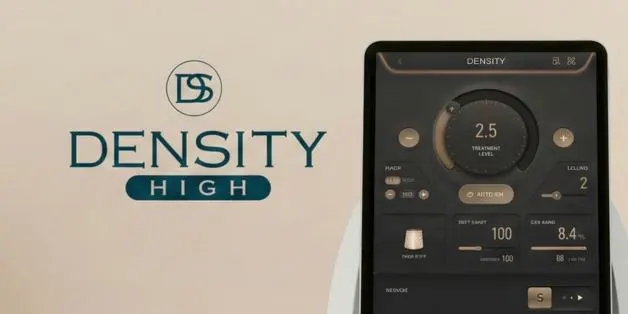
Density RF is described as a dual-mode system that combines monopolar and bipolar delivery. A 2025 case series reported improvement in facial laxity with good tolerance, including among patients with darker skin types. We treat this as helpful early evidence, but not a promise.[1]
What concerns it is designed for
In practice, our dermatologists consider Density RF when the main concern is mild to moderate laxity and the person wants subtle, natural-looking support. It is commonly relevant for early jawline softening, mild cheek laxity, and fine crêpiness in selected areas. Some patients also notice that the skin feels a little firmer in motion, which is often how these changes show up in real life.
What it cannot replace
- Significant skin excess is better assessed for surgical options.
- Fat fullness under the chin or lower face is not directly treated by non-invasive RF alone.
- Deep acne scars usually need different modalities. Non-invasive RF is rarely enough by itself.[2]
How Density RF Works — The Simple Science
RF energy is converted into heat within the skin and supportive tissue. That controlled heat acts as a biological signal and can activate repair pathways that contribute to short-term collagen fibre tightening and longer-term collagen remodelling.[2,3] In simple words, the skin is encouraged to rebuild support, but it does so gradually.
Evidence-based takeaway: The goal is thermal stimulation, not thermal injury. Overheating increases complication risk, so our clinic focuses on even heating, comfort cues, and safe parameters.
Dual-mode energy delivery
We explain dual-mode delivery like this: monopolar energy is used for broader, deeper heating, and bipolar energy is used for more superficial, focused heating. This fits with how these RF fields behave, as described in clinical reviews.[2]
Real-time impedance feedback — why consistency matters
Skin resistance (impedance) is not uniform across the face. When impedance changes, energy delivery can become less predictable. Systems that monitor impedance may support more consistent delivery, but this does not replace technique. Our dermatologists plan conservatively and watch the skin response continuously.
Cooling and comfort controls — and why technique influences safety
Epidermal cooling helps protect the surface while deeper tissue reaches useful temperatures. Comfort matters for safety too, because uneven movement can lead to uneven heating. If someone feels sharp, focal heat, our team treats that as a warning and adjusts.
What collagen remodelling means — and why results are gradual
Some early tightness can happen, but the more meaningful change usually builds over weeks. Patient-facing dermatology guidance also describes tightening as gradual over months as collagen response develops.[6] This is why we advise patients to judge results after the skin has had time to respond.
Who Is a Good Candidate?
In Mumbai, people want treatments that fit real schedules. Heat, humidity, and sun exposure also influence recovery. Density RF can be a reasonable choice when the goal is subtle tightening with low downtime, and when the person is comfortable with gradual change rather than instant transformation.
Our clinical selection checklist
Before we recommend Density RF, we check:
- Concern match: is laxity the main issue, or is volume loss, fat fullness, or skin excess driving the look?
- Skin behaviour: history of post-inflammatory pigmentation, swelling, or a reactive barrier.
- Expectation hygiene: acceptance of modest, gradual change and the possibility of maintenance.[6]
- Timing: major events, travel, or periods of intense sun exposure.
- Recent procedures: peels, lasers, injectables, or skin irritation that may increase sensitivity.
Skin types and pigmentation risk — how we think about safety in Indian skin
Indian skin can pigment after inflammation. RF is often described as chromophore-independent, which can help because it does not directly target melanin like many pigment lasers do.[1] Still, heat and inflammation can trigger darkening in predisposed patients. We reduce this risk with conservative energy, even coverage, and calm aftercare.
Age, anatomy, and laxity grading — who benefits most
Age matters less than anatomy. People often do well when laxity is mild to moderate, skin quality is reasonable, and sun protection is consistent. In very thin or heavily photo-damaged skin, our dermatologists are more conservative because heat tolerance can be different.
When we postpone or avoid RF
We postpone or avoid RF when risk is higher than likely benefit. Common examples include active infection, eczema flare, uncontrolled inflammatory acne, or an irritated barrier from recent procedures or harsh actives. We also pause if expectations are unrealistic — especially requests for surgical-level lifting.
Sensitive zones — under-eye and neck
Under-eye and neck skin are thinner and can swell more. If we treat these zones, we keep settings conservative and may avoid the under-eye in very reactive skin or where swelling risk is high. Treatment decisions are zone-specific, not one uniform setting.[2] This same care applies to our approach with all skin tightening treatments in Mumbai — each zone demands individual assessment.
Treatment Journey — What to Expect From Start to Finish
Consultation and planning — how we map the face and decide settings
Our dermatologists assess which areas are truly laxity-driven and which are volume-driven, then plan zones based on thickness and sensitivity. We also review prior procedures, skincare tolerance, and any history of pigmentation or swelling. This guides whether Density RF is suitable and how conservative to be.
Before the session — prep and what to avoid
Preparation is usually simple. We prefer clean skin on the day and advise avoiding new harsh actives close to the session if you are irritation-prone. Always tell our team about recent infections, rashes, procedures, or medication changes.
During the procedure — what you may feel and why
Most people feel warmth, sometimes with brief peaks. Sensation varies by zone and sensitivity. Our focus is even coverage and controlled heat. If the heat feels sharp or localised, we treat it as feedback and adjust immediately.
Immediately after — expected redness, swelling, and typical downtime
Mild redness and warmth are common. Mild swelling can happen, especially in sensitive areas. Many people return to routine quickly, but we advise avoiding extra heat exposure and friction for a short period — this can prolong redness and may increase pigmentation risk in susceptible skin.[7]
Results timeline — what changes first, what takes longer
Some people notice an early “fresh” look, but meaningful tightening is usually gradual. Public dermatology guidance also notes that results build over time and may become clearer over a few months.[6] For patients comparing options, our Ultraformer MPT (HIFU) page explains a complementary approach when deeper tissue targeting is needed.
Session planning and maintenance
There is no single “right number” of sessions for everyone. Planning depends on baseline laxity, skin response, and tolerance. Some people benefit from a series, others from periodic maintenance. We decide based on response and safety — not on fixed promises.
Side Effects and Safety — What Patients Should Know
Non-invasive RF is often low downtime when performed correctly, but it is not risk-free. Medical sources list redness, swelling, and discomfort as common short-term effects, and acknowledge that burns and scarring are possible complications.[7] Our approach is to keep risk low through selection, conservative parameters, and even technique.
Common short-term effects
Common short-term effects include redness, warmth, mild tenderness, and occasional mild swelling. These usually settle within days.
Less common risks — burns, prolonged redness, hyperpigmentation
Less common risks include burns, prolonged redness, and post-inflammatory hyperpigmentation.[7] We reduce risk with conservative settings in high-risk skin, systematic coverage to avoid hot spots, and calm aftercare with strong sun protection.
When Other Treatments Are Recommended Instead
We choose treatments based on fit. “Better” depends on the problem we are trying to solve and the person’s skin behaviour.
HIFU vs Density RF — how we choose
HIFU targets deeper layers with focused ultrasound, so we consider it when deeper lifting cues are needed and the anatomy supports it. We consider Density RF when the goal is more diffuse tightening and texture support with a comfort-first approach. Our Ultraformer MPT guide covers HIFU in detail for patients who want to compare.
RF microneedling vs non-invasive RF — why indications differ
RF microneedling is often used for scars and pores because energy is delivered at controlled depths through needles. It usually has more downtime and needs careful aftercare. Reviews treat it as distinct from non-invasive RF.[2]
Thread lift, injectables, and lasers — when they are a better fit
If volume loss is dominant, injectables may be a better match. For patients with significant jowling, our team may discuss a thread lift as a more structural option. If pigmentation or vascular redness dominates, lasers or other modalities may be more appropriate. RF should not be used to solve the wrong problem.
Combination planning — laxity plus pigmentation, pores, or scars
If pigmentation is active, we stabilise the barrier and triggers first, including disciplined sun protection. Once the skin is calmer, we consider RF. For scars and pores, we may consider RF microneedling or other texture-focused modalities chosen carefully for Indian skin.[2] Barrier support — hydration and SPF — forms the base of all our energy treatment protocols. You can read about our broader Jovena FaceStim RF approach for comparison of RF platforms we use at the clinic.
What Most People Get Wrong About Density RF
Myth: “One session replaces surgery”
Non-invasive RF can improve mild to moderate laxity, but it cannot remove excess skin or reposition tissues like surgery.
Myth: “More heat always means better results”
More heat can mean more risk. The aim is controlled stimulation — RF reviews stress safe parameters and even delivery.[2]
Myth: “RF is risk-free because it is non-invasive”
Non-invasive does not mean complication-free. Burns, prolonged redness, and pigmentation changes are possible.[7]
Myth: “All RF devices and outcomes are the same”
Devices differ in energy delivery and cooling, and doctors differ in selection and technique. Outcomes vary because clinical approach varies.
Patient Questions We Frequently Hear
Is it painful, and what makes the experience more comfortable?
Most people feel warmth, sometimes with brief peaks. Cooling, pacing, and even technique improve comfort. If discomfort becomes sharp or localised, our team adjusts.
Is it safe for darker Indian skin tones?
RF does not directly target melanin, which can be helpful.[1] Still, pigmentation risk can come from inflammation. Conservative settings, avoiding irritated skin, and calm aftercare are the practical safeguards.
Can it be done under the eyes or on the neck?
Sometimes yes, but these areas are sensitive. We use conservative settings and may avoid under-eye treatment in patients prone to swelling or irritation.
How soon will I see changes, and how long do results last?
Meaningful change is usually gradual over weeks to months.[6] Duration varies by baseline laxity, lifestyle, and whether maintenance is needed. We plan based on response — not promises.
Can I combine it with Botox, fillers, lasers, peels, or skin boosters?
Often yes, but sequencing matters. We individualise combinations based on skin behaviour and recent procedures, and avoid stacking multiple aggressive heat-based treatments close together.
What if I have had a bad experience with RF before?
We review what happened, what device was used, and how long the reaction lasted. Sometimes the issue was wrong indication or timing. We may choose a different modality or a more conservative approach.
References
- Lin S, Kumar N. Clinical Evaluation of a Novel Dual-Mode Radiofrequency Device for Facial Laxity: A Case Series. Clin Cosmet Investig Dermatol. 2025. https://pmc.ncbi.nlm.nih.gov/articles/PMC12621579/
- Lyu JJ, Kim BJ, Kim MN, et al. Radiofrequency in Facial Rejuvenation. Indian J Dermatol Venereol Leprol. 2022. https://journals.lww.com/ijdv/fulltext/2022/06000/radiofrequency_in_facial_rejuvenation.6.aspx
- El-Domyati M, El-Ammawi TS, Medhat W, et al. Radiofrequency facial rejuvenation: Evidence-based effect. J Am Acad Dermatol. 2011. https://pmc.ncbi.nlm.nih.gov/articles/PMC6541915/
- Oh S, Lee HJ, Kim JY, et al. Combined Treatment of Monopolar and Bipolar Radiofrequency Increases Skin Elasticity. Int J Mol Sci. 2022. https://pmc.ncbi.nlm.nih.gov/articles/PMC8950306/
- American Academy of Dermatology Association. Many ways to firm sagging skin. https://www.aad.org/public/cosmetic/younger-looking/firm-sagging-skin
- Cleveland Clinic. Radio Frequency (RF) Skin Tightening: Benefits and Dangers. https://my.clevelandclinic.org/health/treatments/24683-radio-frequency-rf-skin-tightening