What Is Profhilo | How It Works | Side Effects & Safety | Alternatives | FAQs
When Your Skin Looks Tired, Crepey, or Less Firm Even Though You Do Not Want a “Filled” Look
Many patients tell me, “I look tired, but I do not want to look done.” In these cases, the issue is often not dramatic volume loss. It is a decline in skin quality. The skin may look less elastic, slightly crepey, dull, or older in a way that skincare alone is not correcting. This is where Profhilo often enters the discussion.
I do not view Profhilo as a universal anti-ageing shortcut. I see it as one tool for patients whose main concern is skin quality, not major shape change. Used well, it can support hydration, elasticity, and a fresher overall look. Used in the wrong patient, it can underperform simply because the indication was wrong.[1,2]
What Is Profhilo?
Is Profhilo a filler, a skin booster, or something else?
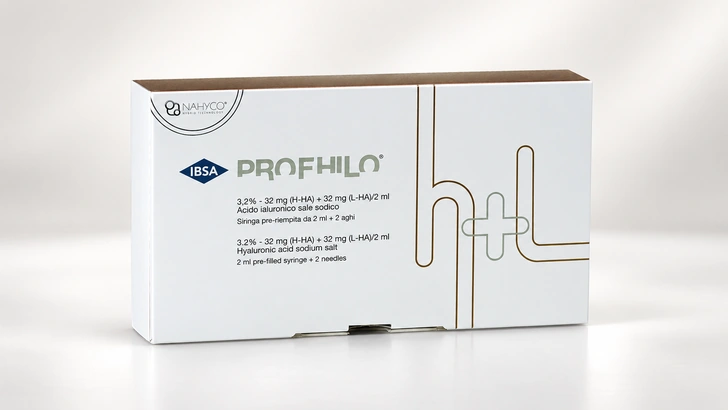
Profhilo is an injectable hyaluronic acid treatment based on hybrid cooperative complexes of high- and low-molecular-weight hyaluronic acid, produced using a thermal process known as NAHYCO technology.[1] It is often grouped with skin boosters, but that does not fully explain it.
In practical terms, I explain it as a skin-quality injectable rather than a structural filler. It is not designed to sharply contour the face, replace significant lost volume, or build strong projection. Its role is more about improving tissue quality.
What concerns can Profhilo help address?
When I consider Profhilo, I am usually looking at mild skin laxity, crepey texture, reduced bounce, dullness, and early ageing changes in patients who still want a natural look. Evidence on injectable hyaluronic acid for skin quality shows promising improvement in hydration, firmness, texture, radiance, and elasticity, though study quality varies across products and protocols.[2]
That means the right expectation is refinement, not reshaping.
How Profhilo Works?
What hyaluronic acid bio-remodelling means in practical terms?
Hyaluronic acid helps retain water and supports the extracellular environment around skin cells. Profhilo uses a high concentration of hyaluronic acid in hybrid complexes designed for tissue diffusion rather than strong structural lift.[1] Laboratory and translational work on these hybrid complexes suggests increased expression of collagen and elastin-related markers compared with high- or low-molecular-weight hyaluronic acid alone, which helps explain why the treatment is described as bio-remodelling.[1,3]
For patients, bio-remodelling should be understood as support for better tissue quality over time, not as a complete reversal of ageing.
Why Profhilo behaves differently from traditional volumising fillers?
Traditional fillers are chosen when I want support, contour, or projection. Profhilo is different. It is more about tissue spread and skin quality than sculpting. This is why it often appeals to patients who are worried about looking puffy or overfilled.
But different does not mean better. If the real problem is volume loss, a skin-quality injectable should not be expected to do the work of a structural filler.
What kind of improvements patients can realistically expect?
The most realistic improvements are in hydration, skin feel, surface freshness, and mild-to-moderate improvement in elasticity or crepiness. In an open-label study in Asian patients, Profhilo was associated with significant improvement in superficial skin hydration and transepidermal water loss over time, with good tolerability reported.[4] At the same time, a 2026 randomised controlled trial reported improvement in wrinkles and pore appearance, but found that dermal thickness improvement did not exceed placebo effect and patient satisfaction was mixed.[5]
I think that nuance is useful. Profhilo can help, but it has limits. It should not be sold as a dramatic lifting treatment.
Why I Choose Profhilo for the Right Patient?
The patient profile that usually does well with Profhilo
The patient who usually does well is someone with early to moderate decline in skin quality, especially if the face or neck looks slightly crepey, tired, or less firm, but without major deflation or strong tissue descent. These patients often want to look fresher, not obviously altered.
Why skin quality sometimes matters more than adding volume?
Not every ageing change is a volume problem. Sometimes the face looks older because the skin itself has lost freshness. In such cases, adding volume without thinking about tissue quality can look mismatched. The face may be fuller, but not necessarily better.
When subtle rejuvenation is a better strategy than shape change?
Subtle rejuvenation often suits younger patients with early changes, patients who want very discreet treatment, and those who are not ready for volumising fillers. However, subtle only works when the diagnosis is correct. If the real issue is heaviness, hollowness, jowling, or dynamic wrinkling, a different treatment may make more sense.
Who Is Not the Right Candidate for Profhilo?
When I advise caution or say no?
I am cautious when expectations are unrealistic, when there is active skin infection or inflammation in the treatment area, when bruising risk has not been properly reviewed, or when the patient is being driven more by trend pressure than by a clear clinical goal. General guidance around injectable hyaluronic acid treatments also supports careful patient selection and adverse-event prevention through proper medical assessment.[6]
Situations where another treatment makes more sense first
If the main concern is muscle-driven wrinkling, neuromodulators may be better. If the problem is significant volume loss, contour deficiency, or structural ageing, fillers are often more appropriate. If there is more visible laxity, textural scarring, or surface damage, lasers, radiofrequency microneedling, or other tightening and resurfacing options may be more logical first-line choices.
Why patient expectations matter as much as the product?
Expectation management is part of the treatment. A patient expecting contour correction from a skin-quality injectable is likely to be disappointed. A patient who understands that Profhilo is a refinement treatment is much more likely to judge the result fairly.
The Treatment Journey, What to Expect from Consultation to Follow-Up
My consultation framework and facial assessment
I begin by identifying what the patient actually means by looking tired. Is it dullness, laxity, heaviness, hollowness, lines, or a mix of several concerns? I assess skin, movement, support, and volume together. Profhilo should not be chosen because it is popular. It should be chosen because the pattern of ageing fits the treatment.
Planning injection points, timing, and session spacing
Profhilo is commonly delivered through a protocol-based pattern rather than broad scatter injection, though technique should always respect anatomy and clinical judgement. Many published protocols use an initial two-session plan spaced around four weeks apart.[3,4] I also plan timing carefully, especially for Mumbai patients scheduling around work, weddings, shoots, or travel.
During the procedure, comfort, downtime, and aftercare
The procedure is usually quick. Patients may feel brief stinging or pressure at injection points. Mild swelling, redness, tenderness, small bumps, or occasional bruising can occur. A systematic review of injectable hyaluronic acid for skin quality found that bruising, swelling, and tenderness were the most common adverse events and generally settled within two weeks.[2]
What changes patients may notice after each session?
Some patients notice early changes in skin feel or hydration. Others notice more after the second session. I advise patients to look for fresher skin, slightly better bounce, and less of that tired, crepey look. I do not set the benchmark as dramatic lift, because that is not the right job for this treatment.
Side Effects, Safety, and Recovery
Common short-term effects
The common short-term effects are local and expected: small raised bumps at injection points for a short period, redness, tenderness, swelling, and sometimes bruising.[2,6]
Less common risks patients should know about
Less common issues include prolonged swelling, inflammatory reactions, asymmetry of response, or dissatisfaction because the visible change feels too subtle. Post-marketing surveillance data for hybrid cooperative complex hyaluronic acid suggest a favourable safety profile overall, with low reported rates of complaints and the most common adverse events being oedema, erythema, and discomfort.[6]
How I reduce risk through assessment, product choice, and technique?
Risk reduction begins before treatment. I look for mismatch between complaint and product, upcoming commitments, active skin issues, and whether combination treatment would make more sense than trying to force one treatment to do everything. Technique matters too. A treatment designed to look natural still requires precision.
When I Prescribe Other Treatments Instead, and Why?
Profhilo vs dermal fillers
I use dermal fillers when shape, support, or volume replacement is the priority. I use Profhilo when skin quality is the main issue. Fillers are structural tools. Profhilo is a tissue-quality tool.
Profhilo vs skin boosters and mesotherapy
Patients often group all injectable hydration treatments together. I do not. Some skin boosters and mesotherapy approaches target superficial hydration or deliver mixed ingredients. Profhilo is positioned more specifically around hybrid cooperative complexes of hyaluronic acid intended for broader tissue diffusion and bio-remodelling.[1]
Profhilo vs energy-based tightening treatments
If the main problem is laxity beyond the mild range, energy-based devices may offer a more suitable strategy. Profhilo may still have a role, but not necessarily as the lead treatment.
Profhilo vs Botox, when the concern is movement rather than skin quality
If repeated muscle movement is driving the concern, especially in the upper face, Botox-type treatments are usually more logical. Profhilo may complement a plan, but it does not do the same job.
How I Personalise Treatment Plans?
Younger patients with early skin quality changes
In younger patients, I am conservative. The aim is to address a specific concern without starting an unnecessarily heavy treatment ladder too early. A minimalist plan often ages better than an aggressive one.
Patients with crepey skin, laxity, or dullness
These patients often form the core Profhilo group, but even here there is variation. Some need skin-quality support alone. Others need a combined plan because the skin issue sits alongside volume change, pigmentation, or textural damage. Personalisation means resisting one-size-fits-all aesthetic medicine.
Neck, lower face, and other treatment areas, when appropriate
The neck and lower face are common areas of concern because they often show early ageing. Published work on Profhilo and related hybrid cooperative complex treatments has reported benefit in face and neck rejuvenation settings, including studies focused on neck roughness and laxity.[1,4] But that does not mean every patient with these concerns is automatically a good candidate.
Why skin health, age, anatomy, and goals change the plan?
A 38-year-old with early textural fatigue, a 48-year-old with mixed volume and skin-quality ageing, and a 58-year-old with more visible laxity do not need the same plan. Good aesthetic care is about sequencing and selection, not product loyalty.
How I Combine Profhilo With Other Treatments?
Combining with Botox
This can make sense when one part of the concern is movement and another part is skin quality. The key is having a clear reason for each step.
Combining with fillers
Profhilo and fillers can work well together when the patient has both skin-quality decline and structural loss. In such cases, fillers address support and contour, while Profhilo supports tissue quality.
Combining with lasers, RF microneedling, or tightening devices
Combination plans can be useful when the patient has texture, laxity, or scar-related concerns that need more than hydration-led rejuvenation. Consensus thinking across facial aesthetic practice supports combination strategies when they are anatomy-led and indication-led, not trend-led.[6]
Why sequencing matters more than doing everything together?
Doing multiple treatments is not the same as treating well. Poor sequencing can increase inflammation, recovery confusion, and unrealistic expectations. Good sequencing makes the plan safer and easier to evaluate.
Why Profhilo Is Considered Innovative?
What the current science suggests?
The innovation lies mainly in the hybrid cooperative complex design and the tissue-diffusion behaviour of the product. Reviews of the platform describe a thermal process that combines high- and low-molecular-weight hyaluronic acid without classic chemical cross-linking, with experimental evidence suggesting effects on collagen and elastin pathways and a clinical profile aimed at bio-remodelling rather than pure volumisation.[1,3]
What evidence supports, and what it does not?
The evidence supports a plausible role in skin quality improvement, particularly hydration, texture-related outcomes, and selected signs of laxity.[1,2,4] It does not support treating Profhilo as a replacement for every other aesthetic treatment. The newer randomised data are useful because they remind us that visible benefit and patient satisfaction are not always the same thing.[5]
How I interpret published data in real-world practice?
I see the literature as supportive, not absolute. Study design, sample size, outcome measures, and conflicts of interest all matter. Then comes clinical judgement. The real question is not whether a treatment has studies. It is whether it makes sense for this patient, with this anatomy, at this stage.
What Most People Get Wrong About Profhilo?
“It is the same as filler”
It is not. The treatment goals are different.
“It can replace every anti-ageing treatment”
No. Ageing is multifactorial, and no single treatment addresses every layer of it.
“One session is enough for everyone”
Usually not. Most commonly used protocols involve more than one session, and response varies.[3,4]
“It is only for older patients”
Not necessarily. The issue is tissue indication, not age alone.
“No downtime means no risks”
Low downtime and low risk are not the same as zero risk.[2,6]
Patient Questions I Often Get
How long do Profhilo results usually last?
This varies. The better way to think about it is as part of a treatment course and follow-up plan rather than as a one-time permanent event.
At what age should someone consider Profhilo?
There is no fixed age. I consider it when the pattern of ageing suggests skin-quality decline and the patient’s goals fit the treatment.
Does Profhilo make the face look puffy or overdone?
When chosen for the right patient and used appropriately, it is often selected precisely because the patient wants a fresher look without obvious shape change.
Is Profhilo painful?
Most patients find it tolerable, though brief discomfort at injection points is expected.
Can Profhilo be done with Botox or fillers?
Yes, in selected patients and with sensible planning. Combination treatment is often about addressing different aspects of ageing.
How do I know whether I need Profhilo or another treatment instead?
The answer comes from diagnosis, not trend familiarity. If your main issue is skin quality, Profhilo may be relevant. If it is movement, structural loss, or significant laxity, another treatment may be more appropriate.
Final Thoughts, Where Profhilo Fits in a Thoughtful Rejuvenation Plan
Profhilo has a real place in modern aesthetic dermatology because it addresses a concern many patients recognise well: skin that looks less fresh, less elastic, and less resilient, even when they do not want obvious aesthetic change. But it works best when it is used with restraint, context, and accurate diagnosis.
My view is simple. Profhilo is neither a trend to dismiss nor a shortcut to oversell. It is a useful skin-quality treatment for the right patient, at the right stage, with the right expectation.
References
- Humzah D, Cassuto D, Tateo A, et al. Intradermal Injection of Hybrid Complexes of High- and Low-Molecular-Weight Hyaluronan: Where Do We Stand and Where Are We Headed in Regenerative Medicine? Int J Mol Sci. 2024;25(6):3216. https://pubmed.ncbi.nlm.nih.gov/38542191/
- Ghatge AS, Bhalerao SA, Mohammed S, et al. The Effectiveness of Injectable Hyaluronic Acid in the Improvement of the Facial Skin Quality: A Systematic Review. Clin Cosmet Investig Dermatol. 2023;16:825-839. https://pmc.ncbi.nlm.nih.gov/articles/PMC10082573/
- Sparavigna A, Tenconi B, De Ponti I, et al. Antiaging, photoprotective, and brightening activity in biorevitalization: a new solution for aging skin. Clin Cosmet Investig Dermatol. 2016;9:57-65. https://pmc.ncbi.nlm.nih.gov/articles/PMC5044990/
- Cheng SWN, Ho A, Bellia G, et al. Efficacy and Tolerability of Stable Hybrid Cooperative Complexes of High- and Low-Molecular Weight Hyaluronic Acid in Asian Patients: An Open-Label Study. Aesthet Plast Surg. 2025. https://pubmed.ncbi.nlm.nih.gov/40921777/
- Zanella G, Fadanelli G, Correia A, et al. Effects of Profhilo Tissue Bioremodeling on Skin Texture and Perioral Wrinkles: A Randomized Controlled Triple-Blind Clinical Trial. Aesthet Plast Surg. 2026. https://pubmed.ncbi.nlm.nih.gov/41731228/
- Salti G, Tateo A, Cassuto D, et al. Hyaluronic Acid Hybrid Cooperative Complexes Nearing 10 Years of Use: Update on Safety Assessment Based on Post-Marketing Surveillance Data. J Cosmet Dermatol. 2025;24(7):e70197. https://pubmed.ncbi.nlm.nih.gov/40654100/