Overview | How It Works | Who Is It For? | Safety | FAQs
When Acne Clears, But Your Skin Still Feels Unsettled
Many patients come after their acne has started settling, but their skin still does not feel normal. The pimples may be fewer, yet the face feels red, dull, tight, oily in some areas, dry in others, and easily irritated. This stage is frustrating because skin needs help but may not tolerate another strong peel, scrub, or aggressive facial.
In Mumbai, heat, humidity, sweat, pollution, sunscreen layering, and repeated cleansing can make this phase harder. Some patients also over-correct with acids, strong acne gels, clay masks, and anti-oil face washes. The result is often not clearer skin, but a tired skin barrier.
An Oxygen Dome Facial may be considered at this stage. I do not see it as a cure for acne. I see it as a supportive recovery treatment when the skin needs calming, hydration, and barrier-friendly care after breakouts. Acne guidelines still keep medical treatment at the centre when needed [1,2]. A recovery facial should work around that plan, not replace it.
What Is an Oxygen Dome Facial?
How I Explain It to Patients
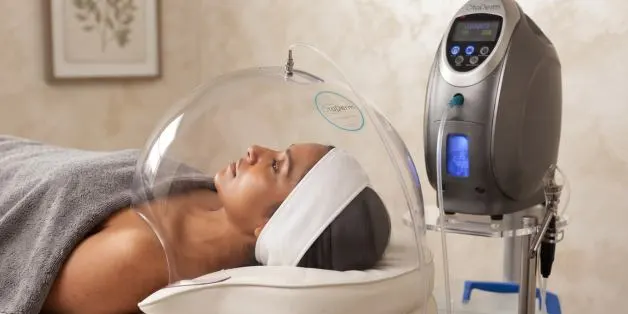
An Oxygen Dome Facial is a clinic-based skin recovery treatment where the face is placed under a clear dome-like chamber that creates an oxygen-rich environment. It may be combined with gentle cleansing, calming masks, lightweight serums, and barrier-supportive moisturising steps.
The word “oxygen” can sound dramatic, so I explain it simply. Acne-recovering skin often needs less aggression and more support, with hydration and soothing ingredients delivered without heavy rubbing or harsh exfoliation.
Why It Is Different From a Regular Salon Facial
A regular salon facial may involve massage, extraction, scrubbing, and steaming. For acne-prone skin, too much friction, heat, pressure, or extraction can worsen redness or trigger fresh inflammation.
In a dermatologist-led setting, the approach is different. I check active acne, open lesions, medicines, recent procedures, sensitivity, pigmentation risk, and event timelines. The treatment is adjusted to the skin’s current state.
Where It Fits in Acne Recovery, Not Acne “Cure”
Oxygen Dome Facial is better understood as a supportive acne recovery facial. It may help the skin feel calmer and more hydrated after a breakout. It is not meant to control hormonal acne, deep cystic acne, comedonal acne, or acne scarring on its own.
How Oxygen Dome Facial Works on Acne-Recovering Skin
Oxygen Delivery and the Skin Microenvironment
Oxygen has a role in skin repair and tissue metabolism. Topical oxygen has been studied in skin conditions, including mild to moderate acne, but the evidence is limited and should be interpreted carefully [3]. An Oxygen Dome Facial is not medical wound oxygen therapy and should not be promoted as a disease treatment.
Hydration, Barrier Comfort, and Post-Acne Redness
Acne-prone skin is not always strong. Many acne patients have barrier disturbance, water loss, irritation, and sensitivity, especially while using active acne treatments [4,5]. The skin may sting after cleansing, flush after sunscreen, peel, or feel tight despite oiliness.
For such patients, the goal is to reduce unnecessary irritation. I prefer lightweight, non-comedogenic, barrier-friendly steps that soothe the skin rather than strip it further.
Why Gentle Support Matters After Breakouts
After acne settles, redness, tenderness, post-acne marks, and barrier weakness may continue for weeks. If the patient chooses aggressive exfoliation too soon, the inflammation cycle can restart.
This is common before weddings, shoots, festivals, travel, and social events. A gentle recovery facial may be more sensible than a strong peel when the skin is already inflamed or recently irritated.
What the Evidence Suggests, and What It Does Not Prove
Early evidence exists around oxygen-based skin procedures. A preliminary oxybrasion study in acne reported improvement in hydration and sebum-related parameters, with no side effects noted in that study group [6]. This does not mean every oxygen facial treats every acne type. Device, protocol, severity, and skin type matter.
Why Choose Oxygen Dome Facial for Acne Recovery?
For Skin That Is Inflamed, Sensitive, or Over-Treated
I consider Oxygen Dome Facial when skin looks over-treated after repeated actives, harsh cleansers, exfoliating toners, home peels, or unplanned product combinations. The patient may say, “My acne is better, but my skin is burning.” Here, the priority becomes calming, hydration, and rebuilding tolerance.
For Mumbai Skin Exposed to Heat, Humidity, Sweat, and Pollution
Mumbai skin faces a specific challenge. Humidity may make skin oily, while sweat, sunscreen, dust, makeup, and repeated washing create congestion and irritation together. Product selection during Oxygen Dome Facial matters as much as the device.
For Patients Who Need Recovery Support Between Active Acne Treatments
Some patients are already on topical retinoids, benzoyl peroxide, azelaic acid, oral medication, or periodic peels. These may be needed, but skin can become dry, flaky, or reactive. In selected cases, Oxygen Dome Facial can sit between active treatments as a recovery session.
When I Would Not Choose This Treatment
I would not choose Oxygen Dome Facial as the main treatment for nodulocystic acne, deep painful acne, severe congestion, infected lesions, or rapidly worsening acne. I would also delay it for picked wounds, crusting, dermatitis, or recent skincare reactions.
Who Is a Good Candidate?
Mild Post-Acne Redness and Dullness
A good candidate has settling acne with redness, dullness, mild uneven texture, or tired-looking skin. The treatment may help the skin feel fresher and more comfortable when the protocol avoids heat, harsh scrubbing, and unnecessary extraction.
Acne-Prone Skin With Barrier Weakness
Patients with barrier weakness often describe stinging, tightness, peeling, or sudden sensitivity. The aim is not to dry out acne. The aim is to restore comfort while continuing the right acne care.
Patients Taking Acne Treatment Who Need a Gentler Supportive Facial
Many acne medicines can make skin more sensitive early on. This does not mean the medicine is wrong, but the support plan may need adjustment. Oxygen Dome Facial should be considered only after reviewing medicines, tolerance, and irritation level.
Patients Preparing for Events Without Aggressive Exfoliation
Before an event, patients often ask for a glow treatment. In acne-prone skin, I am careful with strong exfoliation close to the event. If the skin is calm, Oxygen Dome Facial may be a safer recovery-style option.
Who Should Avoid or Delay Oxygen Dome Facial?
Active Painful Acne Flares
If acne is painful, deep, swollen, or spreading, I treat the acne first. A recovery facial cannot control the inflammation that drives such acne. Doing a facial during an active flare may make skin more uncomfortable.
Open, Picked, or Infected Lesions
Open or picked acne lesions need caution. If there is crusting, oozing, tenderness, or suspected infection, any facial should be delayed to reduce worsening, pigmentation, and scarring risk.
Recent Aggressive Peels, Lasers, or Irritating Skincare
If the patient recently had a strong peel, laser, exfoliating treatment, or used multiple irritating actives, I first assess the barrier. Sometimes the right step is to pause procedures and simplify skincare.
Uncontrolled Rosacea, Eczema, or Allergy-Prone Skin
Not every redness is acne redness. Rosacea, eczema, allergy, and irritant reactions can mimic acne-related sensitivity. If these are uncontrolled, the treatment plan must change.
What You May Feel During the Treatment
Most patients describe a cooling, relaxing, or fresh feeling. Some may feel mild tightness or warmth depending on baseline sensitivity. Any sharp burning, strong itching, or discomfort should be reported during the session.
What to Expect After the Treatment
After treatment, the skin may look fresher and feel more hydrated. Mild temporary redness can happen. The treatment should be judged by comfort, reduced dryness, better tolerance, and a calmer appearance over the recovery phase.
Side Effects and Downtime
Common Temporary Effects
Possible temporary effects include mild redness, slight tingling, tightness, or sensitivity. These usually settle, but duration varies with baseline skin condition and products used.
When Redness or Tingling Needs Attention
If redness worsens, burning continues, bumps appear, or the skin becomes itchy, the patient should contact the clinic. This may suggest irritation, allergy, or product mismatch.
Why Technique and Product Selection Matter
Technique matters because acne-prone skin is reactive. Too much rubbing, massage, extraction, heat, or occlusive layering can create problems. Even a gentle device can be paired with unsuitable skincare.
Aftercare Mistakes That Can Trigger Irritation
The most common mistakes are using actives too soon, scrubbing the skin, applying too many products, skipping sunscreen, or trying a new strong product immediately after the facial. Recovery treatments work better when aftercare is simple.
When Other Treatments May Be Prescribed Instead
When Prescription Acne Treatment Comes First
If the patient has active acne, prescription acne treatment may be needed first. Guidelines support evidence-based therapies such as topical retinoids, benzoyl peroxide, antibiotics when appropriate, and other options based on severity [1,2]. Oxygen Dome Facial cannot replace this decision-making.
When Chemical Peels Are More Suitable
Chemical peels may be considered for congestion, oiliness, comedones, or superficial post-acne pigmentation. They must be selected carefully in Indian skin to reduce irritation and pigmentation risk. If the barrier is weak, I may choose recovery care first.
When Lasers or Energy-Based Devices May Be Considered
Energy-based devices may be considered for acne scars, redness, texture, or selected forms of active acne support. They are not chosen casually. Skin type, scar type, downtime, sensitivity, and pigmentation risk all matter.
When Acne Scar Treatments Are Needed Instead of Recovery Facials
Oxygen Dome Facial does not remodel acne scars. If the main concern is pitted scars, rolling scars, boxcar scars, or tethered scars, the patient needs scar assessment and a separate scar plan.
How I Combine Oxygen Dome Facial With Other Treatments
With Medical Acne Treatment
When a patient is on medical acne treatment, I use Oxygen Dome Facial only if it supports tolerance. I may adjust timing around retinoids or other irritating products. The aim is to help the patient stay consistent with the main acne plan.
With Chemical Peels
Oxygen Dome Facial may be used in a programme where peels are done on separate visits. I avoid stacking too many active steps together. In acne care, sequencing is often what makes the plan safer.
With LED or Calming Skin Therapies
In sensitive patients, calming therapies may be considered when the aim is comfort and recovery. The combination depends on what the skin can tolerate. Sometimes the simplest recovery protocol is the most sensible one.
With Barrier Repair Skincare
Barrier repair skincare is often the foundation. A treatment session cannot compensate for daily irritation at home. I review cleanser, moisturiser, sunscreen, actives, and makeup habits because wrong home care makes results short-lived.
With Scar Management Plans
For scar-prone patients, acne control comes first. Once active acne is stable, scar treatment can be planned. Oxygen Dome Facial may support comfort between more intensive sessions, but it should not be presented as a scar treatment.
Personalising Oxygen Dome Facial for Each Patient
Oily, Acne-Prone Skin
For oily skin, I avoid heavy occlusive creams and rich masks. The protocol should support hydration without making the skin greasy. I also check whether the oiliness is true sebum excess or rebound oiliness from over-cleansing.
Sensitive, Red, or Stinging Skin
For sensitive skin, I reduce steps. I may skip exfoliation, avoid fragrance, and keep the treatment calming. If the skin is actively burning even before treatment, I may delay the facial and first repair the barrier with simple skincare.
Pigmentation-Prone Indian Skin
Indian skin can pigment after inflammation. This is why I avoid unnecessary irritation in acne recovery. A gentle plan may reduce the risk of worsening post-acne marks, while a harsh plan may deepen them.
Skin Recovering From Picking or Over-Exfoliation
Skin picking and over-exfoliation are common. If there are open areas, we delay treatment. If the skin has healed but is weak, Oxygen Dome Facial may be considered as part of a calmer reset.
Patients With Recurrent Breakouts Before Events
Event-related breakouts are often worsened by stress, makeup trials, late nights, travel, and new skincare. I avoid experimenting close to the event. If Oxygen Dome Facial is planned, I prefer doing it with enough time to observe how the skin responds.
Why Oxygen Dome Facial Is Innovative, But Should Still Be Used Judiciously
The Science of Oxygen, Acne, and Skin Recovery
The innovation lies in combining an oxygen-rich treatment environment with a gentle, barrier-aware protocol. Acne is inflammatory, and the skin around acne can be fragile. A supportive oxygen-based facial may fit well when the goal is recovery, not aggressive correction.
Why “Supportive Treatment” Is a More Accurate Claim Than “Acne Treatment”
Calling Oxygen Dome Facial an acne treatment can mislead patients. Calling it a supportive acne recovery facial is more accurate. It may help the skin feel calmer and more hydrated, but acne control still depends on diagnosis, severity, hormones, skincare, medicines, and consistency.
My Clinical Decision Framework
Before recommending it, I ask whether active acne is controlled enough, whether the barrier is weak, whether there are open lesions or dermatitis, whether the treatment supports the main acne plan, and whether products suit acne-prone Indian skin. If not, I choose another route.
What Most People Get Wrong About Oxygen Dome Facial
Myth 1: Oxygen Dome Facial Kills Acne Permanently
No facial can promise that. Acne has multiple drivers, including sebum, blocked follicles, inflammation, bacteria, hormones, genetics, and skincare habits. Oxygen Dome Facial may support recovery, but it does not permanently stop acne.
Myth 2: If It Feels Gentle, It Works for Everyone
Gentle does not mean universal. A patient with active cystic acne, infection, uncontrolled rosacea, or allergy-prone skin may not be suitable at that moment. Suitability depends on assessment.
Myth 3: More Exfoliation Means Faster Acne Recovery
This is one of the most damaging beliefs I see. Over-exfoliation can increase redness, burning, pigmentation, and breakouts. In recovery, restraint is often more useful than intensity.
Myth 4: It Can Replace Prescription Acne Treatment
It cannot. If acne needs medical treatment, a facial should not delay it. This is especially important in patients who are developing scars or painful lesions.
Myth 5: One Session Can Repair Months of Skin Damage
One session may make the skin feel fresher, but barrier recovery takes consistency. Cleansing, moisturising, sunscreen, acne treatment, and trigger control all matter. It is one part of a plan, not the whole plan.
Patient Questions I Often Get
Is Oxygen Dome Facial good for acne-prone skin?
It can be suitable for selected acne-prone skin, especially when active acne is settling and the skin needs calming or hydration. It is not ideal during a painful active flare, open lesions, or suspected infection.
Can I do Oxygen Dome Facial while I am on acne medication?
Sometimes, yes, but only after reviewing the medication and skin sensitivity. If your skin is peeling, burning, or very dry from acne treatment, the protocol may need modification or postponement.
Will it help with acne marks?
It may support skin comfort and reduce the look of temporary dullness or redness, but it is not a primary treatment for pigmentation or scars. Brown post-acne marks, red marks, and pitted scars need different plans.
Can it reduce redness after acne?
It may help mild post-acne redness look calmer in some patients, especially when redness is linked to irritation and barrier weakness. Persistent redness needs assessment because it may be due to active inflammation, rosacea, dermatitis, or vascular change.
How soon before an event should I do it?
I prefer not to do a new treatment for the first time immediately before an important event. If your skin is acne-prone or sensitive, plan with enough time to observe the response. Your dermatologist can guide timing based on your skin history.
How often can it be done safely?
Frequency depends on acne activity, barrier condition, current treatments, and goals. Some patients need it only occasionally as a recovery session. Others may benefit from a planned schedule between acne treatments.
Citation Sources
- Reynolds RV, Yeung H, Cheng CE, et al. Guidelines of care for the management of acne vulgaris. Journal of the American Academy of Dermatology. 2024. https://www.jaad.org/article/S0190-9622(23)03389-3/fulltext
- National Institute for Health and Care Excellence. Acne vulgaris: management. NICE guideline NG198. https://www.nice.org.uk/guidance/ng198
- Bennardo L, Del Duca E, Dastoli S, Schipani G, Scali E, Silvestri M, Nisticò S. Potential applications of topical oxygen therapy in dermatology. Dermatology Practical and Conceptual. 2018;8(4):272-276. https://pubmed.ncbi.nlm.nih.gov/30479854/
- Deng Y, Wang F, He L. Skin Barrier Dysfunction in Acne Vulgaris: Pathogenesis and Therapeutic Approaches. Medical Science Monitor. 2024;30:e945336. https://pubmed.ncbi.nlm.nih.gov/39668545/
- Sukanjanapong S, Ploydaeng M, Wattanakrai P. Skin Barrier Parameters in Acne Vulgaris versus Normal Controls: A Cross-Sectional Analytic Study. Clinical, Cosmetic and Investigational Dermatology. 2024;17:2427-2436. https://pubmed.ncbi.nlm.nih.gov/39502708/
- Chilicka K, Rogowska AM, Szyguła R, Rusztowicz M, Nowicka D. Efficacy of Oxybrasion in the Treatment of Acne Vulgaris: A Preliminary Report. Journal of Clinical Medicine. 2022;11(13):3824. https://pubmed.ncbi.nlm.nih.gov/35807109/