What Is New Doublo | How It Works | Safety & Side Effects | Alternatives | FAQs
When Your Skin Starts to Lose Firmness, but You Are Not Ready for Surgery
You may notice a softer jawline, less firm cheeks, or looseness around your neck. Yet you may not want surgery or a long break from work. This is why people explore non-surgical skin tightening in Mumbai.
My first question is what has changed in your face. Skin may lose firmness, but facial fat can also shift or reduce. Bone structure, sun exposure, and weight changes also affect ageing. A device cannot correct every change.
New Doublo 2.0 interests me because it brings two forms of energy into one treatment approach: microfocused ultrasound and radiofrequency. The aim is to address different tissue layers in a planned way. That is useful only when the treatment matches the problem. I would rather recommend a smaller, well-chosen intervention, or no procedure, than apply energy where it is unlikely to help.
What Is New Doublo 2.0?
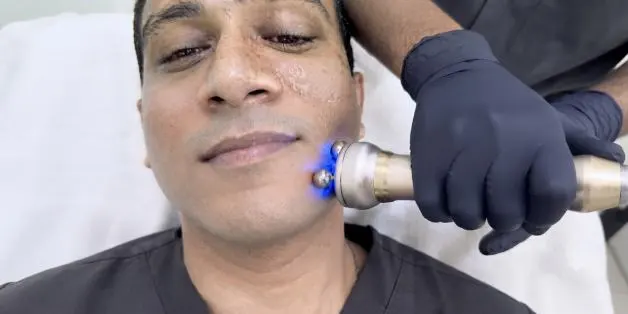
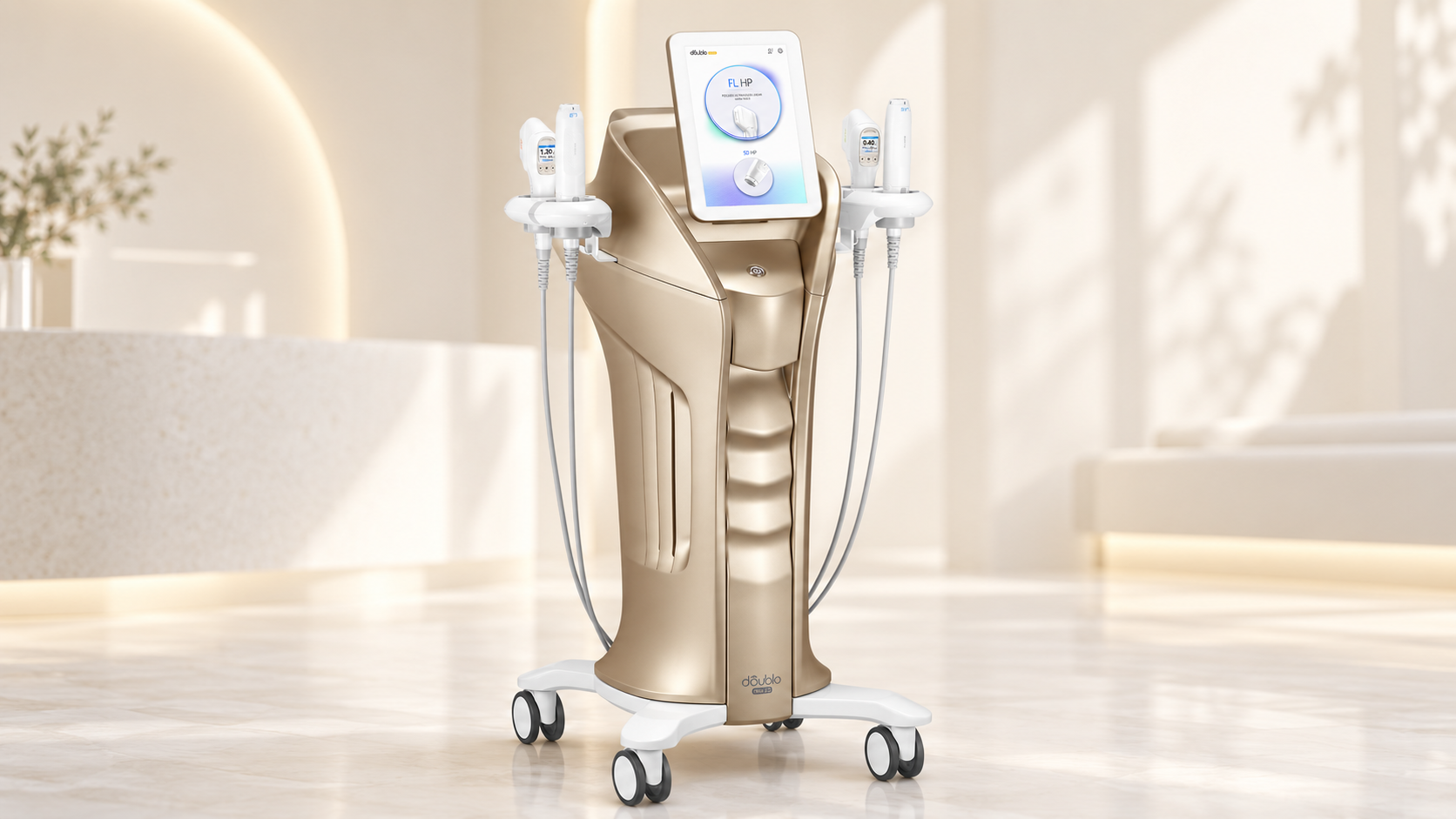
New Doublo 2.0, also called Hironic New Doublo, is a non-invasive energy-based system used for selected skin tightening and rejuvenation concerns. Its combined mode uses microfocused ultrasound (MFU) and radiofrequency (RF). You may also hear it described as a New Doublo HIFU treatment, although that name leaves out the RF component.
Ultrasound focuses energy at selected tissue depths. RF spreads controlled heat through a broader area of skin. These methods are not interchangeable. Combining them may address deeper laxity and some surface skin-quality concerns.
It does not remove loose skin, replace lost facial volume, or reproduce surgical lifting. Also, not every cartridge or treatment mode uses both types of energy. I would confirm the exact device, mode, intended treatment area, and local instructions before planning care.
How Does New Doublo 2.0 Work?
Skin contains collagen fibres that give it strength and support. With age, collagen changes and the tissue around it can become less firm. Energy-based procedures use carefully controlled heat to start a repair response. The change is gradual because the body needs time to remodel tissue.
Microfocused ultrasound sends sound energy to selected depths below the surface. At the focus points, that energy becomes heat. Small zones of thermal change can trigger collagen remodelling in the dermis and supporting tissues. A systematic review found evidence of modest tightening in people with mild to moderate facial laxity, while also noting differences between studies and treatment methods. [1]
Radiofrequency uses electrical energy to warm tissue. It does not act like a surface facial or a topical cream. RF can affect collagen in the dermis and may help with firmness and texture. A recent systematic review found promising results across RF studies, but the devices, methods, and reporting varied. Results from one RF system cannot simply be assigned to another. [2]
New Doublo 2.0 has a method called Synergy Dotting. In this mode, RF energy is delivered first, followed closely by a focused ultrasound pulse through the treatment head. RF provides wider heating, while MFU places energy at a selected focus. The principle is to treat different layers during the same planned sequence, not to heat every part of the face as much as possible.
There are also focused linear ultrasound options. Cartridge depth, energy, contact, and spacing matter. Cartridge labels cannot replace an anatomy assessment.
Why Would I Choose New Doublo 2.0 for a Patient?
I would consider New Doublo 2.0 when the main concern is mild to moderate skin laxity and the patient wants a gradual, non-surgical change. Typical concerns include an early loss of jawline definition, mild looseness below the chin, or a change in cheek firmness. Some patients also ask about fine texture changes. I explain that texture and lifting are separate goals, even when one device can address aspects of both.
Before choosing treatment, I look for three things:
- There is enough tissue and skin thickness to treat the area safely.
- The amount of laxity is realistic for an energy-based procedure.
- The patient understands that improvement may be subtle and will vary.
I become more cautious with a thin face, prominent hollows, major loss of volume, or a history of unwanted facial fat loss. Tightening is not always the same as making a face look younger. Further loss of fullness could make some faces look more tired.
I may also decline treatment when loose skin is severe, when the concern is mostly excess fat rather than skin laxity, or when the expected result depends on a change this technology cannot deliver. It is a way to avoid the wrong intervention.
For me, the reason to choose a combined MFU and RF treatment is a clear tissue-based need, not simply the fact that two technologies are available.
New Doublo 2.0 vs Other Skin Tightening Treatments
Patients often compare New Doublo 2.0 with Ultraformer MPT. Both belong to the wider group of ultrasound-based tightening technologies, but their handpieces, energy-delivery methods, and available modes differ. Ultraformer MPT is primarily an ultrasound-focused approach. New Doublo 2.0 also offers an integrated MFU and RF mode. That distinction does not prove that one is more effective for every face.
In a small randomised split-face trial, monopolar RF and microfocused ultrasound with visualisation both improved mild to moderate face and neck laxity over six months, without a clear difference in tightening outcomes. It was not a trial of New Doublo 2.0. [3]
If the main issue is surface texture or acne scarring, RF microneedling or another targeted procedure may make more sense. If a facial hollow is caused by volume loss, an energy device will not refill it. If muscle movement produces expression lines, a different approach may be considered. Marked hanging skin can require a surgical opinion.
For skin tightening treatment in Mumbai, I explain the treatment category before the device. Anatomy, risks and goals guide the choice.
What Makes New Doublo 2.0 Innovative? Understanding the Science
What interests me about New Doublo 2.0 is the planned sequence of energy delivery. MFU aims at focused tissue points, while RF spreads heat through a different tissue pattern. This gives a scientific reason to investigate whether the combination offers additional skin-quality benefits.
A 2023 non-randomised split-face study used the V-RO/New Doublo ultrasound and RF system in Korean adults. Twenty-one participants completed the analysis. The combined side showed advantages for selected measures, including skin elasticity, fine lines, and some pore-related outcomes. However, the study did not establish a significant extra face-lifting effect over ultrasound alone. Follow-up lasted only eight weeks. This study supports the combined approach but does not prove that every New Doublo 2.0 configuration has identical results. [4]
This small study cannot establish outcomes in Indian patients, long-term benefit, or superiority over other carefully chosen treatments.
In my view, innovation becomes clinically meaningful when it improves our ability to match treatment to tissue. A more complex device is not, by itself, a better prescription. Careful patient selection and technique remain central.
New Doublo 2.0 Safety: What I Consider Before Recommending Treatment
Non-invasive does not mean risk-free. Common effects after ultrasound or RF treatments include redness, swelling, tenderness, and short-lived discomfort. Temporary changes in sensation can occur. More serious problems, such as burns, blistering, scars, nerve symptoms, or unwanted loss of underlying tissue, have been reported with microfocused ultrasound devices, although these events are uncommon and the evidence does not measure New Doublo 2.0’s exact risk. [5]
I review the full medical history, especially implanted electronic devices, metal or other implants in the treatment region, previous surgical work, and recent aesthetic procedures. Pregnancy, active infection, open wounds, and certain medical conditions may also lead to deferral or a different plan. Device-specific contraindications and local labelling must be checked rather than assumed to be identical across systems.
Safety also depends on correct contact, accurate treatment depth, sensible energy, and respect for facial anatomy. Areas with little tissue cover require particular caution. I would not use a high setting simply because the patient wants faster results.
Aftercare instructions should make it clear when to seek medical review. Severe or growing pain, blistering, a change in facial movement, persistent numbness, or marked skin colour change should not be dismissed as normal recovery. Early assessment is more sensible than waiting for such symptoms to settle on their own.
What Most People Get Wrong About New Doublo 2.0
- Myth 1: More heat and higher energy always produce better results. Tissue has a limit to what it can safely tolerate. Greater energy can increase discomfort or injury without improving the outcome. I select settings for the area and patient, not for an impressive number.
- Myth 2: New Doublo 2.0 gives the same results as a surgical facelift. Surgery can reposition tissue and remove excess skin. Energy-based treatment cannot do those things. Its role is more limited and is usually considered when laxity is mild to moderate.
- Myth 3: Everyone needs the same number of sessions. Treatment frequency depends on response, tissue quality, goals, and tolerance. I prefer to allow time for assessment before suggesting another procedure.
- Myth 4: Treatment results are immediate and permanent. Early tightness may partly reflect short-term tissue changes. Collagen remodelling takes longer, and ageing continues. Results, when present, can fade with time.
- Myth 5: Combining two technologies automatically makes treatment superior. Different energy patterns may offer added value for selected skin concerns. The evidence does not establish that the combination gives a stronger lift in every patient.
These misunderstandings often begin when a device name becomes more important than the diagnosis. I find it more helpful to ask what tissue needs change, how much change is realistic, and what risk is acceptable.
Patient Questions I Often Get About New Doublo 2.0
Is New Doublo 2.0 painful?
You may feel warmth, pressure, or brief prickling sensations as energy is delivered. Comfort varies by area and individual sensitivity. Some regions, particularly near bone, can feel more tender. Pain control should be discussed before treatment, and severe or unusual pain should be reported at once.
Is New Doublo 2.0 suitable for Indian skin tones?
It may be considered across different skin tones because its main target is beneath the surface. Still, darker skin can develop pigmentation after inflammation or a burn. I would assess skin health, pigmentation history, treatment settings, and recent sun exposure rather than assume that a device is safe for everyone.
How many New Doublo 2.0 sessions might I need?
There is no reliable universal number. Some treatment plans begin with one session and reassessment, while others may need staged care. The starting condition, area, response, and risks matter more than a preset package. I would allow enough time to judge the first treatment before making the next decision.
Can New Doublo 2.0 help with a double chin or sagging jawline?
It may help some people whose jawline concern is mainly mild skin laxity. A double chin can also reflect fat, muscle position, jaw structure, or a mix of factors. Tightening alone may not resolve these causes. I would examine the area before choosing any treatment.
Can New Doublo 2.0 cause facial fat loss?
Unwanted tissue loss has been reported after other microfocused ultrasound procedures, although the exact risk with New Doublo 2.0 is not well established. This is one reason I am cautious with thin cheeks, existing hollows, and excessive energy. A device should not be used simply to chase sharper contours in every face.
Can I return to work or social activities after treatment?
Many patients can resume routine activity fairly soon, but redness, swelling, or tenderness may remain for a short time. The experience is not identical for everyone. I would plan around important commitments and follow individual advice on heat, exercise, skincare, and any symptoms that need review.
References and Clinical Sources
[1] Contini M, Hollander MHJ, Vissink A, et al. A Systematic Review of the Efficacy of Microfocused Ultrasound for Facial Skin Tightening. Int J Environ Res Public Health. 2023;20(2):1522. https://pubmed.ncbi.nlm.nih.gov/36674277/
[2] Kumar N, Suh DH, Lee SJ, Ryu HJ. Radiofrequency-Based Treatments for Facial Rejuvenation: A Systematic Review of Efficacy, Safety, and Patient-Centered Outcomes. Aesthet Surg J Open Forum. 2025;7:ojaf159. https://pubmed.ncbi.nlm.nih.gov/41426292/
[3] Alhaddad M, Wu DC, Bolton J, et al. A Randomized, Split-Face, Evaluator-Blind Clinical Trial Comparing Monopolar Radiofrequency Versus Microfocused Ultrasound With Visualization for Lifting and Tightening of the Face and Upper Neck. Dermatol Surg. 2019;45(1):131-139. https://pubmed.ncbi.nlm.nih.gov/30531187/
[4] Byun JW, Kang YR, Park S, Hong W. Efficacy of radiofrequency combined with single-dot ultrasound efficacy for skin rejuvenation: A non-randomized split-face trial with blinded response evaluation. Skin Res Technol. 2023;29(9):e13452. https://pubmed.ncbi.nlm.nih.gov/37753689/
[5] Humphrey VS, Rambhia PH, Gmyrek R, Chapas A. Microfocused Ultrasound With Visualization: A Systematic Review of Adverse Events and Risk of Subsequent Facelift Compromise. Dermatol Surg. 2025;51(4):424-429. https://pubmed.ncbi.nlm.nih.gov/39625163/