Ultraformer MPT Mumbai | How It Works | Good Candidate | Side Effects & Safety | Patient Questions
When you want lifting and tightening, but do not want surgery
Many patients do not ask me for a dramatic change. They usually say their jawline looks softer, the lower face feels heavier in photos, or the neck does not look as firm as before. They want a fresher, tighter look, but they do not want surgery or a long recovery.
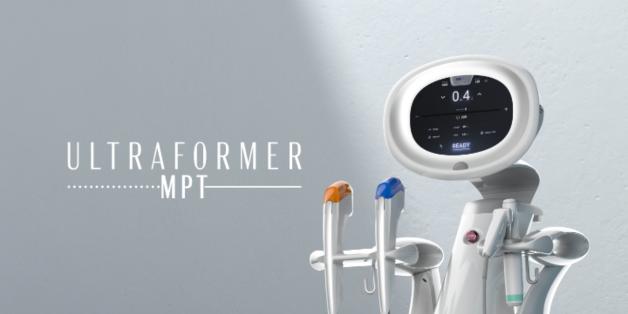
This is where Ultraformer MPT comes into the conversation. It is a HIFU platform used for non-surgical lifting and tightening. In simple terms, it delivers focused ultrasound energy at selected depths below the skin to create controlled heat points. Those points trigger collagen remodelling over time.[1,2]
What matters most, however, is not just the machine. It is choosing the right patient, the right area, and the right depth. If that thinking is missing, the treatment can easily be oversold.
What Is Ultraformer MPT?
What “MPT” means
Ultraformer MPT is a high-intensity focused ultrasound, or HIFU, platform. In aesthetics, HIFU is used to create tiny thermal coagulation points at controlled depths, which then stimulate tissue repair and collagen remodelling.[1,2]
“MPT” refers to micro-pulsed delivery. In practical terms, the platform is designed to deliver energy in smaller, controlled pulses across different treatment depths. That may improve flexibility during treatment, but the strongest evidence still supports HIFU as a category for mild to moderate laxity rather than any one device being a cure-all.[1,5]
How Ultraformer MPT is different from older HIFU platforms
Older HIFU systems already established the basic principle of deeper, non-surgical lifting. Newer platforms mainly differ in cartridge options, energy delivery patterns, and how easily the operator can adapt treatment to smaller and larger areas.
That matters because the face is not uniform. The brow, cheek, jawline, under-chin area, and neck all age differently. A newer platform only becomes useful when those differences are respected. Technology expands options, but judgement decides whether the option suits the face.[3,5]
How Ultraformer MPT Works
Which skin layers it targets
Ultraformer MPT places focused ultrasound energy at selected depths below the skin. Depending on the cartridge and area, treatment may target deeper dermal layers and the superficial musculoaponeurotic system, or SMAS, which is relevant in facial support and lifting.[1,2]
This is why HIFU is different from treatments that work mainly on the skin surface. Its role is deeper support. It is more relevant for laxity than for concerns that are mainly pigment-related or textural.
Why depth selection matters
Depth selection is one of the most important decisions in HIFU. If depth does not match the anatomy, the result may underperform. If energy is delivered without understanding tissue thickness, fat distribution, and bony support, the result may also look less balanced.
The literature shows that HIFU devices differ in frequency, energy parameters, and treatment depths.[5] That is why I see this as an anatomical procedure with a device, not a machine treatment that can be copied the same way on every face.
What collagen remodelling really means in practice
Collagen remodelling is often explained too vaguely. In practice, it means the treated tissue enters a repair response after controlled thermal injury. That does not create an instant facelift. It creates gradual change over the following weeks and months.[1,2]
This is also why the best candidates are usually patients with early to moderate laxity rather than advanced tissue descent. HIFU can improve support and contour. It cannot recreate what surgery can physically reposition.
Who Is a Good Candidate for Ultraformer MPT?
Signs that suggest this treatment may suit you
The better candidates are usually patients with early loss of jawline definition, mild jowling, under-chin laxity, or neck looseness that is visible but not severe. These are often the cases where non-surgical tightening can fit well into a broader anti-ageing plan.[1,2]
When I would not recommend it
I become cautious when the main issue is not laxity but volume loss, facial heaviness, or advanced tissue descent. In those cases, tightening alone may disappoint. I would also rethink treatment in the presence of local infection, open wounds, or other medical situations where energy-based procedures need added caution. Safety reviews repeatedly show that outcomes depend heavily on assessment and operator skill.[4]
When expectations need to be reset
Expectation setting is part of treatment. If a patient wants a fresher, firmer, slightly more defined face, Ultraformer MPT may be reasonable. If they want a surgical level of lift without surgery, expectations need to be reset early. The right promise is not “biggest lift.” It is “appropriate lift for the right face.”
Why Some Patients Choose Ultraformer MPT
Lower-face lifting and jawline definition
The lower face is one of the most common reasons patients ask about HIFU. A softer jawline or early jowling may respond well when the anatomy is suitable. Objective studies have shown measurable lifting effects across facial units after HIFU treatment, especially in areas linked to contour and definition.[3]
Mild to moderate skin laxity
This is where the evidence is strongest. Systematic reviews support HIFU for mild to moderate facial skin laxity, while also making it clear that outcomes vary by patient selection, device settings, and treatment protocol.[1,2]
Face, neck, and selected body areas
Facial tightening gets most of the attention, but the neck is also a common area because even mild looseness there can make a person look older. Some platforms are also used for selected body areas, but face and neck remain the most relevant zones for aesthetic lifting.[1]
Minimal downtime for busy Mumbai lifestyles
A practical reason many patients choose Ultraformer MPT is downtime. There is usually no wound care and no long recovery phase. For busy professionals in Mumbai, that matters. But minimal downtime does not mean no response. Temporary redness, swelling, tenderness, or a tight feeling can still happen.[4]
Side Effects and Safety: What Patients Should Know
Common temporary effects
The common side effects are usually mild and temporary. These include redness, swelling, tenderness, tingling, sensitivity, and a sore or tight feeling in the treated area.[4]
Less common risks
Less common risks may include prolonged tenderness, temporary nerve irritation, bruising, hyperpigmentation in some situations, or unwanted fat reduction if treatment is poorly selected or delivered.[4] These are not common, but they are important enough to discuss before treatment.
Why proper patient selection matters
Safety is not only about avoiding serious complications. It is also about avoiding the wrong result. If a patient already looks volume-depleted, aggressive tightening may not make the face look younger. Good patient selection reduces both medical and aesthetic risk.[1,4]
Ultraformer MPT vs Other Tightening Treatments
When I may prefer radiofrequency-based tightening
If the main concern is more superficial skin quality change, broader textural support, or a series-based tightening plan, radiofrequency-based treatments may fit better. The choice depends on the problem, not the popularity of the device. You can read more about how Thermage FLX compares to Density RF for context on skin tightening options.
When threads, injectables, or surgery may be more appropriate
Threads may be considered when mechanical repositioning is needed in selected cases. Dermal fillers may be more relevant when facial ageing is driven more by volume loss than by true laxity. Surgery may be the better answer when descent is advanced and a stronger lift is required.
Why “better” depends on the anatomy, not the trend
Patients often ask which treatment is better. My answer is usually the same: better for what face, what problem, and what expectation? A good plan begins with the ageing pattern, not with a social media comparison.
How I Personalise Ultraformer MPT for Different Patients
Younger patients with early laxity
In younger patients, the goal is often gentle support and slowing visible loss of definition. Conservative planning usually makes more sense than aggressive treatment.
Patients with jowling or jawline softening
These are often strong candidates when the jowling is early and the tissues are not too heavy. When the lower face is fuller, the result may be subtler and the discussion has to be more careful. If a double chin is also present, we may address both in the same plan.
Patients with neck laxity
The neck can respond well in selected patients, but neck ageing is often mixed. Posture, platysmal banding, skin thinning, and sun damage may all contribute. So I keep the plan realistic.
Patients who also have volume loss, skin texture concerns, or pigmentation issues
Very few patients have a single-issue face. Someone may have mild laxity, rough texture, pigment, and hollowness together. In such cases, Ultraformer MPT may address one layer of the problem, but not all of it.
How Doctors Combine Ultraformer MPT With Other Treatments
With injectables for lift plus structure
If the face needs both support and structure, HIFU and injectables may address different parts of the ageing process. Tightening can improve support, while injectables may restore shape where volume loss is the bigger issue.
With energy-based treatments for skin quality
If texture, scars, pores, or surface roughness are also present, other energy-based treatments may be considered separately because HIFU does not replace resurfacing or texture-focused procedures.
With collagen-stimulating plans for longer-term maintenance
Some patients do best when HIFU becomes part of a longer-term collagen-support plan rather than a single event. That does not mean combining random treatments. It means deciding what role each treatment plays and when. For a deeper look at the science, read our guide on collagen for skin.
Why combination planning should not be copied from social media
One of the biggest mistakes I see is patients arriving with a ready-made treatment stack from reels. Combination medicine is not about doing more. It is about doing what is necessary, in the right order, for the right anatomy.
Why Ultraformer MPT Is Considered an Innovative HIFU Platform
Micro-pulsed delivery and treatment efficiency
Ultraformer MPT is seen as innovative because it reflects the newer direction of HIFU platforms: more flexible energy delivery, more cartridge choices, and more adaptable treatment planning. That can improve workflow and treatment customisation, but it does not remove the biological limits of the treatment.[3,5]
Multi-depth treatment planning
One important advantage of modern HIFU is the ability to think in layers. Different facial zones may benefit from different depths. This matters because facial ageing itself happens in layers, not on one flat surface.[5]
What Most People Get Wrong About Ultraformer MPT
“It gives the same result as a facelift”
No. A facelift physically repositions tissue. HIFU stimulates remodelling and produces a subtler, gradual improvement.[1]
“It works for everyone with loose skin”
No. It works best in selected cases of mild to moderate laxity. Heavy tissue, advanced descent, or strong volume loss may call for another plan.[1,2]
“One session fixes everything”
No. Ageing is rarely one-layered. Laxity, volume loss, and skin quality often coexist, and one device does not solve every issue.
“No downtime means no side effects”
No. Minimal downtime is not the same as zero reaction. Temporary redness, swelling, and tenderness can happen.[4]
“More energy always means better results”
No. Better means more accurate, not simply more intense.
Patient Questions I Often Get
Is Ultraformer MPT painful?
It can be uncomfortable in some areas, but the sensation is usually brief and varies by area and pain threshold. I describe it as warmth, tingling, or short deep zaps.
How many sessions are usually needed?
That depends on the degree of laxity, the area being treated, and the overall plan. Some patients are treated as a single tightening step, while others need a maintenance strategy.
When will I see visible results?
Some patients notice early firmness, but the more meaningful visible change usually appears gradually over the next few weeks to months.[1,2]
Can it help the jawline and double chin area?
It may help when the main issue is mild laxity and soft tissue heaviness. If the concern is mostly excess fat or advanced tissue descent, another or additional treatment may be more logical.
Is it safe for Indian skin?
In general, HIFU skin tightening is considered suitable across skin types because the energy is focused below the surface rather than targeting pigment in the way some laser procedures do. Even so, suitability is always individual.[1,4]
Can I combine it with other treatments?
Yes, in selected cases. But the combination should follow diagnosis and sequence, not a trend list.
Citation Sources
- Haykal D, Cartier H. A Systematic Review of High-Intensity Focused Ultrasound in Skin Tightening and Body Contouring. Aesthetic Surgery Journal. https://pubmed.ncbi.nlm.nih.gov/40184185/
- Contini M, et al. A Systematic Review of the Efficacy of Microfocused Ultrasound for Facial Skin Tightening. Journal of Cosmetic Dermatology. https://pubmed.ncbi.nlm.nih.gov/36674277/
- Kim JS, et al. Three-dimensional Analysis of Lifting Effects after High-intensity Focused Ultrasound across Seven Facial Aesthetic Units Considering SonoAnatomy. Journal of Cosmetic Dermatology. https://pubmed.ncbi.nlm.nih.gov/39372881/
- Biskanaki F, et al. Complications and Risks of High-Intensity Focused Ultrasound in Esthetic Procedures: A Review. Applied Sciences. https://www.mdpi.com/2076-3417/15/9/4958
- Dicker V, et al. High-Intensity Focused Ultrasound Devices for Skin Tightening: A Comparative Literature Review of Device Specifications. Skin Health and Disease. https://pubmed.ncbi.nlm.nih.gov/?term=High-Intensity+Focused+Ultrasound+Devices+for+Skin+Tightening