What Is Body Wave? | How It Works | Who Is a Good Candidate | Safety Considerations | Results & Maintenance | FAQs
When Your Body Feels Heavy, Puffy or Sluggish
Many patients describe the same concern in different words. Some say their legs feel heavy by evening. Some feel bloated despite eating normally. Some notice puffiness after travel, long sitting hours, body contouring, hormonal shifts or humid weather. In Mumbai, heat, commuting, erratic sleep and desk-bound routines can make this feeling more noticeable.
Body Wave lymphatic drainage is a non-invasive support treatment I consider when the main concern is fluid-related heaviness, puffiness or sluggishness. It is not a fat-loss treatment. It is not a skin-tightening treatment. It is not a substitute for medical care when swelling has an underlying cause. Its role is to support lymphatic and venous return through controlled compression.
My role as a dermatologist is to decide when it is appropriate, when it should be combined with other treatments, and when it should be avoided. That judgement matters because simple “puffiness” may be lifestyle-related, but swelling can also point to vascular, cardiac, kidney, infection-related or medication-related causes.
What Is Body Wave Lymphatic Drainage?
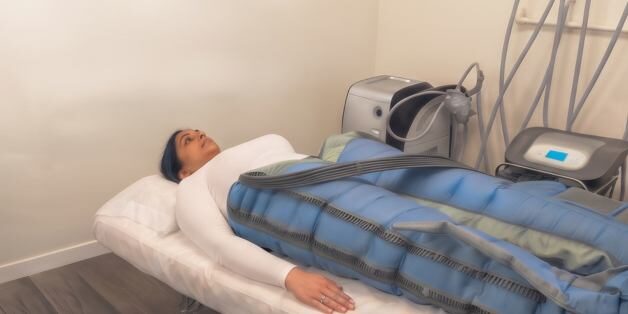
Body Wave lymphatic drainage is a compression-based treatment that creates a rhythmic, wave-like pressure over selected body areas. The patient wears a specialised garment connected to a device. Different chambers inflate and deflate in sequence, encouraging fluid movement towards the body’s natural drainage pathways.
This treatment category is also known as pressotherapy, sequential compression or intermittent pneumatic compression. In aesthetic practice, it is used for selected patients who feel bloated, puffy or heavy, and as a support treatment around body contouring plans.
The correct positioning is important. Body Wave may help a patient feel lighter and less congested, but it does not dissolve fat, build muscle, tighten loose skin or replace exercise, hydration and medical assessment.
How Body Wave Lymphatic Drainage Works
The role of the lymphatic system in fluid balance
The lymphatic system helps return excess tissue fluid, proteins and immune cells back into circulation. When this movement is slow or overloaded, a person may feel heaviness, tightness or swelling. The International Society of Lymphology describes lymphoedema as a condition requiring proper diagnosis and staged care, not casual treatment based only on appearance [1].
In aesthetic practice, not every patient with puffiness has lymphoedema. Many have milder fluid retention linked to heat, travel, long sitting hours or treatment-related inflammation. Body Wave may be considered only after red flags are ruled out.
How sequential compression creates a wave-like drainage effect
Body Wave uses sequential compression. This means pressure is applied in a planned order rather than all at once. The rhythmic inflation and release may help move fluid from the periphery towards central drainage routes.
Medical studies on intermittent pneumatic compression show that controlled compression can reduce limb volume in selected lymphoedema patients [2,3]. Cosmetic use is not the same as medical lymphoedema care, but the mechanical principle of external compression supporting fluid movement is related.
How Body Wave is different from a regular massage
A regular massage depends on hand pressure, therapist skill and patient tolerance. Body Wave is more standardised because pressure, rhythm and sequence can be adjusted. It should feel firm and controlled, not painful.
Manual lymphatic drainage still has a role, especially in trained rehabilitation settings. Reviews show its benefits vary by patient group, severity and whether it is combined with compression methods [4,5]. I see Body Wave as a structured, device-assisted option for selected aesthetic and wellness-support indications, not as a replacement for all manual techniques.
Why Choose Body Wave Lymphatic Drainage?
When I consider it for patients
I consider Body Wave when a patient has fluid-related heaviness, puffiness, mild bloating, post-travel congestion or sluggishness after prolonged sitting. I may also consider it during a body contouring journey, when the patient feels tight, sore or heavy after selected non-surgical treatments.
It is useful for patients who want a no-downtime support session and are not expecting fat reduction or skin tightening from the treatment itself.
What concerns it may support
Body Wave may support lighter-feeling legs, reduced puffiness, better comfort after long sitting hours and a smoother recovery experience in selected body contouring plans. Some patients also feel less bloated when the bloating is related to water retention or inactivity rather than a digestive condition.
I avoid exaggerated language. The treatment may support drainage and comfort. It should not be promoted as a cure, detox, fat-melting session or guaranteed inch-loss method.
What it cannot do
Body Wave cannot remove stubborn fat pockets, build muscle, tighten loose skin after pregnancy or major weight loss, or treat true lymphoedema without medical planning. It also cannot replace a physician’s evaluation if swelling is sudden, painful, one-sided or linked with redness, fever, calf pain or breathlessness.
Who Is a Good Candidate for Body Wave Lymphatic Drainage?
Patients with bloating, puffiness or water retention
A good candidate is someone who feels puffy, heavy or water-retentive, without warning signs of disease. In Mumbai, I often see this in patients who sit for long hours, travel frequently, sleep poorly or notice swelling during humid weather.
I also ask about menstrual patterns, hormonal medication, pregnancy status, recent weight changes and salt intake. These details help me separate routine fluid retention from concerns that need deeper evaluation.
Patients combining it with body contouring treatments
Body Wave can be used with selected body contouring plans, depending on the technology used, patient sensitivity and treatment area. After non-invasive fat reduction or muscle-toning treatments, some patients feel tightness, soreness or heaviness. A gentle drainage-focused session may help with comfort.
I do not combine treatments automatically. Sometimes it is better to wait. Sometimes pressure should be reduced. Sometimes the patient does not need Body Wave at all.
Patients seeking a non-invasive, no-downtime support treatment
Some patients want a supportive body treatment before travel, events or return to work after a hectic period. Body Wave can fit this need because it is non-invasive and usually does not require downtime.
However, “no downtime” does not mean “no screening.” Even a gentle treatment needs medical common sense.
When I May Refuse or Delay Body Wave Lymphatic Drainage
Medical conditions that need clearance first
I may refuse or delay Body Wave if a patient has uncontrolled cardiac disease, active infection, suspected deep vein thrombosis, severe symptomatic varicose veins, unexplained swelling, uncontrolled hypertension, acute inflammation, recent surgery without clearance, or pregnancy without appropriate medical approval.
Compression therapies are used in medicine, but they are not suitable for everyone. Even in lymphoedema care, compression must be adapted to diagnosis, tissue status and patient tolerance [1].
When swelling needs diagnosis, not drainage
One-sided leg swelling, sudden swelling, calf pain, redness, warmth, fever, chest discomfort or breathlessness should not be treated as cosmetic puffiness. These symptoms need medical attention. Facial, eye or leg swelling that appears suddenly or repeatedly may also need assessment for allergy, thyroid, kidney, medication-related or vascular causes.
Why safety screening matters before a “simple” treatment
Because Body Wave feels comfortable, patients may assume it is always safe. I ask about medical history, vascular issues, pain, recent surgery, pregnancy, medications and the swelling pattern. This prevents two common errors: treating the wrong condition and creating unrealistic expectations.
Side Effects and Safety Considerations
Common temporary effects
Common temporary effects include mild pressure marks from the garment, increased urination, light fatigue, temporary tenderness or a short-lived warm feeling. These usually settle without special care.
When to call your doctor
Call a doctor if swelling becomes sudden, painful, red, hot, one-sided or associated with fever, calf pain, chest pain or breathlessness. These are not normal treatment responses. Unusual bruising, persistent pain or worsening heaviness should also be reported.
Why pressure settings should not be aggressive
There is a common belief that stronger pressure gives better results. I disagree. Pressure must be purposeful, not forceful. Too much pressure may be uncomfortable and unsuitable for patients with tenderness, vascular sensitivity or post-treatment inflammation.
When Other Treatments May Be Prescribed Instead
Body Wave vs manual lymphatic drainage
Manual lymphatic drainage may be preferred when a trained therapist needs to work around delicate areas, scars, post-surgical zones or medically diagnosed lymphoedema protocols. Body Wave may be preferred when the goal is a structured, repeatable compression session for larger body areas.
Body Wave vs CoolSculpting
CoolSculpting is a fat-reduction technology for selected fat pockets. Body Wave does not freeze fat or reduce fat cells. It may support comfort around a body contouring plan, but it is not a replacement for fat reduction.
Body Wave vs Emsculpt NEO
Emsculpt NEO is used for muscle stimulation and fat reduction in selected candidates. Body Wave does not build muscle. If the concern is poor muscle tone, Body Wave alone is not the answer. If the concern is heaviness or fluid retention, it may be more relevant.
Body Wave vs skin tightening treatments
Skin tightening treatments target collagen, laxity and tissue firmness. Body Wave does not remodel collagen in that way. If loose skin is the main concern, I may discuss skin tightening options instead of positioning drainage as the solution.
How I Combine Body Wave With Other Treatments
After body contouring treatments
After body contouring, I may use Body Wave to support comfort and reduce the feeling of congestion. Timing depends on the treatment done, tenderness level and patient response. Two patients may undergo the same treatment but need different recovery support.
With cellulite protocols
Cellulite is influenced by fibrous bands, fat architecture, skin quality, circulation and fluid changes. Body Wave may support the fluid component, but it cannot fully correct cellulite by itself. It may be one part of a broader plan.
With post-weight-loss body plans
After weight loss, patients may notice heaviness, mild swelling, uneven texture or loose skin. Body Wave may support comfort and drainage, but loose skin needs separate assessment. The plan may include skin tightening, muscle-toning treatments, lifestyle support or referral, depending on the concern.
With lifestyle and movement guidance
I always discuss movement, hydration, sleep and long sitting patterns. Lymphatic flow is influenced by muscle activity and breathing. A patient who sits for ten hours may feel better after drainage, but the benefit will be limited if daily movement is ignored.
Why Body Wave Lymphatic Drainage Is an Innovative Support Treatment
What the science says about pneumatic compression and lymph movement
The idea behind Body Wave is not new, but its aesthetic use has become more refined. Intermittent pneumatic compression has been studied in lymphoedema care, with evidence showing limb-volume reduction and quality-of-life improvement in selected patients [2,3,6].
In aesthetic care, we use the mechanical principle for a different goal: comfort, fluid movement and recovery support.
Why the evidence should be interpreted carefully
Medical lymphoedema studies cannot be directly converted into cosmetic promises. A diagnosed lymphoedema patient is different from someone who feels puffy after travel or body contouring. A clinical trial measuring limb volume is also different from a patient’s subjective feeling of lightness.
Why clinical judgement matters more than trend-based claims
Wellness trends often use words like detox, sculpting and drainage loosely. The important question is not whether a treatment is popular. The important question is whether it matches the patient’s concern safely. Good outcomes come from correct selection, sensible pressure and realistic expectations.
What Most People Get Wrong About Body Wave Lymphatic Drainage
Myth 1: It melts fat
Body Wave does not melt fat. It may reduce the feeling of puffiness or water retention, but that is not the same as fat reduction.
Myth 2: More pressure means better results
More pressure is not always better. The right pressure should support drainage without discomfort. Pain means the session needs adjustment.
Myth 3: It is only for weight loss
Body Wave is not a weight-loss treatment. It may support body wellness and contouring plans, but weight management still depends on nutrition, movement, sleep, hormones and medical factors.
Myth 4: Anyone with swelling can do it safely
Swelling is a symptom, not a diagnosis. Sudden, painful, one-sided or unexplained swelling should be assessed before any drainage treatment.
Myth 5: One session permanently fixes fluid retention
One session may help a patient feel lighter, but fluid retention can return if the cause remains. Travel, long sitting, hormonal shifts, high salt intake, poor sleep and low movement can all influence recurrence.
Results, Expectations and Maintenance
What changes patients may notice
Patients may notice a lighter feeling, reduced tightness, less puffiness or better comfort in treated areas. These changes are usually comfort-based rather than dramatic visible transformations.
How soon patients may feel lighter
Some patients feel lighter soon after the session. Others notice a gradual response after repeated sessions, especially when Body Wave is part of a structured body plan.
Why results vary between patients
Results vary because bodies vary. A patient with travel-related fluid retention may respond quickly. A patient with chronic swelling, venous issues or low activity may need deeper evaluation. A patient seeking fat loss may feel disappointed if expectations are not set correctly.
How maintenance is planned
Maintenance may be occasional or plan-based. Some patients use it around travel, events or body contouring sessions. Others use it as part of a wellness routine. I prefer reviewing response rather than prescribing the same schedule for everyone.
Patient Questions I Often Get
Is Body Wave Lymphatic Drainage painful?
No, it should not be painful. You may feel rhythmic pressure and release, but the session should remain comfortable. If it hurts, pressure should be reduced or the session reviewed.
Can it help with bloating?
It may help when bloating is linked to water retention, sluggishness or inactivity. It will not treat digestive disease, food intolerance, constipation, hormonal disorders or abdominal swelling that needs diagnosis.
Is it useful after CoolSculpting or Emsculpt NEO?
It may be useful as a support treatment for selected patients after body contouring, mainly for comfort and drainage support. Timing should be decided after assessing tenderness and response.
How many sessions are usually needed?
The number depends on the goal. Some patients use it occasionally. Some include it in a body contouring plan. Some need reassessment if swelling keeps returning.
Can I do it if I have varicose veins?
It depends on severity and symptoms. Mild visible veins are different from painful, swollen or medically significant venous disease. If there is pain, skin change, ulceration, clot history or significant swelling, medical clearance may be needed.
Is Body Wave Lymphatic Drainage safe for everyone?
No treatment is safe for everyone. Body Wave may not be suitable for patients with certain heart, vascular, infection-related, pregnancy-related or unexplained swelling concerns. Screening is important before starting.
Citation Sources
- Executive Committee of the International Society of Lymphology. The diagnosis and treatment of peripheral lymphedema: 2020 Consensus Document of the International Society of Lymphology. Lymphology. 2020. https://pubmed.ncbi.nlm.nih.gov/32521126/
- Feldman JL, Stout NL, Wanchai A, Stewart BR, Cormier JN, Armer JM. Intermittent pneumatic compression therapy: a systematic review. Lymphology. 2012. https://pubmed.ncbi.nlm.nih.gov/22768469/
- Dunn N, Williams EM, Dolan G, Davies JH. Intermittent Pneumatic Compression for the Treatment of Lower Limb Lymphoedema: A Pilot Trial of Sequencing to Mimic Manual Lymphatic Drainage Versus Traditional Graduated Sequential Compression. Lymphat Res Biol. 2022. https://pmc.ncbi.nlm.nih.gov/articles/PMC9603280/
- Thompson B, Gaitatzis K, Janse de Jonge X, et al. Manual lymphatic drainage treatment for lymphedema: a systematic review of the literature. J Cancer Surviv. 2021. https://pubmed.ncbi.nlm.nih.gov/32803533/
- Lin Y, Yang Y, Zhang X, et al. Manual Lymphatic Drainage for Breast Cancer-related Lymphedema: A Systematic Review and Meta-analysis. Clin Breast Cancer. 2022. https://pubmed.ncbi.nlm.nih.gov/35370085/
- Zaleska M, Olszewski WL, Durlik M. The Effectiveness of Intermittent Pneumatic Compression in Long-term Therapy of Lymphedema of Lower Limbs. Lymphat Res Biol. 2014. https://pmc.ncbi.nlm.nih.gov/articles/PMC4062105/