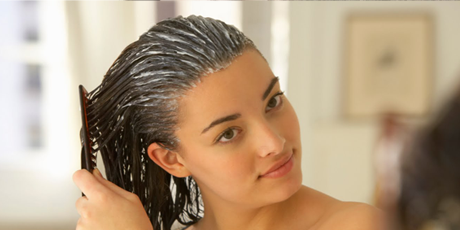
Dandruff can be controlled successfully, but may take time. With perseverance and patience, oiliness and dead-cell build-up can be washed away by cleansing daily with mild shampoos and with dandruff shampoos for better efficacy. If you suffer from a flare-up of symptoms of seborrheic dermatitis, you may need topical and oral medications for reducing inflammation and irritation.
Treatment options
Since excess oil is the prime reason for dandruff, using the right anti-dandruff shampoos on a regular basis will keep the scalp clean and control dandruff.
Anti-dandruff shampoos
- Ketoconazole shampoos – broad spectrum anti-fungal shampoos – available both as prescription and OTC.
- Selenium sulfide shampoos – decrease the amount of malassezia present; slow down the abnormal cell growth cycle.
- Shampoos with salicylic acid – help in eradicating scale formation but make the scalp dry; must be used with a conditioner.
- Tar-based shampoos – slow down the new cell growth cycle – suitable for seborrheic dermatitis, psoriasis and dandruff.
- Zinc pyrithione shampoos – antibacterial and antifungal for decreasing the scalp fungus.
Maximum benefits
Your doctor will check your hair and other symptoms and suggest the best anti-dandruff shampoo. And you may need to
- Try various shampoos and try a combination of two types to see which suits best.
- Start on a daily basis, gradually to two times a week and once dandruff is controlled, reduce the frequency.
- Check directions for use and do as directed; rubbing into scalp, wait for five minutes and rinse thoroughly without any residue.
- Apply shampoo to all affected areas – scalp, ears, face, chest and shoulders.
Topical treatment
If your dandruff coexists with seborrheic dermatitis, with severe symptoms of scaling all over the body, and severe inflammation, your GP will recommend use of topical creams or lotions of
- Ketoconazole.
- Corticosteroids
- Hydrocortisone 1%.
- Cortisone.
- Prescription strength shampoos or foams.
Home remedies
A number of products help to cleanse the scalp and facial areas and/or reduce dandruff like
- White vinegar – cleanses.
- Tea tree oil – on scaly patches, reduces dandruff.
- Aloe – reduces dandruff.
Tips for management
- Make lifestyle changes to handle stress, and stress-related issues.
- Eat a balanced, nutritious diet.
- Reduce harmful hair-styling products.
- No greasy hair-care or skin cosmetics.
- Washing of the scalp everyday with mild shampoo.
- No hot showers.
- Do not rub scalp vigorously with towel.
- Avoid tying wet hair.
- Do not use close-fitting caps, hats etc.
- Brushing your hair down steadily and firmly to take away excess oil from scalp.
Prediction
Dandruff can be a chronic condition and may demand long-term treatment and commitment. But it is a completely curable condition with right diagnosis and appropriate treatment.
[tab]
[tab_item title=”References”]
- Indian Journal of Dermatology, Venereology and Leperology – Multicenter, open-label, non-comparative study of a combination of polytar and zinc pyrithione shampoo in the management of dandruff (Shailendra N Sawleshwarkar, Viraj Salgaonkar, Chetan Oberai) view
- Mayo Clinic – Dandruff: Lifestyle and Home Remedies view
- Mayo Clinic – Dandruff: Alternative medicine view
- WebMD – Dandruff Natural Fixes view
- British Association of Dermatology – Seborrhoeic Dermatitis view
[/tab_item]
[/tab]