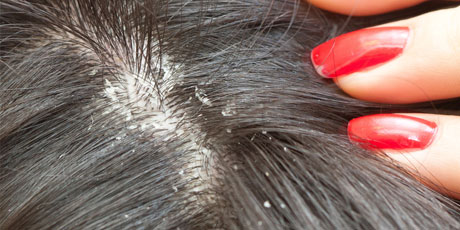
Dandruff is a chronic scalp condition. Most often it is accompanied by itchy feeling and some dry and flaky looking stuff that falls on your collar or shoulders. It is not contagious, not infectious and not a critical medical problem either. But the white/grey looking dry skin flakes can look embarrassing on your dress. The best news is that it can be controlled.
Who can get dandruff?
Almost all can get dandruff. It usually occurs in young adults, and can last throughout life. It can occur in all types of ethnic people equally.
- Males are more susceptible to get dandruff than females.
- People with oily skins and oily scalps are more prone to get dandruff.
- More possible if your diet is deficient in zinc, certain fats and B vitamins.
- More susceptible are people with medical conditions like
- Parkinson’s disease and other neurological conditions.
- Traumatic conditions like heart attack, stroke.
- Poor immune system.
Causes
The main cause of dandruff is due to the changes in the skin of your scalp. Dead skin cells are cast off by our body continually and new cells are formed. This cyclic process is unseen and unnoticed often. But due to some reason, skin cells grow too quickly and are cast off as quickly in the form of grey/white powdery stuff known as dandruff. A fungus called malassezia may trigger speeding of cell formation and casting off cycle.
Possible triggers
There are some triggers which can worsen dandruff as well causing it.
- Stress – emotional and mental trauma.
- A common skin condition, seborrheic dermatitis, which causes oily skin.
- Excess and repeat use of hair gel, mousse, and hairspray.
- Inadequate Hygiene – The skin on your scalp may start peeling and flaking if it is not shampooed frequently enough. The dead skin cells accumulate on the scalp and eventually lead to dandruff.
- Cold and dry winter weather.
- Psoriasis.
Dandruff and seborrheic dermatitis
Dandruff is not directly connected to our hair at all. But it occurs wherever we have hair follicles. Palms and soles do not get scaly patches. When dandruff combines with seborrheic dermatitis, along with scalp, symptoms like scaling and itching can occur on
- Face.
- In/around ears.
- Chest area and between shoulder blades.
- Where skin-folds are present like groin, armpit and inner thighs.
Prognosis
Nearly 50% of the world population has been affected by dandruff some time or other. Even infants have what is known as ‘cradle cap’. While some are more prone to have it life long, some have it in cycles of flare-ups and clearing. With regular and right skin and hair hygiene, it can be controlled effectively.
[tab]
[tab_item title=”References”]
[/tab_item]
[/tab]