What Is Rejuran | How It Works | Who It’s For | Treatment Journey | FAQs
Why More Patients Are Asking About Rejuran?
The skin quality concerns I commonly hear in clinic
Many patients who ask me about Rejuran are not looking for dramatic change. They usually describe skin that looks tired, less fresh, uneven, or slightly worn out. They may notice fine under-eye creasing, early textural ageing, acne marks that linger, or a loss of bounce that good skincare has not meaningfully improved.
That is an important clinical distinction. These are often skin quality concerns, not major volume loss or heavy laxity. In current aesthetic dermatology, skin boosters and polynucleotide-based injectables are drawing attention because they are used to support hydration, elasticity, texture, and overall skin quality rather than simply fill space.[1,4]
Why “tired skin” is often a texture and repair issue, not just an ageing issue?
Patients sometimes assume that every early sign of facial ageing needs a filler. In practice, that is not always true. Skin can look dull or fatigued because of sun exposure, pollution, dehydration, barrier disruption, inflammation after acne, and the gradual slowdown of repair processes that comes with age. In Indian skin, uneven tone and textural irregularity often influence perceived ageing as much as lines do.
This is where Rejuran enters the conversation. I do not see it as a face-changing treatment. I see it more as a skin quality treatment when the goal is repair-oriented rejuvenation.
What Rejuran Is?
What Rejuran contains
Rejuran is an injectable skin booster based on polynucleotides. These are purified DNA fragments used in regenerative and aesthetic medicine. The purpose is not to create bulk in the way a conventional dermal filler does. Instead, the product is used intradermally, or very superficially in the skin, with the aim of supporting a healthier tissue environment over time.[1,2]
Rejuran, polynucleotides, and “salmon DNA” — what these terms actually mean
One of the most common points of confusion is the phrase “salmon DNA”. What this usually refers to is the source material used in the production of polynucleotide-based formulations. It does not mean raw animal tissue is injected into the skin. These are purified nucleic acid fragments processed for medical use.[1]
From a dermatology perspective, the more useful term is polynucleotides. The recent literature describes them as agents used for skin quality, repair-oriented rejuvenation, and supportive tissue regeneration, although mechanisms and protocols are still being refined.[1,2]
How Rejuran Works?
How polynucleotides support skin repair?
Polynucleotides are thought to support the skin through hydration-supporting, scaffold-like, and tissue-repair effects. Reviews and consensus papers describe a role in creating a favourable environment for fibroblast activity, extracellular matrix support, and dermal revitalisation.[1,2,4] In simple terms, the goal is to help skin behave like healthier skin.
What Rejuran may improve, and what it will not do on its own?
Based on current evidence and clinical use patterns, Rejuran may be considered when the aim is to improve surface quality, fine creasing, post-acne textural change, under-eye crepiness in select cases, or overall skin resilience.[1,3,5] It may also have a role when fragile or stressed skin needs a more repair-focused approach.
What it does not do well on its own is equally important. It does not meaningfully lift heavy jowls. It does not replace a well-indicated filler where volume loss is the main issue. It does not tighten advanced laxity in the way a suitable skin tightening treatment may. It does not erase deeper scars by itself.
Who I Consider for Rejuran, and Who I Do Not?
When I consider Rejuran in practice?
I usually think about Rejuran when the main complaint is skin quality rather than shape. That may include patients with early textural ageing, tired-looking skin, fine superficial lines, acne-marked skin that needs a more restorative approach, or under-eye skin that looks thin and crepey but does not need volumisation as the primary correction.
It tends to suit patients who understand that gradual, subtle, quality-focused outcomes can still be clinically valuable. These are often patients who say they want their skin to look healthier, not obviously altered.
When I prefer to say no, delay, or choose another treatment first?
I am cautious when there is active acne inflammation, active skin infection, uncontrolled rosacea or dermatitis, significant barrier damage, unrealistic expectations, or a major event immediately ahead with no recovery window. I may also defer in pregnancy and breastfeeding, or when the relevant medical history suggests postponement is safer.
There are also patients for whom Rejuran is simply not the leading tool. If someone has clear facial hollowing, deeper folds from structural loss, marked sagging, or scars that need a more targeted scar protocol, I would usually discuss other options first.
Why I May Choose Rejuran for a Patient?
The situations where skin quality matters more than simple “plumping”
There is a category of patient where adding volume can actually make the plan less elegant. A slightly puffy correction in a person whose real issue is crepey, dehydrated, or inflammation-prone skin does not always look refined. In those cases, focusing on tissue quality first can be a more sensible strategy.
This is especially relevant in patients who want a fresher look but are wary of looking done. Patients concerned about dark circles and thin under-eye skin sometimes find a skin quality approach more appropriate than a volume approach alone.
Why treatment selection depends on concern, skin behaviour, and downtime tolerance?
I do not select a treatment only by diagnosis. I also select by skin behaviour and patient lifestyle. Some skin bruises easily. Some develops post-inflammatory pigmentation more readily. Some patients can accept visible micropapules for a short period, while others need to return to work or social settings quickly. In Mumbai, that practical piece matters.
So my decision framework is usually this: what is the main complaint, what tissue level is involved, what result is realistic, what downtime is acceptable, and what alternative would outperform it.
The Rejuran Treatment Journey
Before treatment — how I assess the face and set expectations
Before I plan Rejuran, I assess skin thickness, hydration, texture, acne activity, pigment tendency, under-eye anatomy where relevant, and whether the concern is epidermal, dermal, structural, or mixed. Many aesthetic complaints are layered, so this step matters.
I also explain that Rejuran is usually approached as a course, not a one-off session. The exact number and spacing depend on the indication, the area being treated, and the patient response. Consensus and review literature also reflects variation in techniques and protocols across practice settings.[2,3]
During treatment — what the session usually feels like
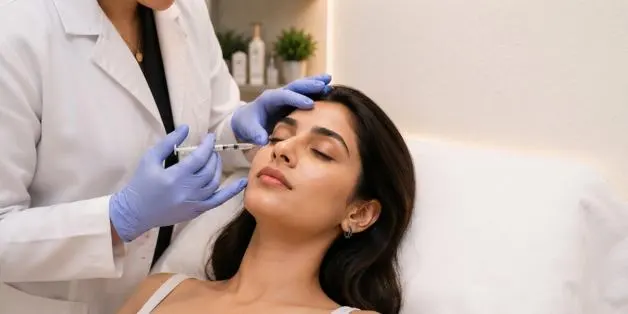
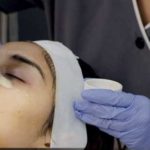
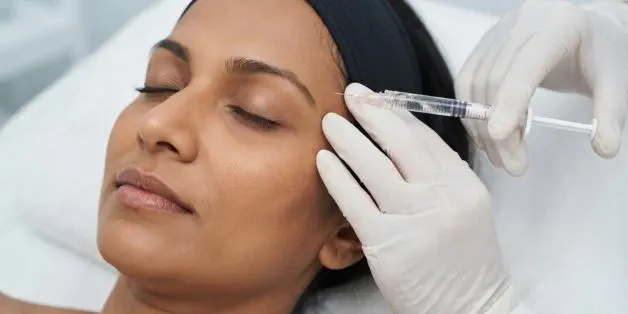
The session is usually done with topical numbing, though comfort levels vary by area and technique. Rejuran is generally delivered through multiple small intradermal injections. Patients commonly feel pricks, mild stinging, or temporary tightness. The under-eye region can feel more sensitive than broader facial areas.
Technique matters. Depth, spacing, area selection, and product placement influence not only comfort but also recovery. This is one reason I do not think injectable skin boosters should be treated as casual procedures.
After treatment — what recovery typically looks like
Recovery is usually manageable, but it is not invisible. Temporary redness, swelling, pinpoint marks, small raised bumps at injection points, and occasional bruising can happen.[2,3] In some patients these settle quickly. In others, especially in delicate or thin skin, they may remain noticeable for a little longer.
I usually advise patients to think practically about timing. If you have an important wedding event, camera-heavy work schedule, or immediate travel, that should be factored in before treatment.
Side Effects and Safety — What Patients Should Know
Common short-term effects after treatment
The common short-term effects are usually procedure-related and local. These may include transient redness, swelling, tenderness, tiny blebs or bumps where product has been placed, and bruising in some patients.[2,3] Reviews of polynucleotide use in aesthetic medicine generally describe side effects as mild and transient, but that should not be confused with no downtime at all.[1,3]
Important precautions, contraindications, and when to seek review
I am more careful, or may avoid treatment, in patients with active local infection, significant inflammatory skin disease in the treatment zone, recent irritation from aggressive skincare, poor timing around major events, pregnancy or breastfeeding, or medical histories that make an elective injectable a less comfortable choice.
Patients should seek review if pain is increasing rather than settling, swelling is disproportionate, a bruise is expanding unusually, or any change feels outside what was explained. Serious complications are uncommon in routine practice, but injectable medicine should always be approached with respect rather than casualness.
When I Prescribe Other Treatments Instead?
When skin boosters, hyaluronic acid injectables, lasers, or biostimulators may be more appropriate?
There are many situations where I would prescribe another treatment instead of Rejuran, or before it. If there is true volume loss or a hollow that changes facial proportions, a hyaluronic acid injectable may be more logical. If the dominant issue is pigmentation, vascularity, or resurfacing need, laser skin resurfacing or other device-based options may contribute more.
For acne scars, I rarely think in single-treatment terms. Rejuran can be supportive in selected cases, but it is not a universal scar solution. Microneedling or other targeted scar protocols may play a primary role.
Why Rejuran is not a replacement for every rejuvenation treatment?
Ageing and skin damage happen at multiple levels. Pigment, texture, vascular change, volume loss, ligament laxity, fat redistribution, and bone support are not the same problem. No single injectable can honestly replace every rejuvenation category. When I choose Rejuran, I choose it for a defined role.
How I Personalise Rejuran and Combine It With Other Treatments?
Combining Rejuran with injectables, devices, and medical skincare
In some patients, Rejuran may sit well alongside medical skincare that improves barrier health and pigment control. In others, it may be combined, in a staged manner, with neuromodulators, selected fillers, platelet-rich plasma, or energy-based treatments when the concern is mixed.[2]
The key is not combination for its own sake. The key is therapeutic logic. If I combine treatments, each component should be solving a different layer of the problem.
Why sequence, spacing, and skin condition matter more than trend-driven combinations?
Patients often ask whether multiple procedures can be done close together because online content tends to present combinations as shortcuts. In reality, sequence matters. Inflamed skin does not behave like calm skin. Sensitive Indian skin, especially with a history of acne, eczema, rosacea, or pigmentation, can react unpredictably if too much is done too quickly.
This is why I prefer structured planning. Trend-driven stacking can look efficient on paper, but clinically it can blur cause and effect and make both safety and outcomes harder to judge.
Why Rejuran Is Considered Innovative?
What the current science suggests?
Rejuran is considered innovative mainly because it sits within the broader move toward restorative, skin-quality-focused injectables. Current reviews suggest that polynucleotides may improve texture, elasticity, hydration, and overall facial appearance in selected patients, while systematic review data suggests encouraging but still limited evidence quality.[1,3] An Asian clinical study also reported improvement in surface evenness, firmness, pigmentation, and radiance over follow-up after a structured treatment course.[5]
Where the evidence is promising, and where I remain cautious?
I find the evidence promising in the skin quality domain — texture, fine lines, hydration-related appearance, and a broader skin health narrative that many patients now value. Consensus work has also helped frame practical use, including area-based recommendations and expected local reactions.[2]
Where I remain cautious is in overstatement. Protocols vary, study sizes are still modest, comparator data is limited, and not every indication has the same quality of evidence.[1,3]
What Most People Get Wrong About Rejuran?
Myth 1 — it is just another filler
No. Rejuran does not belong in the same expectation bucket as a traditional filler. Fillers are generally used to replace or add volume in a targeted anatomical plane. Rejuran is more about skin quality and repair-oriented support.
Myth 2 — it works the same for everyone
It does not. Skin age, inflammation history, barrier quality, pigment tendency, anatomy, lifestyle, and aftercare all affect how a patient responds. Even the same product can behave differently in a thin under-eye area versus broader cheek skin.
Myth 3 — more sessions always means better outcomes
Not necessarily. Better selection, better spacing, and a better overall plan matter more than chasing session numbers. If the diagnosis is wrong, repeating a treatment does not correct the original mismatch.
Myth 4 — it can replace a full treatment plan
Rejuran may be one part of a rejuvenation plan, especially where the skin itself needs support, but it cannot replace judgement. If laxity, volume loss, scar tethering, pigment, or dynamic wrinkling are driving the complaint, they need to be addressed on their own terms.
Patient Questions I Often Get About Rejuran
How many sessions are usually needed?
Usually, patients are advised to think in terms of a treatment course rather than a single sitting. The exact number depends on the indication, area, tissue quality, and how the skin responds over time. Published protocols and expert recommendations vary, which is why I prefer not to force every patient into a standard template.[2,3]
Is Rejuran painful?
It is tolerable for most patients, but painless would not be an honest word. With numbing, the discomfort is often manageable. Some areas, especially around the eyes, can feel more sensitive. Technique and injector experience affect comfort meaningfully.
When do results usually start to show?
Patients should usually think in weeks, not hours. Some may notice an early improvement in hydration or freshness, but the more meaningful changes in surface quality are generally gradual. Benefits are typically evaluated over a treatment course and follow-up period rather than immediately after one session.[3,5]
Can Rejuran be done before an event?
It can be, but timing matters. Because temporary bumps, redness, or bruising can occur, I prefer not to place a recovery-dependent injectable too close to an important event. If the patient is event-focused, I plan backwards from the date rather than forwards from convenience.
Can it be combined with Botox, fillers, or lasers?
In selected patients, yes. Combination planning can be very effective when each treatment has a distinct role. The important part is staging and judgement, not simply adding procedures because they are popular. The skin must be in a suitable condition, and the sequence should make clinical sense.[2]
Is Rejuran suitable for Indian skin?
It may be suitable for Indian skin in selected cases, but Indian skin is not one uniform category. Pigment tendency, acne history, barrier sensitivity, and recovery behaviour differ from one patient to another. I make decisions by examining the skin in front of me, not by trend alone.
My Final Word on Where Rejuran Fits
Why I see it as a skin quality treatment, not a shortcut treatment?
My view is that Rejuran fits best when the goal is better skin quality, not a shortcut to every aesthetic outcome. Used well, it can support a fresher, healthier-looking skin surface in the right patient. Used indiscriminately, it can create confusion because the result the patient actually wants may belong to a different treatment category.
Why careful patient selection matters more than hype?
Every few years, aesthetic medicine develops a new vocabulary that spreads faster than clinical nuance. Rejuran is part of an important shift toward skin quality and regenerative thinking, but it still needs to be used with restraint, honesty, and diagnostic clarity. In my practice philosophy, that is the real value of expertise.
References
- Cavallini M, Bartoletti E, Maioli L, et al. Consensus report on the use of PN-HPT (polynucleotides highly purified technology) in aesthetic medicine. J Cosmet Dermatol. https://pmc.ncbi.nlm.nih.gov/articles/PMC7984045/
- Lee KWA, Kim JH, Moon HJ, et al. Polynucleotides in Aesthetic Medicine: A Review of Current Practices and Perceived Effectiveness. Int J Mol Sci. https://pubmed.ncbi.nlm.nih.gov/39125793/
- Lampridou S, Koulouri A, Kokkalis ZT, et al. The Effectiveness of Polynucleotides in Esthetic Medicine: A Systematic Review. J Cosmet Dermatol. https://pubmed.ncbi.nlm.nih.gov/39645667/
- Rho NK, Kim HS, Kim SY, Lee W. Injectable Skin Boosters in Aging Skin Rejuvenation: A Current Overview. Arch Plast Surg. https://pubmed.ncbi.nlm.nih.gov/39544509/
- Lim TS, Liew S, Tee XJ, et al. Polynucleotides HPT for Asian Skin Regeneration and Rejuvenation. Clin Cosmet Investig Dermatol. https://pubmed.ncbi.nlm.nih.gov/38371328/