When the Face Looks Tired Before You Feel Tired
Many patients come to me with a concern that sounds small but feels very personal. They say, “My face looks tired,” “My cheeks look lower,” “My jawline is not as sharp,” or “I want to look fresh, but not different.” They are not always in need of a facelift. They need a treatment that will give them better support, better firmness, and a face that reflects how they feel inside.
As a dermatologist, I do not assess facial ageing as only a skin problem. The face ages in layers. Skin quality changes, collagen support reduces, fat pads shift, facial muscles lose tone, and bone support changes over time. This is why the right treatment depends on the ageing pattern, not just the treatment name.
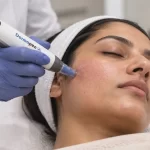
Emface is a non-invasive technology that works on both skin and selected facial muscles. It combines synchronised radiofrequency with high-intensity facial electromagnetic stimulation, also called HIFES. Studies have reported improvement in facial laxity, skin quality, muscle activity, and midface parameters after treatment series, though longer-term and larger studies are still useful [1,2].
What Is Emface?
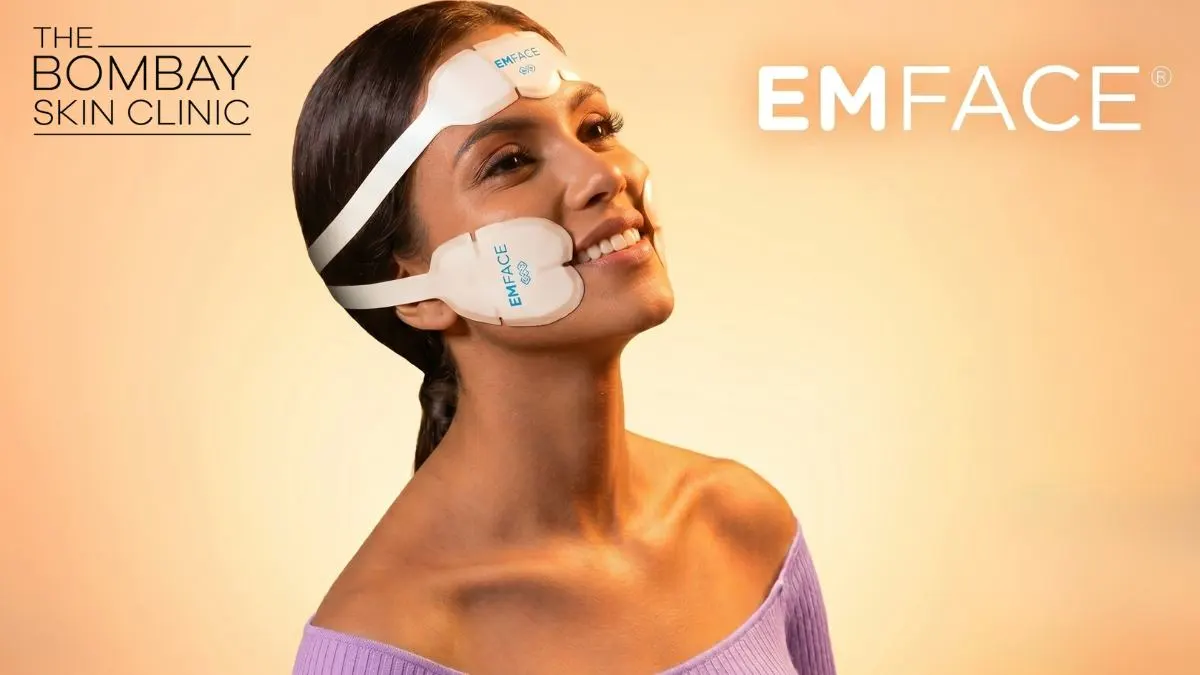
Emface is a non-invasive facial rejuvenation treatment developed by BTL Technologies. It is designed for patients who want facial firming, toning, and mild lifting without needles, cuts, or typical post-procedure downtime.
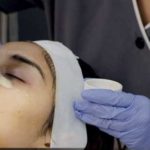
The treatment uses applicators placed on specific areas of the face. These applicators deliver two forms of energy at the same time. Radiofrequency gently heats tissue to support collagen remodelling. HIFES stimulates selected facial muscles in a controlled way. Together, they aim to improve skin firmness and facial muscle tone.
Emface is different from treatments that only tighten skin, only relax muscles, or only add volume. Its unique position is that it addresses two ageing layers in one sitting: skin and muscle. This can make it useful for patients with early facial laxity, mild descent, and reduced facial tone.
However, Emface is not a surgical facelift. It does not remove loose skin. It does not replace fillers when true volume loss is the main concern. It does not replace neuromodulators when expression lines are caused by overactive muscles. It is best understood as a non-invasive support treatment for selected faces.
How Does Emface Work?
Radiofrequency for Skin Firmness
Radiofrequency, or RF, is used in aesthetic dermatology to heat deeper tissue in a controlled way. This heat response may support collagen remodelling and improve firmness over time. In Emface, synchronised RF is delivered with HIFES so that skin support and deeper soft tissue behaviour are addressed together.
Research on synchronised RF and HIFES has shown evidence of cutaneous remodelling and improvement in laxity-related measures [3]. In practice, I interpret this carefully. RF is not magic heat. It has to be delivered safely, with correct placement, controlled energy, and the right patient selection.
HIFES for Facial Muscle Stimulation
HIFES stands for high-intensity facial electromagnetic stimulation. It stimulates selected facial muscles through controlled contractions. The aim is not to freeze expression. It is to improve tone in muscles that contribute to lift and facial support.
A review of RF and HIFES explains the treatment rationale through facial anatomy and age-related soft tissue changes [4]. Another clinical study reported improvement in zygomaticus major muscle thickness, electromyography signal strength, skin displacement, and midface volume after a treatment series [2].
This is clinically interesting because the zygomaticus region contributes to midface lift and expression. Still, I explain to patients that evidence supports the mechanism, but it does not guarantee the same visible change for every face.
Why Treating Skin and Muscle Together Matters
A tired face is rarely caused by only one factor. A patient may have early laxity, mild cheek descent, weaker facial support, and reduced skin firmness at the same time. Treating only the surface may not be enough. Adding volume may not suit a naturally full face. Relaxing muscles may help lines, but it will not build lift.
This is why I assess the face dynamically. I look at rest position, smile support, asymmetry, skin thickness, fat distribution, and laxity. The real question is not, “Is Emface good?” The better question is, “Is Emface the right tool for this face?”
Why Choose Emface Treatment?
Patients usually consider Emface treatment in Mumbai when they want natural-looking improvement and prefer a needle-free option. Some are not ready for injectables. Some want maintenance support for tone and firmness.
When I Consider Emface for a Patient
I consider Emface when I see mild to moderate facial laxity, early cheek descent, reduced facial tone, or a tired midface pattern. It may suit patients who want gradual improvement and are comfortable with a series-based treatment plan.
I also consider it when adding volume is not the most elegant answer. If a patient already has a full face, more filler can sometimes make the face look heavier. In such cases, a toning and firming approach may be more appropriate.
Who May Not Be the Right Candidate?
I may not advise Emface for severe laxity, marked jowling, heavy tissue descent, unrealistic expectations, or a clear need for surgical correction. I also avoid or defer it in patients with certain implanted electronic devices, metal implants in the treatment area, active infection, uncontrolled medical concerns, or pregnancy, depending on screening.
Sometimes, the most ethical decision is to say no. If a patient expects a surgical lift from a non-surgical treatment, I would rather explain the limitation clearly.
What Emface Can and Cannot Do
Emface can support skin firmness, facial tone, and mild lifting in selected patients. It may improve the appearance of tiredness, early descent, and mild laxity.
Emface cannot remove excess loose skin. It cannot replace a facelift in advanced laxity. It cannot correct deep volume loss like fillers or biostimulators. It also cannot stop ageing. Results vary because anatomy, age, skin quality, lifestyle, and baseline laxity all differ.
When Other Treatments May Be Prescribed Instead
Emface is not the answer for every face. In good aesthetic medicine, diagnosis comes before the device.
Emface vs HIFU
HIFU is often considered when deeper tissue tightening is needed in selected areas. Emface is different because it combines RF-based skin heating with facial muscle stimulation. If the main issue is deeper tightening, HIFU may be more suitable. If the issue is mild laxity with reduced tone, Emface may be considered.
Emface vs Dermal Fillers
Dermal fillers are used when the main issue is volume loss, contour deficiency, or structural support. Emface does not replace lost volume in the same way. If a patient has hollowing or clear volume depletion, filler or a biostimulatory approach may be discussed. If the face is already full, I may be cautious with filler and consider toning options instead.
Emface vs Botox
Botox and other neuromodulators relax overactive muscles that cause expression lines. Emface stimulates selected facial muscles. For strong frown lines, forehead lines, or crow’s feet caused by repeated movement, neuromodulators may be more relevant. For tone and early lift, Emface may play a different role.
Emface vs Thread Lift or Endolift
Thread lifts and laser-assisted tightening procedures such as Endolift are more interventional than Emface. They may be considered when tissue repositioning or more focused tightening is needed. Emface may suit patients who want a non-invasive, needle-free route and have milder concerns.
How I Personalise Emface With Other Treatments
For Early Facial Laxity
For early laxity, Emface may be used as a standalone option or as part of a plan with skin quality treatments. The aim is to support firmness while preserving the natural character of the face.
For Volume Loss
If volume loss is present, I identify where it is coming from: cheek flattening, temple hollowing, under-eye transition, or lower face support loss. Emface may help tone and firmness, but it will not replace volume where volume is truly missing. In such cases, fillers or collagen-stimulating treatments may be discussed carefully.
For Skin Texture, Pores, and Fine Lines
If the patient has pores, rough texture, acne marks, pigmentation, or fine lines, Emface alone may not address all concerns. Skin-focused treatments such as lasers, peels, microneedling-based treatments, or other dermatology protocols may be considered depending on skin type and concern.
For Jawline and Lower Face Definition
For jawline concerns, I assess whether the issue is skin laxity, fat, muscle activity, bone structure, or posture-related appearance. Emface may help selected patients with tone and mild lift, but it is not a fat reduction or surgical jawline procedure.
For Patients Who Want a Natural, Less-Is-More Result
Some patients want to look fresh but not treated. For them, I focus on restraint. The plan may involve Emface, skin quality improvement, small-volume correction, or no injectable treatment at all. A less-is-more approach does not mean doing less thinking. It means choosing only what the face genuinely needs.
Why Emface Is Innovative: What the Science Suggests
Emface is innovative because it brings facial muscle stimulation into non-surgical rejuvenation in a structured way. Traditional devices often focus on skin heating or tissue tightening. Injectables focus on volume, movement, or collagen stimulation. Emface adds another layer by addressing facial muscle tone with RF-based tissue heating.
The Clinical Logic Behind RF and HIFES
The clinical logic is that facial ageing includes both skin changes and muscle-related changes. HIFES stimulates selected muscles, while synchronised RF provides controlled heating. Early research suggests this combination may support muscle activity, tissue remodelling, and improvement in facial laxity markers [2,3,4].
For the right patient, this gives dermatologists another option between skincare-only plans and more invasive procedures.
What Current Studies Show
Several studies and reviews have evaluated synchronised RF with HIFES. A 2025 study in Asian subjects reported that combined synchronous RF and HIFES improved facial skin laxity and quality in the studied group [1]. Another study reported improvements in midfacial aesthetics, including muscle thickness and facial volume measures after four treatments [2]. Research has also explored wrinkle reduction and brow position changes with RF and HIFES applied to the frontal region [5].
These findings are promising, but they should be interpreted responsibly. Many studies are recent or small. Patient selection remains essential.
Side Effects and Safety Considerations
Emface is generally positioned as a non-invasive treatment with minimal downtime, but non-invasive does not mean no screening is needed. Every energy-based treatment deserves proper evaluation.
Common Temporary Effects
Common temporary effects may include warmth, redness, tingling, mild tenderness, or a sensation of facial muscle fatigue. These usually settle without major interruption to routine activities.
Any unusual pain, prolonged redness, swelling, skin irritation, or discomfort should be reported to the treating doctor. I prefer patients to communicate early rather than wait and worry.
When I Would Pause or Refuse Treatment
I would pause or refuse treatment if there is an active skin infection, open wound, uncontrolled inflammation, unsuitable implant or device history, pregnancy, unclear medical risk, or unrealistic expectation. I am also cautious when a patient has recently had another procedure and the tissue needs time to settle.
Why Medical Screening Matters
Medical screening protects the patient and improves planning. It helps identify contraindications, previous procedures, medication history, healing tendencies, and expectation mismatch.
What Most People Get Wrong About Emface
Myth 1: Emface Replaces Every Injectable Treatment
Emface does not replace every injectable. If the issue is deep volume loss, fillers or biostimulators may be more suitable. If the issue is overactive expression lines, neuromodulators may be more appropriate. Emface is useful when skin firmness and facial muscle tone are important parts of the concern.
Myth 2: It Gives a Surgical Facelift Result
Emface is not surgery. It cannot remove excess skin or reposition deeper tissues like a facelift. It may help selected patients with mild to moderate concerns, but it should not be positioned as a surgical substitute.
Myth 3: It Is Only for Older Patients
Emface is not only for older patients. Some younger patients may consider it for early laxity, facial tiredness, or prevention-focused rejuvenation. Age alone is not the deciding factor. Anatomy and indication matter more.
Myth 4: More Energy Means Better Results
More intensity is not always better. Energy settings must be tolerable, safe, and appropriate for the area. A medically guided treatment is not about pushing the maximum setting. It is about choosing the right setting.
Myth 5: If There Is No Downtime, It Is Not Powerful
Downtime is not the only measure of treatment value. Some non-invasive treatments work gradually through controlled tissue response. Lack of major downtime does not mean the treatment has no effect. At the same time, no downtime should not be confused with results that are certain for every patient.
Patient Questions I Often Get
Is Emface painful?
Most patients describe Emface as comfortable or unusual rather than painful. You may feel warmth and strong but controlled facial muscle contractions. The intensity can usually be adjusted for comfort and safety.
How many Emface sessions are usually needed?
Many published protocols study a series of sessions rather than a single treatment [1,2]. The exact number should be decided after consultation, based on laxity, muscle tone, skin quality, age, and treatment goals.
Can Emface help with sagging cheeks or jowls?
It may help selected patients with mild cheek descent or early lower face laxity. If jowling is advanced or there is significant excess skin, Emface alone may not be enough. In such cases, I discuss other options honestly.
Is Emface better than fillers?
It is not better or worse. It is different. Fillers restore volume and structure. Emface supports muscle tone and skin firmness. Some patients need one, some need the other, and some may benefit from a staged combination.
Can men do Emface?
Yes, men can be suitable candidates. In men, I pay close attention to preserving masculine facial structure and avoiding unnecessary volume. Emface may be considered when the goal is firmness, freshness, and subtle lift without changing facial identity.
Is there downtime after Emface?
Most patients can return to routine activities soon after treatment. Temporary redness, warmth, tingling, or mild muscle fatigue may occur. Your doctor should guide you based on your skin type and whether other treatments are combined.
References
- Manuskiatti W, et al. The Efficacy and Safety of Synchronized Radiofrequency and High-Intensity Facial Electromagnetic Stimulation for Facial Skin Laxity and Quality in Asian Subjects. PubMed. https://pubmed.ncbi.nlm.nih.gov/39800907/
- Frank K, et al. Impact of Synchronized Radiofrequency and High-intensity Facial Electrical Stimulation on Midfacial Rejuvenation. PubMed. https://pubmed.ncbi.nlm.nih.gov/39749931/
- Kent DE, et al. First Evidence of Cutaneous Remodelling Induced by Simultaneous Application of Synchronized Radiofrequency and High-Intensity Facial Electromagnetic Stimulation. PubMed Central. https://pmc.ncbi.nlm.nih.gov/articles/PMC10833192/
- Chilukuri S. Holistic Approach for Noninvasive Facial Rejuvenation by Simultaneous Use of High Intensity Focused Electrical Stimulation and Synchronized Radiofrequency. Facial Plastic Surgery Clinics of North America. https://pubmed.ncbi.nlm.nih.gov/37806688/
- Frank K, et al. Effect of Synchronized Radiofrequency and High-Intensity Facial Electrical Stimulation on Frontal and Lateral Canthal Rhytids and Brow Position. PubMed. https://pubmed.ncbi.nlm.nih.gov/39888339/