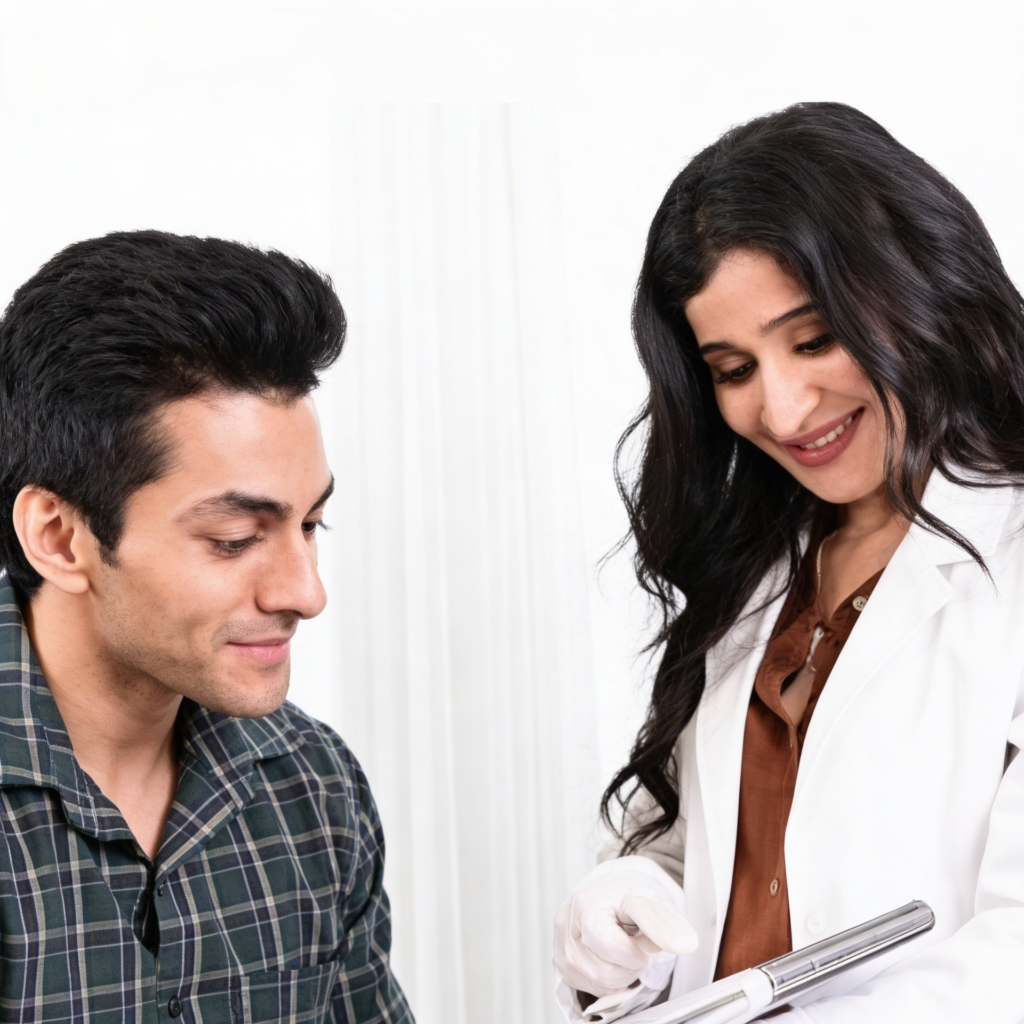
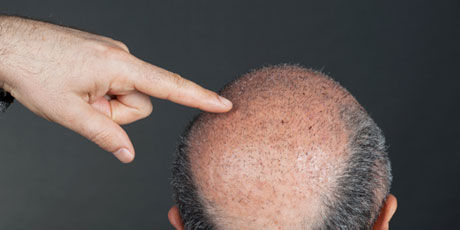
When you go to your family physician with hair loss symptoms, your medical history and family history will be checked. A physical exam and scalp exam will be done so that the doctor can have all needed information and he will order lab tests as needed. Hair analysis, biopsy may help to fix underlying medical condition correctly and start the right treatment protocol for successful outcome.
General medical history
The doctor will first ask about
- Your past, present medical history.
- Your family history.
- Any thyroid involvement or medication for same.
- Details about any present healthcare concerns like heart problems, diabetes, arthritis etc.
- Medications you take – both prescription and over-the-counter.
- Your menstrual history (for females).
- Any allergies etc.
- Any recent history of any medical or surgical illness.
He will also check how balanced your diet is and whether you take any vitamin, iron supplements. He will ask about baldness and hair loss in other family members and what caused the hair loss. He will do a physical exam.
Hair loss history
To know what caused the hair loss, your doctor will ask questions about hair loss like
- What are the characteristics?
- Thinning hair, gradual diffuse hair loss, no noticeable amount of hair loss?
- Sudden and rapid hair loss, like hair shedding – lots of hair falling out?
- Any discernible pattern like receding hairline, frontal/central bald patches, thinning in specific areas or throughout the scalp?
- Is the scalp showing?
- Did u find the patch of hair loss or your hair dresser?
- How do the nearby hairs look?
- How long since hair loss started?
- Any symptoms like scalp redness, itching, flaking etc.
- Any recent illness, injury, burn, or high fever?
- Started on any new medication?
- Do you dye, bleach, perm or color your hair?
- Use devices like blow-drier, curling irons etc for hair styling?
- What are the hair-care products you use?
Diagnostic procedures
The doctor will order complete blood and urinalysis to check for underlying medical conditions like diabetes, thyroid disease, and lupus.
Clinical test
- Hair pull test-He will check your hair and pull gently several hairs for a pull test for determining stage of shedding.
- Daily hair count-daily hair loss count crosses 100 it indicates pathological hair loss
- Hair feathering-to asses the brittle nature of hair
- Woods lamp examination-to diagnose fungal infection
Microscopic examination
- Hair pluck test under microscope.
- Phototrichogram-noninvasive method of studying the hair growth cycle.
- Light microscopy of hair
- Polarizing microscopy of hair
- Electron microscopy of hair
Scalp biopsy
- Skin samples taken from scalp for a biopsy will be checked for infections and other causes of cicatricial alopecia and to check if the follicles are permanently damaged?
Treatment Plan
Many treatment options for hair loss are possible. Topical, oral medications can be combined with procedures. Reversible hair loss can be managed sometimes by changing our life style or stopping what we do. Early diagnosis, treatment and containing hair loss are essential for successful outcome.
[tab]
[tab_item title=”References”]
- University of Maryland Medical Center – Hair Loss Treatment view
- Mayo Clinic – Test & Diagnosis Hair Loss view
- WebMD – Hair Loss exams & Tests view
- American Association of Dermatology – Hair Loss Diagnosis & Outcome view
- John Hopkins Medicine Health Library – Hair Loss view
[/tab_item]
[/tab]