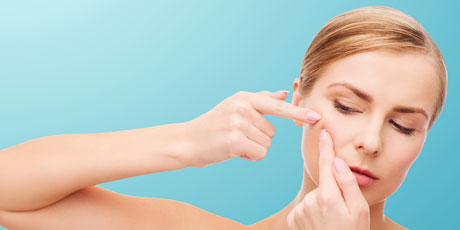
Acne is generally classified as mild, moderate and severe.
- Mild acne – Only whiteheads and blackheads are present, confined to face usually.
- Moderate acne – Whiteheads, blackheads, pustules and papules are present – can be on face, shoulders and back.
- Severe acne – When nodules and cysts are also present; face, shoulders, back, chest and other areas are affected.
The initial diagnosis can be made by a physical examination looking at affected areas.
Diagnosing acne
How acne is diagnosed? The most common characteristics are the whiteheads and blackheads, known as comedones, and pus-filled pimples. Looking at the exterior appearance of the spots and how they are distributed over the face and other areas like neck, chest etc, your doctor can tell you what kind of acne you have got. Mild acne can be mostly self-diagnosed and treated with over-the-counter products, both topical and oral which do not need any prescription.
Consulting your GP
But when acne persists and more areas are affected, consulting your family doctor is a good idea. Your physician will like to know how long you have been suffering from acne and how frequently it flares/occurs. He will ask details of over-the-counter medications and other treatment you have tried. Assessing the severity of acne, he will formulate a treatment plan.
Dermatologist consult
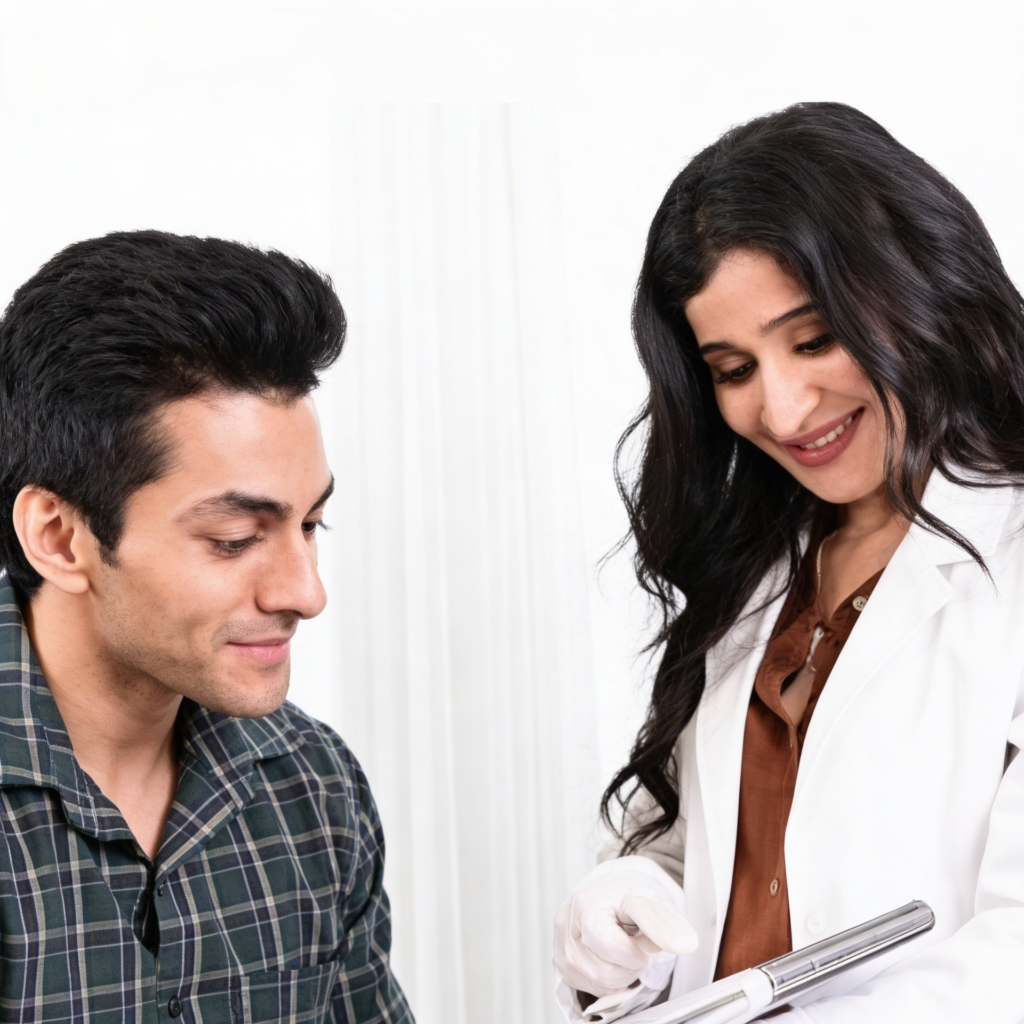
You must consult a dermatologist when you have severe and widespread breakout of acne, with painful inflamed skin and when dark spots, scars/pitting etc result due to acne. The dermatologist will evaluate the spots, severity of acne, check how much area is affected, grade it accordingly and start treatment. He can offer counselling about the psychological effects of acne like self-consciousness, depression etc.
Grades of acne
- Grade I – Mild with just blackheads, whiteheads and some pimples without any inflammation.
- Grade II – Moderate with numerous blackheads, whiteheads and more papules and pustules.
- Grade III – Moderate to severe with widespread spots including nodules and painful, red and inflamed skin.
- Grade IV – Most severe with pustules, nodules and painful cysts with involvement of back, chest and shoulders etc; known as cystic acne.
Acne lookalikes
Some skin conditions resemble acne remarkably but with different causes needing different treatments like
- Rosacea
- Folliculitis
- Keratosis pilaris
- Miliaria rubra
Getting a medical opinion is the best way to get an accurate diagnosis.
Outcome
A good acne treatment plan can prevent fresh breakouts and help in clearing the skin to avoid permanent scarring and resultant psychological trauma.
[tab]
[tab_item title=”References”]
- WebMD – Skin Problems and Treatments view
- US National Library of Medicine – National Institutes of Health [Acne vulgaris; Cystic acne; Pimples; Zits] view
- British Association of Dermatologists – Acne Resource view
- NHS – Acne Symptoms view
- American Academy of Dermatology – Acne: Tips for managing view
[/tab_item]
[/tab]