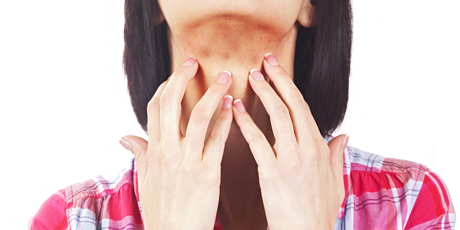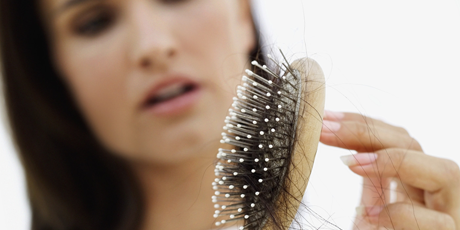
Treatment for hair loss can be with topical, oral medications, or surgery – like hair transplant procedure. Some types of hair loss like hereditary hair loss cannot be completely prevented or reversed. Wearing wigs and toupees and hair styling can help in hiding the hair loss and help you to win your confidence back.
Treating underlying conditions
The treatments aim at hair loss prevention, encouraging hair growth, and covering bald patches.
- If hair loss has been due to underlying diseases, your physician will start treatment. Once the medical cause is treated successfully, hair grows back.
- For scarring alopecia, an early diagnosis and successful treatment of lichen planus or discoid lupus can help to contain the hair loss.
- In alopecia areata, hair grows spontaneously and treatment is aimed at speeding it. Treatment includes topical, oral medications and immunotherapy generally.
- In telogen effluvium, dealing with mental/emotional stress and coming out of traumatic physical conditions like surgery, illness, high fevers, avoiding hair-loss causing medicines, and stopping crash diets etc can stop hair loss and hair may grow spontaneously.
- Hair loss due to chemotherapy gets reversed with stopping the therapy.
- Eating a nutritious, balanced diet, with adequate iron, proteins and vitamins, and taking good, gentle care of hair will help avert/stop hair loss.
Treatment options are as follows
Medications
- Minoxidil (Rogaine) – topical – to be applied to the bald patch twice daily for hair growth. Decrease in dose reduces efficacy and discontinuing results in regression. Used in –
- Female pattern baldness.
- Male pattern baldness.
- Alopecia areata.
- Finasteride (Propecia) – oral – this is a prescription drug for treating male pattern baldness; this helps in restoring normal growth.
- Antiandrogens like cyproterone acetate,spironolactone,flutamide in female pattern hair loss.
- Corticosteroids –
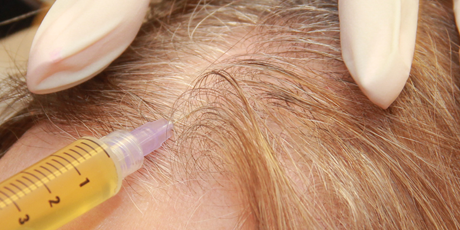
- Injected to the bald spots for alopecia areata.
- Topical – ointments and creams.
- Oral – but has side effects.
- Intavenous-for alopecia universalis.
- Contact immunotherapy for alopecia areata.
- Psoralen with ultraviolet A light (PUVA) therapy for alopecia areata.
Surgical procedures
- Hair transplant.
- Follicular unit transplantation
- Punch grafting
- Scalp reduction.
- Scalp flaps.
- Tissue expansion.
Cosmetic approach
- Using wigs, toupees.
- Styling like perm.
- Dyes, coloring.
- Tattoos.
Prognosis
Heredity is the most common cause for hair loss. Treatments may be partially successful in some cases. Medications for hair loss may need to be taken life long to prevent recurrence of hair loss. Reversible hair loss can be cyclic but can be managed much more successfully once the appropriate treatment is started. Counseling may help in adjusting to permanent hair loss and managing it efficiently.
[tab]
[tab_item title=”References”]
- University of Maryland Medical Center – Hair Loss Treatment view
- Mayo Clinic – Hair Loss treatment & Drugs view
- WebMD – Hair Loss Medication view
- American Association of Dermatology – Hair Loss Tips view
- John Hopkins Medicine Health Library – Hair Loss view
- NHS UK – Hair Loss Treatment view
[/tab_item]
[/tab]